
Most Frequently Asked Questions
God, Christianity, and Life
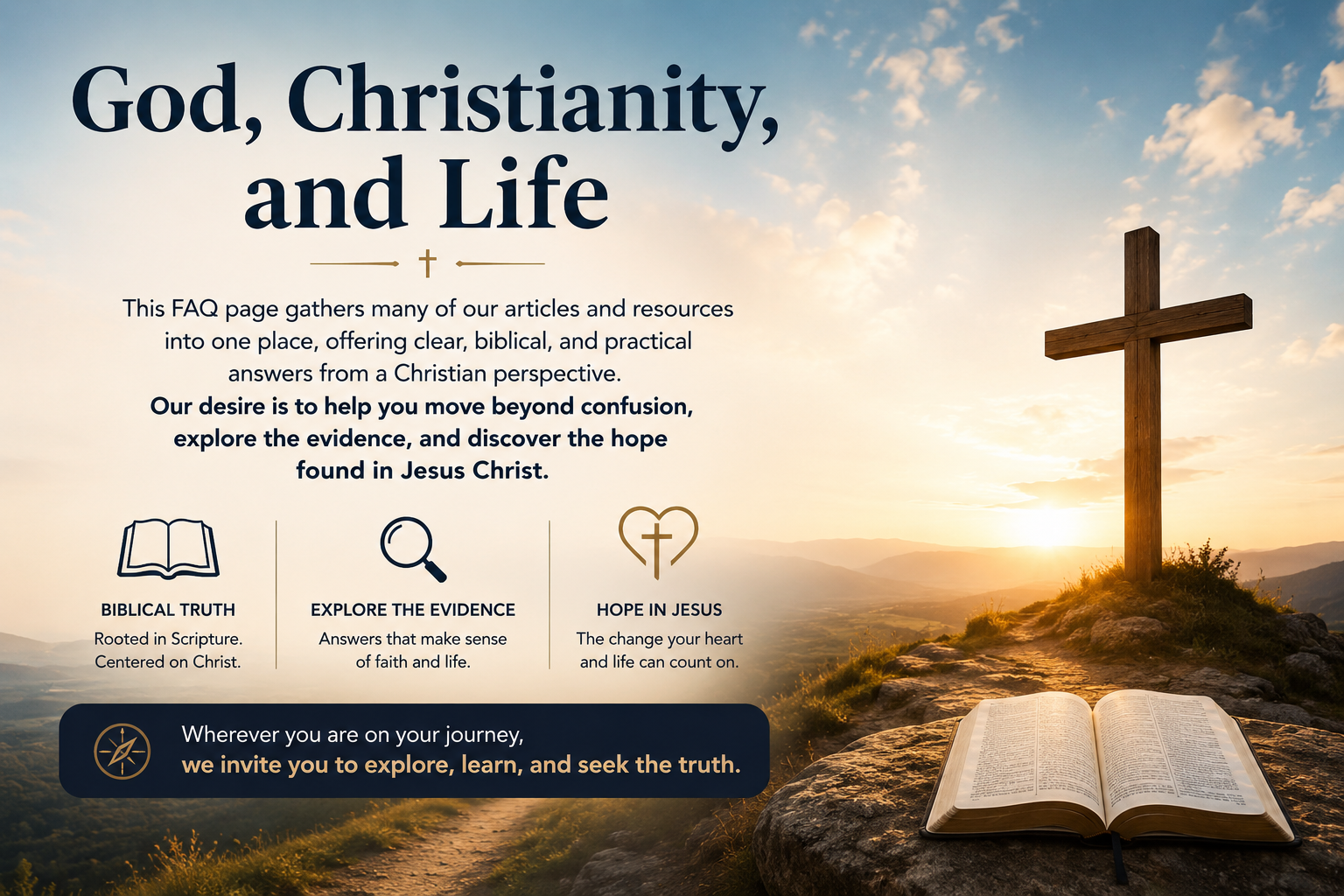
This FAQ page gathers many of our articles and resources into one place, offering clear, biblical, and practical answers from a Christian perspective. Our desire is to help you move beyond confusion, explore the evidence, and discover the hope found in Jesus Christ.
Wherever you are on your journey, we invite you to explore, learn, and seek the truth
Few questions are more important—or more common—than this one. For centuries, people from every culture and background have asked whether God is real or simply a human idea. While no one can place God in a laboratory or prove His existence the way we prove a mathematical equation, there are powerful reasons to believe that God exists.
The universe itself points beyond itself. The remarkable order, complexity, and fine-tuning of creation suggest an intelligent Designer rather than a random accident. The existence of moral truth—our deep sense that some things are truly right and others truly wrong—also points to a moral Lawgiver. Human beings naturally long for meaning, purpose, justice, and eternity, desires that many believe find their fulfillment in God alone.
The Bible declares, “The heavens declare the glory of God; the skies proclaim the work of his hands” (Psalm 19:1). Scripture presents God not as a distant force but as a personal Creator who has revealed Himself through creation, conscience, history, and ultimately through Jesus Christ.
For Christians, the strongest evidence for God’s existence is found in the person of Jesus. His life, teachings, death, and resurrection provide compelling reasons to believe that God has entered human history and made Himself known.
Belief in God is not a blind leap into the dark. It is a reasonable response to the evidence of creation, the testimony of Scripture, the reality of human experience, and the historical claims surrounding Jesus Christ.
Whether you are a skeptic, a seeker, or a lifelong believer, we invite you to explore this question with an open mind. The search for God is ultimately not just about finding answers—it is about discovering the One who made you and loves you.
“For since the creation of the world God’s invisible qualities—his eternal power and divine nature—have been clearly seen, being understood from what has been made.” — Romans 1:20 (NIV)
Who Was Jesus?
Jesus Christ is the central figure of Christianity. Christians believe He is more than a great teacher, prophet, or moral example. The Bible teaches that Jesus is the eternal Son of God who came into the world to save sinners and reveal the character of God. He lived a sinless life, died on the cross for our sins, rose from the dead, and now reigns as Lord.
Was Jesus a Real Historical Person?
Yes. The overwhelming consensus among historians is that Jesus of Nazareth was a real person who lived in first-century Judea. His life, death by crucifixion, and influence on history are supported by both biblical and non-biblical historical sources.
Is Jesus God?
Christians believe that Jesus is fully God and fully man. He is not merely a representative of God but God Himself who took on human flesh. Jesus claimed divine authority, accepted worship, forgave sins, and identified Himself with the God revealed in the Old Testament.
Why Did Jesus Come to Earth?
Jesus came to seek and save those who are lost. Humanity’s greatest problem is sin, which separates us from God. Jesus came to provide forgiveness, reconciliation with God, and eternal life through His death and resurrection.
What Did Jesus Teach?
Jesus taught about the Kingdom of God, repentance, faith, forgiveness, love, humility, and eternal life. He called people to trust Him, follow Him, and love God with all their heart, soul, mind, and strength.
Why Did Jesus Die on the Cross?
Jesus died as a sacrifice for sin. Christians believe that on the cross He bore the punishment that sinners deserve, satisfying God’s justice and making forgiveness possible for all who trust in Him.
Did Jesus Really Rise from the Dead?
The resurrection is the foundation of the Christian faith. The New Testament records that Jesus physically rose from the dead on the third day after His crucifixion and appeared to many witnesses. Christians believe His resurrection proves His victory over sin and death.
Can Jesus Forgive My Sins?
Yes. The Bible teaches that anyone who turns to Christ in faith and repentance can receive complete forgiveness. No one is beyond the reach of God’s grace, and salvation is offered freely through Jesus Christ.
Is Jesus the Only Way to God?
Jesus Himself said, “I am the way and the truth and the life. No one comes to the Father except through me” (John 14:6). Christians believe that salvation is found in Christ alone because He alone dealt with humanity’s sin through His death and resurrection.
How Can I Know Jesus Personally?
Knowing Jesus begins with recognizing your need for forgiveness, believing that He died and rose again for your salvation, and placing your trust in Him. Christianity is not merely following rules—it is entering into a personal relationship with the living Christ.
What Is Jesus Doing Now?
The Bible teaches that Jesus is alive, seated at the right hand of God the Father, interceding for His people, building His church, and ruling over all things. One day He will return to judge the world and establish His eternal kingdom.
Why Does Jesus Still Matter Today?
Jesus remains the most influential person in human history. More importantly, He offers hope, forgiveness, purpose, and eternal life to all who trust in Him. His message is as relevant today as it was two thousand years ago because humanity’s deepest need has not changed.
Want to learn more? Start by reading one of the Gospels—especially the Gospel of John—to discover who Jesus claimed to be and why millions of people throughout history have trusted Him as Savior and Lord.“
Why Does God Allow Evil and Suffering?
Few questions are more difficult—or more important—than this one. If God is good, loving, and all-powerful, why is there so much evil, pain, injustice, disease, and heartbreak in the world?
The Bible does not give a simple answer that removes every mystery, but it does provide a framework for understanding suffering through the lens of God’s character and purposes.
Scripture teaches that God created the world good, but sin entered through humanity’s rebellion against Him. As a result, all creation has been affected by the consequences of the Fall (Genesis 3; Romans 8:20–22). The suffering we experience today is not the world as God originally intended it to be.
At the same time, God remains sovereign over all things. Nothing occurs outside His knowledge or control. Yet God often allows suffering for purposes we cannot fully understand. He uses trials to strengthen faith, develop perseverance, reveal our dependence on Him, and accomplish His greater plans (Romans 5:3–5; James 1:2–4).
The greatest example of this truth is the cross of Jesus Christ. The most evil act in human history—the crucifixion of the sinless Son of God—became the means by which God accomplished the greatest good: the salvation of sinners. What appeared to be defeat was actually God’s plan for redemption.
This does not mean every tragedy has an obvious explanation, nor does it minimize the reality of pain. Christians are not called to pretend suffering is good. Instead, we are called to trust that God is good even when life is difficult and His purposes are hidden from us.
The Bible also points us forward to a future hope. One day Christ will return, evil will be judged, suffering will end, and God will make all things new. Every tear will be wiped away, and His people will dwell with Him forever in a restored creation free from sin, death, and sorrow (Revelation 21:1–5).
Until that day, we live by faith, trusting the God who entered our suffering through Jesus Christ, walks with us in our trials, and promises that our present sufferings are not worth comparing with the glory that is to come.
In short: God allows evil and suffering for reasons that are often beyond our understanding, but He has not abandoned His creation. Through Christ, He is redeeming what sin has broken and will one day bring evil and suffering to an end forever.
Is Christianity the Only True Religion?
This is one of the most important and challenging questions people ask. In a world filled with many religions and spiritual beliefs, it can seem narrow or even offensive to claim that one faith alone is true. Yet Christianity has always made a unique and exclusive claim—not because Christians believe they are better than others, but because of who Jesus claimed to be.
Christianity teaches that salvation is not found through religious effort, moral achievement, or spiritual enlightenment. Instead, it is found through a personal relationship with Jesus Christ, who claimed to be God’s Son and the only way to reconciliation with God. Jesus said, “I am the way and the truth and the life. No one comes to the Father except through me” (John 14:6).
The Christian faith respects the sincerity of people from other religions and acknowledges that many faiths contain elements of truth about morality, purpose, and the human condition. However, Christianity differs from every other religion in its central message: that God came to us in the person of Jesus Christ and accomplished our salvation through His death and resurrection.
The question ultimately comes down to Jesus Himself. If Jesus truly rose from the dead, then His claims deserve serious consideration. Christianity stands or falls on that historical event. The apostles boldly proclaimed that salvation is found in Christ alone, saying, “Salvation is found in no one else, for there is no other name under heaven given to mankind by which we must be saved” (Acts 4:12).
This does not mean Christians should be arrogant or dismissive toward others. Rather, believers are called to speak the truth with humility, compassion, and love. Every person deserves respect because every person is created in God’s image.
The real question is not whether Christianity is one religion among many, but whether Jesus Christ is who He claimed to be. If He is, then His invitation is for everyone: “Come to me, all you who are weary and burdened, and I will give you rest” (Matthew 11:28).
In Plain Talk: Christianity teaches that Jesus Christ is the only Savior of the world. This claim is not based on cultural preference or religious tradition, but on the life, death, and resurrection of Jesus. The invitation of the gospel is open to all people, regardless of background, nationality, or past mistakes.
Can the Bible Be Trusted?
This is one of the most important questions a person can ask. If the Bible is truly God’s Word, then it deserves our attention, trust, and obedience. If it is not trustworthy, then its claims about God, salvation, and eternal life cannot be relied upon.
The good news is that the Bible stands up remarkably well to careful examination. Unlike many ancient writings, the Bible is supported by thousands of ancient manuscripts, allowing scholars to compare copies and verify its accuracy.
Archaeological discoveries have repeatedly confirmed the existence of people, places, and events mentioned in Scripture. Even critics acknowledge that the Bible is one of the best-preserved documents from the ancient world.
More importantly, the Bible presents a unified message written by more than forty authors over a period of approximately 1,500 years. Despite being written in different cultures and circumstances, its central theme remains consistent: God’s plan to redeem sinners through Jesus Christ. This remarkable unity points to a divine Author working through human writers.
Jesus Himself affirmed the authority and truthfulness of Scripture. He quoted it regularly, taught from it, and declared that God’s Word is truth (John 17:17). For Christians, confidence in the Bible is ultimately rooted in confidence in Christ.
The Bible does not ask for blind faith. It invites honest investigation. When examined carefully, it proves to be historically reliable, spiritually transformative, and worthy of trust. Millions of believers throughout history have found that its promises are true, its wisdom is sound, and its message leads people to a living relationship with God through Jesus Christ.
Key Scriptures:
2 Timothy 3:16-17
Psalm 119:160
John 17:17
2 Peter 1:20-21
Isaiah 40:8
Bottom Line:
The Bible can be trusted because it is historically reliable, faithfully preserved, affirmed by Jesus Christ, and proven true through its life-changing message and enduring testimony throughout history.
Why Did Jesus Have to Die?
This is one of the most important questions in the Christian faith. If God is loving and merciful, why was the death of Jesus necessary? Could God not simply forgive sins without the cross?
The Bible teaches that God’s character includes both perfect love and perfect justice. Because God is holy, sin cannot simply be ignored. Every act of rebellion against God carries a penalty. Scripture says, “The wages of sin is death” (Romans 6:23). If God overlooked sin, He would cease to be perfectly just.At the same time, God loves sinners and desires to save them. The cross is where God’s justice and mercy meet. Jesus, the sinless Son of God, willingly took upon Himself the punishment that sinners deserved. He became our substitute, bearing God’s judgment in our place so that we could be forgiven and reconciled to God.
The prophet Isaiah foretold this centuries before Jesus was born:
“He was pierced for our transgressions, he was crushed for our iniquities; the punishment that brought us peace was on him, and by his wounds we are healed.” (Isaiah 53:5)
Jesus Himself said that He came “to give his life as a ransom for many” (Mark 10:45). His death was not a tragic accident or the defeat of a good man. It was God’s plan from the beginning to provide salvation for His people.
Through His death, Jesus accomplished several things:
He paid the penalty for sin.
He satisfied God’s justice.
He demonstrated God’s love.
He defeated the power of sin and death.
He opened the way for sinners to be reconciled to God.
The story does not end at the cross. Three days later, Jesus rose from the dead, proving that His sacrifice was accepted and that He has victory over sin, death, and the grave.
The good news of the gospel is that anyone who trusts in Jesus Christ can receive forgiveness, eternal life, and peace with God—not because of their own goodness, but because of what Christ accomplished on the cross.
In simple terms: Jesus had to die because our sin required a payment that we could never make ourselves. Out of love, God sent His Son to take our place so that all who believe in Him might be saved. “God demonstrates his own love for us in this: While we were still sinners, Christ died for us” (Romans 5:8).
What Happens After Death?
One of the most common questions people ask is, “What happens after death?” The Bible teaches that death is not the end of our existence. Every person will one day stand before God and enter into an eternal destiny. For those who have trusted in Jesus Christ as Savior and Lord, death is the doorway into the presence of God and the beginning of eternal life. For those who reject Christ, Scripture warns of judgment and eternal separation from God.
The Bible says that believers who die are immediately with the Lord. While the body returns to the earth, the soul enters God’s presence, awaiting the future resurrection when Christ returns. On that day, believers will receive glorified bodies and enjoy eternal life in the new heavens and new earth.
The Bible also teaches that there will be a final judgment. Every person will give an account before God. Salvation is not earned by good works but is received through faith in Jesus Christ alone. Those who belong to Christ are forgiven, justified, and given the promise of eternal life.
While many questions remain about the details of the life to come, Christians can face death with confidence because of Christ’s victory over sin and the grave. Jesus said, “I am the resurrection and the life. The one who believes in me will live, even though they die” (John 11:25).
Death is not the end of the story. Because of Jesus, there is hope beyond the grave, the promise of resurrection, and the assurance of eternal life with God for all who trust in Him.
Key Scriptures: John 11:25-26, 2 Corinthians 5:8, Philippians 1:21-23, Hebrews 9:27, Revelation 21:1-4.
Why Are Christians So Hypocritical?
One of the most common objections to Christianity is the behavior of some Christians. Many people have been hurt, disappointed, or disillusioned by believers who claimed to follow Christ but failed to live according to His teachings. The question is understandable: if Christianity is true, why do Christians sometimes act hypocritically?
The Bible is surprisingly honest about this reality. Christians are not presented as perfect people but as sinners who are being transformed by God’s grace. Throughout Scripture, even some of God’s most faithful servants failed in significant ways. The church has always been made up of imperfect people who are still growing in faith and obedience.
Jesus Himself strongly condemned hypocrisy. Some of His harshest words were directed not toward unbelievers, but toward religious leaders who appeared righteous on the outside while neglecting true devotion to God in their hearts. Christianity does not excuse hypocrisy—it exposes it and calls believers to repentance.
At the same time, it is important to distinguish between Christ and His followers. The truth of Christianity rests on the person and work of Jesus Christ, not on the flawless performance of every Christian. When a doctor fails morally, it does not invalidate the science of medicine. In the same way, the failures of Christians do not disprove the truth of the gospel.
Many believers sincerely strive to follow Christ, love others, and live lives of integrity, though they do so imperfectly. The gospel is not a message that Christians have achieved righteousness on their own. It is the good news that sinners can be forgiven and changed through faith in Jesus.
If you have been hurt by hypocritical Christians, your pain is real and should not be dismissed. But rather than judging Christianity by its worst representatives, consider looking directly at Jesus. His life, teachings, compassion, holiness, and sacrifice reveal the true heart of the Christian faith.
Key Truth: Christianity is not about perfect people pretending to be good. It is about broken people being transformed by the grace of a perfect Savior.
Why Do I Need the Church?
Many people today ask, “Can’t I just follow Jesus on my own?” While a personal relationship with Christ is essential, the Bible never presents the Christian life as a solitary journey. From the beginning, God designed believers to grow, worship, serve, and encourage one another within a community of faith.
The church is not merely a building, denomination, or religious organization. It is the family of God—a gathering of believers united in Christ. Through the church, we hear God’s Word taught, participate in worship, receive encouragement, serve others with our gifts, and find support during life’s trials.
The New Testament repeatedly calls Christians to gather together, pray together, bear one another’s burdens, and spur one another on toward love and good works. We need fellow believers to help us grow in faith, provide accountability, offer wisdom, and remind us of God’s promises when we are discouraged.
Being part of a healthy church also provides opportunities to use the gifts God has given us. Christianity is not only about what we receive but also about how we serve others. Every believer has a role to play in strengthening the body of Christ.
Of course, churches are made up of imperfect people. At times believers experience disappointment, conflict, or hurt within the church. Yet God’s solution to imperfect people has never been isolation, but grace, forgiveness, and continued fellowship centered on Christ.
The church cannot save you—only Jesus Christ can do that. But God has ordained the church as a primary means by which believers grow, mature, and remain steadfast in their faith. Just as a coal removed from a fire gradually grows cold, Christians who separate themselves from biblical fellowship often struggle spiritually over time.
If you are seeking to follow Christ faithfully, finding a Bible-believing church is one of the most important steps you can take. There you can worship God, learn His Word, build meaningful relationships, and serve alongside others as you walk the path of faith together.
Key Scriptures: Hebrews 10:24-25, Acts 2:42-47, Ephesians 4:11-16, 1 Corinthians 12:12-27, Galatians 6:2.
What Must I Do to Be Saved?
This is one of the most important questions a person can ask. The Bible gives a clear and hopeful answer: salvation is God’s gift, received through faith in Jesus Christ.
The Philippian jailer asked the apostle Paul, “What must I do to be saved?” Paul replied:
“Believe in the Lord Jesus, and you will be saved.” (Acts 16:31)
To be saved means to be forgiven of your sins, reconciled to God, and given eternal life through Jesus Christ. Salvation is not earned by good works, religious rituals, church attendance, or personal effort. It comes by God’s grace alone.
The Bible teaches that all people have sinned and fall short of God’s perfect standard (Romans 3:23). Because of our sin, we stand separated from God and unable to save ourselves. But God, in His love and mercy, sent His Son Jesus Christ to live the perfect life we could not live, die on the cross for our sins, and rise again from the dead.
When a person repents of sin and places their trust in Jesus Christ alone for salvation, God forgives their sins and declares them righteous.
As Scripture says:
“For it is by grace you have been saved, through faith—and this is not from yourselves, it is the gift of God—not by works, so that no one can boast.” (Ephesians 2:8-9)
Saving faith is more than simply knowing facts about Jesus. It is trusting Him personally as Savior and Lord. It involves turning from a life of self-rule and placing your confidence in Christ’s finished work on the cross.
If you recognize your need for forgiveness and believe that Jesus died and rose again for you, you can come to Him today in faith.
God promises:
“Everyone who calls on the name of the Lord will be saved.” (Romans 10:13)
Salvation is not about becoming perfect. It is about receiving the perfect Savior. Those who trust in Christ are adopted into God’s family, indwelt by the Holy Spirit, and given the assurance of eternal life.
In Simple Terms
To be saved, you must:
Recognize that you are a sinner in need of God’s forgiveness.
Believe that Jesus Christ died for your sins and rose again.
Repent and turn to Christ in faith.
Trust in Jesus alone—not your good works—for salvation.
Follow Him as Lord and Savior.
The good news of the gospel is that salvation is available to all who come to Christ in faith. No one is beyond God’s grace, and no one is saved by their own efforts. Salvation is found in Jesus Christ alone.
Mountain Veteran Ministries
Find Your Next Bearing
Every journey needs a direction. If you're wondering where to go from here, choose the path that best fits where you are today.
⚒️ I Want to Live Faithfully
Discover practical wisdom for following Christ in today's world.
→ Living as a Christian Today✝️ I Want to Understand the Gospel
Learn what salvation means and why Jesus came.
→ Understanding Salvation📖 I Want to Understand the Bible
Explore why Christians trust Scripture and how to read it well.
→ Understanding the Bible❓ I Still Have Questions
Explore thoughtful answers to some of Christianity's hardest questions.
→ Hard Questions