
When Prayer Feels Like Talking to the Ceiling
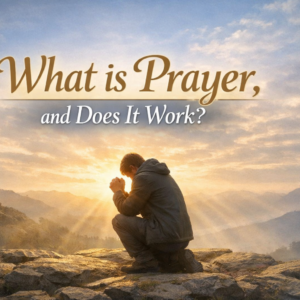
Most of us have been there — kneeling beside the bed, eyes closed, words going up — and feeling like they hit the ceiling and bounced back. But Scripture doesn’t call that failure. It calls it faith.
You’ve done it. Most of us have. You find a quiet moment, bow your head, close your eyes — and the words go up. But something feels off. No warmth. No sense of being heard. Just the hum of the refrigerator and the tick of the clock. You finish and get up wondering if God was even in the room.
That feeling doesn’t mean your faith is broken. It doesn’t mean God left. And it certainly doesn’t mean prayer is pointless. But it does mean something worth examining — because the gap between what we expect prayer to feel like and what the Bible actually says about it is bigger than most of us realize.
Let’s talk about it honestly.
The Feeling Isn’t the Measure
We live in a culture that prizes experience. If something doesn’t produce a feeling — warmth, peace, goosebumps, a sense of presence — we assume it didn’t work. We apply that same logic to prayer, and it quietly wrecks our devotional life. We judge the effectiveness of our communion with God by what we felt during it.
But Scripture never grounds prayer’s validity in emotional experience. Not once does Jesus say, “Pray, and you’ll feel great afterward.” He says pray. He teaches how to pray. He assumes his people will pray. But the measure he applies is faithfulness, not feeling.
“And when you pray, do not heap up empty phrases as the Gentiles do, for they think that they will be heard for their many words. Do not be like them, for your Father knows what you need before you ask him.” — Matthew 6:7–8
That last line is the key. Your Father already knows. Prayer isn’t uploading information to a God who was in the dark. It’s not convincing a distant deity to care about you. The God you’re talking to already knows your name, already sees your situation, and already loves you before you form the first word. Which means the ceiling you think your prayers are hitting? He’s on the other side of it — and he heard.
Why Prayer Feels Empty Sometimes
Before we get to encouragement, we should be honest. There are real reasons prayer can feel hollow, and not all of them are spiritual attacks or personality quirks. Some are worth sitting with.
1. We’re Treating Prayer Like a Transaction
If we come to prayer primarily with a list — things we want God to fix, provide, or change — and those things don’t materialize on our timeline, prayer starts feeling useless. Vending machine spirituality. Insert prayer, receive blessing. When the machine doesn’t dispense, we wonder if it’s even plugged in.
But prayer was never designed to be a transaction. It’s a relationship. The Psalms — Israel’s prayer book — are full of complaint, confusion, longing, and wrestling. They’re not lists. They’re conversations between a person and their God, sometimes raw and disoriented, sometimes jubilant. David didn’t pray to get things. He prayed to be with God — even when God felt far away.
“My God, my God, why have you forsaken me? Why are you so far from saving me, so far from my cries of anguish?” — Psalm 22:1
That’s not a polished prayer. That’s a man crying in the dark. And God included it in the Scripture he gave us — which tells you something about what he thinks of honest, feeling-less, ceiling-bouncing prayer.
2. We’re Distracted, Not Disconnected
Sometimes the problem is less theological and more practical. We’re tired. Our minds are scattered. We start praying and end up mentally composing a grocery list or replaying a conversation from yesterday. We finish and feel like we said words at God while thinking about something else.
That’s not a sin. That’s being human. The ancient practice of liturgical prayer — fixed prayers with set words — developed in part because Christians recognized that our minds wander, and sometimes we need the structure of someone else’s words to anchor our attention. The Lord’s Prayer itself is a structured form Jesus gave us precisely because we need scaffolding.
If your private prayer feels scattered, you’re not spiritually defective. You’re distracted. That’s a different problem with different solutions — none of which involve concluding that God isn’t listening.
3. We’re in a Dry Season — and Dry Seasons Are Normal
The mystics called it aridity. John of the Cross called it the dark night of the soul. The Puritans wrote entire treatises on spiritual desertion — seasons when God seems absent, prayer feels mechanical, and faith feels more like stubbornness than joy.
These seasons are well-documented in Scripture and church history. They are not signs that God has left. They are, more often, seasons of deepening — where faith is stripped of its emotional scaffolding and tested at its root. The question isn’t “Why doesn’t prayer feel good?” It’s “Will I keep praying even when it doesn’t?”
The answer God is looking for, apparently, is yes.
What Jesus Actually Said About Prayer
Jesus talked about prayer constantly — and the picture he paints looks almost nothing like the polished, feel-good devotional experience we often expect.
In Luke 18:1–8, he tells the parable of the persistent widow. A woman kept coming to an unjust judge — not once, not with eloquence, not with emotional intensity — just with stubborn, repetitive, relentless asking. Jesus holds her up as a model. The point isn’t that you have to badger God into caring. The point is that real prayer is persistent. It keeps showing up even when the door seems closed.
“And will not God give justice to his elect, who cry to him day and night? Will he delay long over them? I tell you, he will give justice to them speedily.” — Luke 18:7–8
Then Jesus closes with a haunting question: “When the Son of Man comes, will he find faith on earth?” The faith he’s describing isn’t faith that always feels warm. It’s faith that keeps praying in the silence.
In Matthew 7:7–11, Jesus gives us the famous “ask, seek, knock” teaching. What most people miss is the tense of those verbs in the original Greek — they’re continuous action. Not “ask once.” Keep asking. Keep seeking. Keep knocking. The image is a person who doesn’t quit at the door. And Jesus grounds this in fatherhood: what human father, when his child asks for bread, gives him a stone? God is better than the best father you can imagine. He hears. He answers. The timing is his, not yours.
And then there’s Gethsemane — the moment where we see Jesus himself pray a prayer that, in the short term, received a “no.” Let this cup pass from me. The cup didn’t pass. And yet Jesus, sweating drops like blood, submits: not my will, but yours (Luke 22:42). If the Son of God prayed with that kind of anguish and received that kind of answer, what does that tell us about the nature of prayer? That it was never about getting exactly what we want. It was about aligning ourselves with the one who holds everything.
The Spirit Prays When You Can’t
Here is perhaps the most underappreciated truth about prayer in the entire New Testament. When you genuinely don’t know what to say — when the words won’t come, when the feeling is gone, when all you can do is sit there — you are not alone in that silence.
“Likewise the Spirit helps us in our weakness. For we do not know what to pray for as we ought, but the Spirit himself intercedes for us with groanings too deep for words.” — Romans 8:26
Read that carefully. Paul isn’t describing an exceptional crisis. He’s describing normal Christian life: we don’t know what to pray for as we ought. That’s all of us, most of the time. And God’s response to that limitation isn’t impatience — it’s the Spirit himself stepping in, praying on our behalf, with groanings that go beyond language.
The God who created the universe intercedes for you in your own weakness. You are not the only one praying in that room. You never were.
And then Paul adds: “And he who searches hearts knows what is the mind of the Spirit, because the Spirit intercedes for the saints according to the will of God” (Romans 8:27). The Father and Spirit are in perfect communication about your needs — even when you can’t articulate them yourself. Your inarticulate, ceiling-grazing prayer is caught up into something far larger than your words.
What the Saints Have Said
You are not the first person to feel this way. Not by a long shot. The history of Christian devotion is littered with some of the holiest people in history describing exactly what you’re describing.
Martin Luther, who prayed for hours each day and whose prayer life helped launch the Reformation, wrote that he sometimes felt as though his prayers were bouncing off the sky. His counsel? Pray anyway. Use the Lord’s Prayer as a guide when your own words fail. Let the structure carry you when the feeling won’t.
C.S. Lewis, in Letters to Malcolm: Chiefly on Prayer, wrote with unusual honesty about the mechanics and frustrations of prayer — acknowledging that much of prayer is an act of will against the grain of emotion. He argued that the dryness itself can be a gift, stripping prayer of the self-congratulation that comes when it feels good.
Mother Teresa’s private letters, published after her death, revealed decades of spiritual darkness — a sustained period where God felt entirely absent to her. She kept praying. She kept serving. And she held both the darkness and her faith simultaneously, without resolving the tension prematurely. Her conclusion: the feeling of God’s absence does not mean his absence.
The Westminster Larger Catechism describes prayer as “an offering up of our desires unto God, for things agreeable to his will, in the name of Christ, with confession of our sins, and thankful acknowledgment of his mercies.” Notice what’s not in that definition: a feeling. Prayer is an act — an offering — not an emotional state.
Practical Footholds When Prayer Feels Dead
Theology matters. But sometimes you need a handhold, not a lecture. Here are a few things that have helped believers across centuries when prayer dried up.
Pray the Psalms
When your own words fail, borrow Israel’s. The Psalms were written to be prayed — they cover every emotional register from ecstatic praise to desperate abandonment. Psalm 88 ends without resolution, in darkness. Psalm 22 begins in despair and finds its way to trust. Psalm 46 is bedrock confidence. Find where you are and pray from there. You’re not improvising alone — you’re joining a 3,000-year-old conversation.
Use Fixed-Form Prayer
The Lord’s Prayer was given as a pattern, and many believers have found that when spontaneous prayer runs dry, liturgical prayer carries them. The Book of Common Prayer, the Northumbria Community’s Celtic Daily Prayer, or simply the Lord’s Prayer itself — praying someone else’s words when yours are gone isn’t spiritual laziness. It’s wisdom.
Pray Short and Honest
You don’t have to say much. “Lord, I don’t feel anything right now, but I’m here” is a complete prayer. “Help” is a complete prayer. Honesty before God beats performance every time. He already knows the state of your heart — you’re not updating him, you’re aligning yourself with him.
Let Your Body Help
Posture matters more than we think. Kneeling, folding hands, walking while praying, praying aloud — physical engagement can break the dissociation between mind and spirit. The incarnation tells us that bodies matter to God. Use yours in prayer.
Keep a Prayer Record
Dry seasons look different in retrospect. Keeping even a simple journal of prayers and answers over months reveals a pattern of faithfulness you can’t see in the moment. When prayer feels empty, go back and read what God did three months ago. Memory is a spiritual discipline.
The Ceiling Isn’t the End
Here is the bottom line: the feeling that your prayers are hitting the ceiling is not evidence that God isn’t listening. It may be evidence that your faith is being tested. It may be evidence that you’re in a normal dry season. It may be evidence that your expectations were formed more by experience-culture than by Scripture. Or it may just be Tuesday, and you’re tired, and your mind is scattered.
None of those things close the ears of God.
Psalm 34:18 says, “The LORD is near to the brokenhearted and saves the crushed in spirit.” He is near — not distant — to exactly the kind of person who feels like prayer isn’t working. Isaiah 65:24 promises: “Before they call I will answer; while they are yet speaking I will hear.” Before you finish the sentence. While you’re still fumbling for words.
The ceiling is not the end of your prayer. It’s the beginning of the territory where faith does its deepest work — not by feeling its way forward, but by walking in the dark and trusting that the God who spoke the cosmos into existence is not undone by your silence.
Keep praying. Even when it feels like talking to the ceiling. Especially then.
For the Veteran Who’s Given Up on Prayer
A lot of veterans have told us that prayer was the first thing to go after deployment — or after something broke that they thought God should have prevented. If that’s you, we’re not here to fix your theology. We’re here to say: the door is still open. Romans 8:38–39 says nothing — not death, not life, not anything in all creation — can separate you from the love of God in Christ Jesus. Not your silence. Not your anger. Not your doubt. The line is still open, even if you haven’t picked it up in years.
Key Takeaways
- Feeling isn’t the measure of prayer. Scripture never grounds the validity of prayer in emotional experience — faithfulness, not feeling, is what God looks for.
- Dry seasons are normal, not disqualifying. The greatest saints in history experienced prolonged seasons of spiritual aridity and kept praying through them.
- Jesus modeled persistent, honest prayer — including a prayer that received a “no” — and still submitted to the Father’s will. We follow that same pattern.
- The Holy Spirit intercedes when your words run out. Romans 8:26 is a promise that you are never the only one praying in the room.
- Practical tools exist for dry seasons. Praying the Psalms, using fixed-form prayer, praying short and honest, and keeping a prayer record can carry you through when spontaneous prayer won’t come.
- God is near to those who feel he’s far. Psalm 34:18 and Isaiah 65:24 speak directly to the person who feels unheard — and the news is better than the feeling suggests.
Key Scriptures: Matthew 6:7–8 · Psalm 22:1 · Luke 18:7–8 · Luke 22:42 · Romans 8:26–27 · Psalm 34:18 · Isaiah 65:24
Mountain Veteran Ministries
Find Your Next Bearing
Every journey needs a direction. If you're wondering where to go from here, choose the path that best fits where you are today.
⚒️ I Want to Live Faithfully
Discover practical wisdom for following Christ in today's world.
→ Living as a Christian Today✝️ I Want to Understand the Gospel
Learn what salvation means and why Jesus came.
→ Understanding Salvation📖 I Want to Understand the Bible
Explore why Christians trust Scripture and how to read it well.
→ Understanding the Bible❓ I Still Have Questions
Explore thoughtful answers to some of Christianity's hardest questions.
→ Hard Questions