
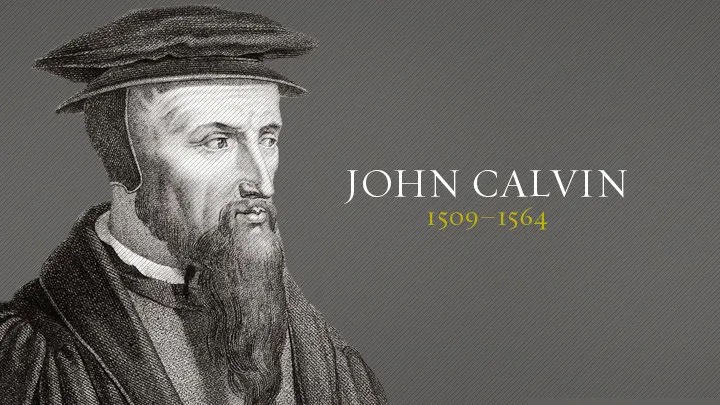
✝️ Understanding the Philosophy and Theology of John Calvin
John Calvin remains one of the most influential figures in Christian history. Born in 1509 in Noyon, France, Calvin’s writings and teachings profoundly shaped the Protestant Reformation and the theological framework we now call Reformed Theology. But Calvin’s work was not merely about reforming the Church; it was about lifting high the sovereignty and glory of God in all areas of life.
In this article, we’ll explore Calvin’s philosophy in depth, breaking it down into clear categories. We’ll also include Scripture references and illustrations that show why Calvin’s theology continues to influence millions of Christians today.
🕊️ 1. God’s Absolute Sovereignty
For Calvin, everything begins and ends with God’s sovereignty. He believed that God, as the Creator, is in full control of every aspect of life. Nothing happens outside of His knowledge or will.
Scripture: “For from him and through him and to him are all things. To him be glory forever. Amen.”(Romans 11:36)
Calvin argued that because God is sovereign, we can trust that even the most difficult circumstances serve a purpose. He wrote in his famous work Institutes of the Christian Religion that the universe is not governed by blind chance but by God’s wise and loving providence.
Illustration:
Think of a master weaver at a loom. From the underside, the tapestry may look chaotic with tangled threads. But from above, the pattern is clear and beautiful. Calvin believed God sees the “top side” of life’s tapestry. Even when we see knots and tangles, God is weaving something beautiful for His glory.
📜 2. The Authority of Scripture
Calvin was convinced that the Bible is the final authority for all matters of faith and life. In the 16th century, many church leaders placed tradition or papal decrees above Scripture. Calvin pushed back, declaring that God’s Word alone (Sola Scriptura) is the standard of truth.
Scripture: “All Scripture is God-breathed and is useful for teaching, rebuking, correcting and training in righteousness.” (2 Timothy 3:16)
Calvin believed the Bible is inspired by God and is sufficient for guiding believers. He also believed that the Holy Spirit must open our hearts to understand and apply Scripture.
Illustration:
Imagine holding a lantern in a dark forest. The light shows you where to walk and keeps you from stumbling. Calvin viewed the Bible as that lantern—it shines God’s truth into a world filled with darkness.
🙇♂️ 3. Human Sinfulness (Total Depravity)
One of Calvin’s most sobering teachings is that human beings are deeply sinful because of Adam and Eve’s fall in the Garden of Eden. This is sometimes called total depravity.
Scripture: “As it is written: ‘There is no one righteous, not even one; there is no one who understands; there is no one who seeks God.’” (Romans 3:10–11)
Total depravity doesn’t mean that people are as bad as they could possibly be, but that sin has affected every part of our being—our minds, wills, emotions, and bodies. We cannot save ourselves or even choose God without His intervention.
Illustration:
Think of a glass of water with a single drop of poison. The entire glass is contaminated. In the same way, sin has infected every aspect of human nature.
✝️ 4. Salvation by Grace Alone
Because we are unable to save ourselves, Calvin taught that salvation is entirely a gift from God’s grace. This aligns with the Apostle Paul’s words:
Scripture: “For it is by grace you have been saved, through faith—and this is not from yourselves, it is the gift of God—not by works, so that no one can boast.” (Ephesians 2:8–9)
Calvin was adamant that good works cannot earn salvation. Instead, they are the fruit of salvation. God, in His mercy, extends grace to sinners, and we receive it through faith in Jesus Christ.
Illustration:
Imagine someone drowning in the ocean. They can’t swim to shore, and they’re too weak to stay afloat. Suddenly, a lifeguard dives in, pulls them out, and carries them to safety. The rescued person didn’t save themselves; the lifeguard did all the work. That’s how Calvin described God’s grace.
📖 5. Predestination and Election
Perhaps Calvin’s most controversial teaching is predestination—the belief that God, before the foundation of the world, chose certain people (the elect) to be saved.
Scripture: “For he chose us in him before the creation of the world to be holy and blameless in his sight.”(Ephesians 1:4)
Calvin believed that God’s choice wasn’t based on anything we would do, but solely on His will and purpose. This doctrine, though difficult for many to grasp, is meant to assure believers of God’s unchanging love.
Illustration:
Think of a child adopted into a loving family. The parents chose the child, not because of the child’s accomplishments or behavior, but simply because they wanted to love and care for them. Calvin believed God’s election works the same way—it’s rooted in His grace, not our merit.
🩸 6. Christ’s Atonement
Calvin taught that Jesus’ death on the cross fully paid for the sins of the elect. This is sometimes called particular redemption because Christ’s sacrifice was completely effective for those God chose to save.
Scripture: “I am the good shepherd. The good shepherd lays down his life for the sheep.” (John 10:11)
Christ didn’t just make salvation possible; He secured it. His atoning death satisfied God’s justice and guaranteed the salvation of those who believe.
Illustration:
Imagine a legal debt you could never repay. Someone steps in, pays the entire amount, and hands you the receipt. That’s what Christ did on the cross—He paid the full debt of sin.
🔥 7. The Holy Spirit’s Role
Calvin placed a strong emphasis on the Holy Spirit. He taught that the Spirit draws people to Christ, gives them new hearts, and empowers them to live holy lives.
Scripture: “I will give you a new heart and put a new spirit in you; I will remove from you your heart of stone and give you a heart of flesh.” (Ezekiel 36:26)
The Spirit doesn’t just work at the beginning of salvation; He continues to guide and sanctify believers throughout their lives.
Illustration:
Picture a sailing ship with its sails down. Without wind, it cannot move. The Holy Spirit is like the wind—He fills our “sails” and enables us to move forward in faith.
🕊️ 8. Perseverance of the Saints
Calvin believed that those whom God saves will remain in faith until the end. This is often called the perseverance of the saints.
Scripture: “Being confident of this, that he who began a good work in you will carry it on to completion until the day of Christ Jesus.” (Philippians 1:6)
Believers may stumble and struggle, but God will never let them go. This teaching is meant to give Christians assurance that their salvation is secure.
Illustration:
Think of a parent teaching a toddler to walk. The child may fall, but the parent never lets go completely. God, as our Father, upholds us even when we trip and fall.
🛤️ 9. The Christian Life: Obedience and Holiness
Calvin was clear that salvation by grace doesn’t mean we can live however we want. Instead, true faith produces a desire to obey God and live a holy life.
Scripture: “You were taught… to put off your old self… and to put on the new self, created to be like God in true righteousness and holiness.” (Ephesians 4:22–24)
Good works are the evidence of salvation, not the cause. Calvin encouraged believers to live out their faith in their families, workplaces, and communities.
Illustration:
A healthy tree naturally bears fruit. In the same way, a healthy Christian life naturally bears the fruit of obedience and love.
🌟 10. The Glory of God
Ultimately, Calvin believed the purpose of life is to glorify God. Every doctrine he taught flows from this conviction.
Scripture: “So whether you eat or drink or whatever you do, do it all for the glory of God.” (1 Corinthians 10:31)
Calvin’s motto could be summed up in the Latin phrase Soli Deo Gloria—“To God alone be the glory.” He believed that all things exist to display God’s majesty, holiness, and love.
Illustration:
Imagine the sun rising over a mountain range. Its light and warmth fill the valley, touching everything. Calvin believed God’s glory should shine through every part of a believer’s life in the same way.
🙌 Final Thoughts: Why Calvin’s Philosophy Still Matters
John Calvin’s theology can seem weighty, even overwhelming, but at its core, it’s about magnifying God’s greatness and His grace toward sinners. Calvin wanted Christians to live with humble confidence—knowing that salvation is God’s work from beginning to end.
Key Takeaways:
- God is sovereign and worthy of trust.
- Scripture is the ultimate authority.
- Salvation is by grace alone through faith.
- God’s electing love assures us of His care.
- The Christian life is about obedience and glorifying God.
As Calvin once wrote, “Our wisdom, insofar as it ought to be deemed true and solid wisdom, consists almost entirely of two parts: the knowledge of God and of ourselves.” (Institutes, Book I).
✍️ Application Questions for Today
- Do you truly trust God’s sovereignty, even in hard times?
- Are you anchoring your beliefs and decisions in Scripture?
- Are you living out your faith with gratitude and obedience?
When we grasp God’s sovereignty and grace as Calvin taught, our hearts are freed from fear and filled with worship.
🔗 Share This Post
This blog post is designed to be shared! If you found it helpful, share it with others who might want to understand John Calvin’s philosophy and theology.
📝 Published by Mountain Veteran Ministries
💬 Leave a comment below or share this blog if it stirred your heart.
📧 Subscribe to our newsletter for more gospel-rooted insights.