
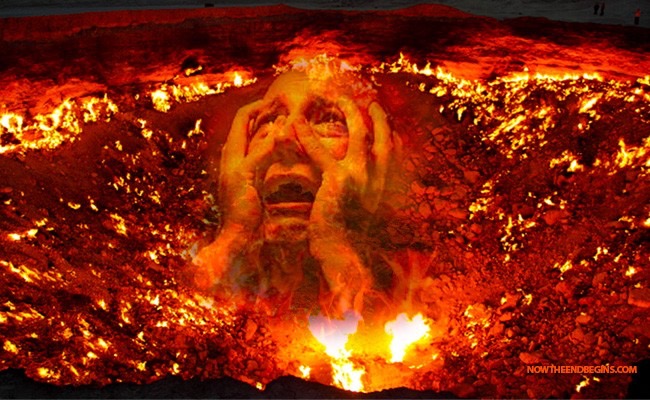
🔥 How Can a Loving God Send People to Hell?
A Christian Response from Faith Leaders, Theologians, and Scripture
💔 The Big Question
It’s one of the most troubling and emotionally weighty questions people ask about the Christian faith:
“How can a loving God send people to hell?”
On the surface, it seems contradictory. After all, we are told God is love. We read about His compassion, His mercy, and His desire that no one should perish (2 Peter 3:9). And yet, Scripture also speaks of eternal separation, punishment, fire, and judgment. That tension raises an honest and heartfelt dilemma: How can both be true?
This isn’t just a theoretical or theological question. It’s deeply personal. People ask it because they care about others—or because they fear for themselves. It’s a question that touches on our view of God’s character, the weight of our choices, and the destiny of the soul.
In this article, we’ll take a closer look at how Christian leaders—past and present—have addressed this question with humility, clarity, and Scripture. Along the way, we’ll discover that hell does not negate God’s love, but rather underscores the seriousness of God’s holiness, our freedom, and the astounding beauty of His grace.
🧭 The Dilemma of Love and Judgment
💡 “Isn’t God Love?”
Absolutely—1 John 4:8 says, “God is love.” That truth is not up for debate. It’s foundational to the Christian understanding of who God is. However, that same Bible also teaches that God is just, holy, and righteous. These are not opposing traits—they are perfectly balanced within His divine nature.
“Love without truth is sentimentality; it supports and affirms us but keeps us in denial about our flaws. Truth without love is harshness; it gives us information but in such a way that we cannot really hear it.” – Tim Keller
In other words, God’s love does not cancel His justice, and His justice doesn’t cancel His love. They both shine through the cross of Christ and are revealed in His Word.
🔥 What Is Hell, Biblically?
🔍 Jesus and the Reality of Hell
It may surprise some people, but Jesus spoke more about hell than any other figure in the Bible. Far from a vague or symbolic idea, Jesus used specific language to describe it:
- “Outer darkness” (Matthew 22:13)
- “Weeping and gnashing of teeth” (Matthew 8:12)
- “Unquenchable fire” (Mark 9:43)
- “Eternal punishment” (Matthew 25:46)
Jesus didn’t speak of hell to scare people into submission. He spoke of it to warn them away from it—to offer a real and urgent invitation into life.
“Enter through the narrow gate… For wide is the gate and broad is the road that leads to destruction, and many enter through it.” – Matthew 7:13
🙅♂️ Not God’s Desire
It’s critical to understand that God takes no pleasure in the death of the wicked (Ezekiel 33:11). He desires that all would turn and live. The message of judgment is not one of hatred, but of redemptive urgency.
“God is patient… not wanting anyone to perish, but everyone to come to repentance.” – 2 Peter 3:9
Hell, then, is not a divine overreaction. It is the tragic end result of those who reject the light they were given.
🕊️ Insights from Christian Faith Leaders
Let’s hear from trusted voices who’ve taken this question seriously—each offering unique insights grounded in biblical truth.
📚 C.S. Lewis – Hell Is Self-Chosen Isolation
“The doors of hell are locked on the inside.” – C.S. Lewis
In The Great Divorce, Lewis paints hell not as a dungeon, but as a gray, joyless place where people live isolated by their own pride and stubbornness. For Lewis, hell exists because God refuses to override human freedom. People would rather “reign in hell than serve in heaven.”
Hell is not so much about God sending people as it is about people choosing eternal separation rather than surrendering their self-will.
⚖️ R.C. Sproul – Holiness Demands Justice
R.C. Sproul’s theology is rooted in the holiness of God. He taught that sin is not simply a moral mistake—it is cosmic treason against a holy King. Hell is a rightful consequence for that rebellion.
“The most violent expression of God’s wrath and justice is seen in the Cross. If you think hell is severe, look at what it cost God to save us from it.” – Sproul
Sproul saw the doctrine of hell as essential for grasping the magnitude of Christ’s sacrifice.
💬 Billy Graham – God Sends No One Unwillingly
Billy Graham consistently emphasized that hell was never intended for people, quoting Matthew 25:41: “Depart from me… into the eternal fire prepared for the devil and his angels.”
He taught that people go to hell only after rejecting God’s repeated offers of mercy.
“You can’t blame God for hell. He didn’t design it for you. He offered you everything to avoid it—including His own Son.”
🔥 Francis Chan – We Can’t Erase What God Revealed
Francis Chan wrote Erasing Hell as a response to the discomfort many modern Christians feel about the doctrine. But instead of softening the truth, Chan doubled down on submission to Scripture.
“It’s not about what I want to believe. It’s about what God actually says.”
Chan urges Christians to be humble, heartbroken, and serious about both the reality of hell and the urgency of the Gospel.
⏳ John Stott – Annihilation as a Biblical Option?
Though controversial among evangelicals, John Stott raised the idea of “conditional immortality”—that the wicked are ultimately destroyed rather than eternally tormented.
He believed this interpretation better aligned with God’s justice and mercy, but he did so cautiously, recognizing it as a minority position.
“I do not dogmatize about the issue. But I question whether ‘eternal conscious torment’ is the most consistent reading of Scripture.”
Even in this view, hell remains real, final, and terribly sobering.
🧠 Theological Realities to Consider
📖 1. God’s Justice Is a Function of His Love
To truly love good is to hate evil. God’s justice means that He doesn’t turn a blind eye to sin. If He did, He wouldn’t be loving—He’d be permissive and negligent.
Psalm 5:4 – “You are not a God who delights in wickedness; evil may not dwell with you.”
A God who never punishes evil isn’t more loving—He’s morally indifferent. But our God is perfectly just and deeply loving.
🛑 2. Love Requires Free Will
God created us with the ability to choose. Without choice, there is no true love. If heaven is a relationship with God, then hell is the absence of that relationship—freely chosen by those who say, “I don’t want God.”
Romans 1:28 – “They did not see fit to acknowledge God, so God gave them up to a debased mind…”
🩸 3. The Cross Is Hell-Avoided by Grace
The Cross shows how serious sin is—so serious that Jesus had to suffer and die. But it also shows how far God was willing to go to rescue us from that consequence.
“God made Him who had no sin to be sin for us, so that in Him we might become the righteousness of God.” – 2 Corinthians 5:21
The doctrine of hell magnifies the beauty of the Gospel: Jesus experienced separation so we could have reconciliation.
❓ Objections and Honest Responses
| ❓ Objection | 💬 Christian Response |
|---|---|
| “Hell is incompatible with love.” | God’s love respects human freedom and never forces anyone to love Him back. |
| “Why eternal punishment for temporary sins?” | Sin is against an infinite God. The seriousness of sin comes from the worth of the One offended. |
| “Why doesn’t God forgive everyone?” | He offers forgiveness freely—but never forces it. Grace must be received by faith. |
| “Hell seems too harsh.” | The severity of hell mirrors the horror of sin—and the immeasurable grace available to all who believe. |
🌅 Grace Is the Final Word
Let’s not forget: God has gone to extraordinary lengths to rescue us from hell. He sent His Son. He offers mercy freely. He knocks at the door of every heart.
Hell is not a sign that God doesn’t love—it’s a warning about how much He does. He dignifies us with freedom. But that freedom carries eternal weight.
Revelation 3:20 – “Behold, I stand at the door and knock…”
God’s heart is not that we fear hell, but that we rejoice in grace. He doesn’t wait with a gavel—He comes with nail-scarred hands, inviting us into life.
📌 Summary: Key Takeaways
- Hell is real, but it’s not God’s plan for us.
- God is love, but He is also holy and just.
- Hell exists because love must allow for rejection.
- Jesus took our punishment so that we could receive eternal life.
- Christian leaders overwhelmingly agree: God sends no one to hell lightly—and He offers salvation freely.
📚 References
- The Bible – 2 Peter 3:9; John 3:16; Matthew 10:28; Revelation 3:20; Ezekiel 33:11; Romans 1; Psalm 5:4; 2 Corinthians 5:21
- C.S. Lewis – The Great Divorce, The Problem of Pain
- R.C. Sproul – Essential Truths of the Christian Faith
- Billy Graham – Peace with God
- Tim Keller – The Reason for God
- Francis Chan – Erasing Hell
- John Stott – Evangelical Essentials, various articles
📝 Published by Mountain Veteran Ministries
💬 Leave a comment below or share this blog if it stirred your heart.
📧 Subscribe to our newsletter for more gospel-rooted insights.