✝️ Turn the Other Cheek: Strength in the Face of Offense
A Christian Call to Radical Love and Redemptive Resistance
📖 What Did Jesus Really Mean?
“But I tell you, do not resist an evil person. If anyone slaps you on the right cheek, turn to them the other cheek also.”
— Matthew 5:39 (NIV)
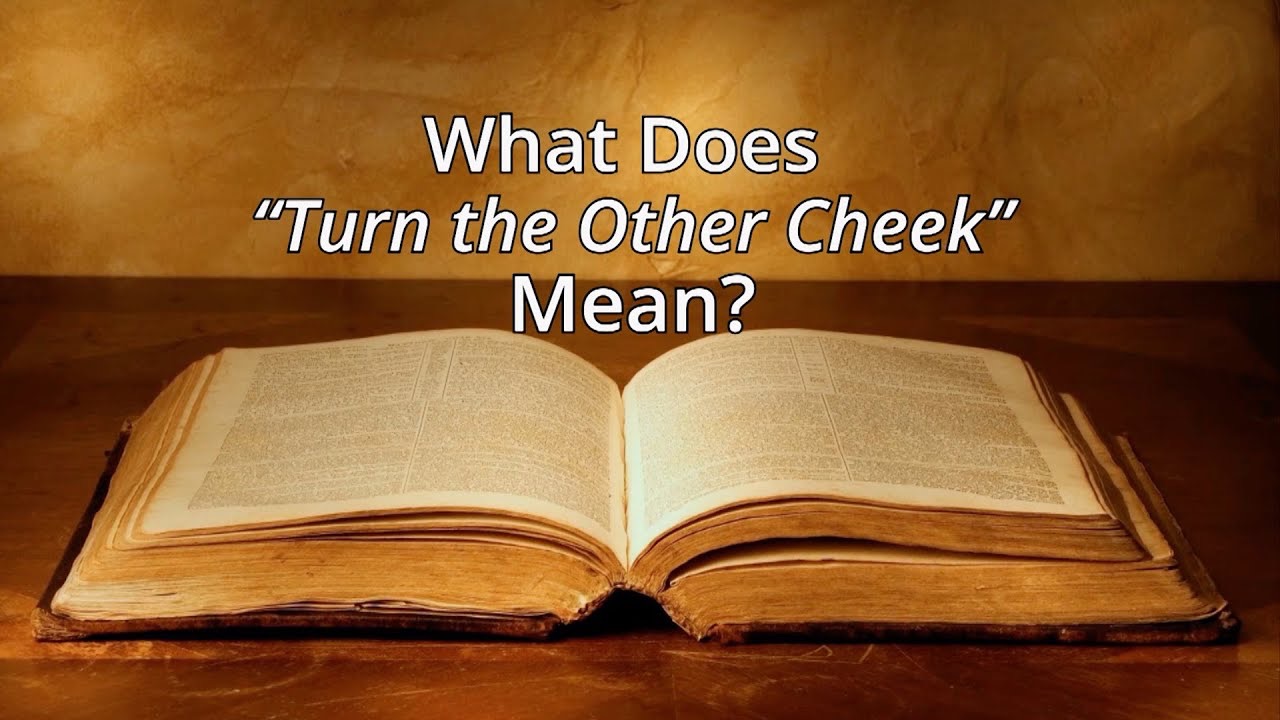
“Turn the other cheek” is one of the most quoted and controversial phrases in all of Scripture. For some, it sounds like weakness. For others, it’s the highest example of moral courage. But for Christians seeking to live by the words of Christ, it’s a profound invitation into a life of non-retaliation, grace, and transformative love.
Let’s break it down—historically, spiritually, and practically—with the help of biblical context and some of the Church’s most faithful voices.
🕊️ A Radical Message in a Violent World
To understand Jesus’ statement, we need to place it within its full biblical and cultural context.
In the Sermon on the Mount, Jesus is reinterpreting the old standard of justice. The ancient law, “an eye for an eye”(Exodus 21:24), was meant to limit retaliation—not encourage it. But Jesus pushes His followers further. He doesn’t just prohibit revenge; He calls for grace in the face of insult.
In first-century Jewish culture, a slap on the right cheek likely involved a backhanded blow—a gesture of insult rather than injury. To turn the other cheek, then, wasn’t an act of surrender. It was a bold, nonviolent stand. It meant saying, “You can try to shame me, but I will not return your hatred. I remain whole, unbroken, and full of dignity.”
🧠 Not Weakness — Strength Under Control
“Turning the other cheek is not passive acquiescence to evil. It is active nonresistance—assertive without aggression, bold without vengeance.”
— John Stott, The Message of the Sermon on the Mount
Turning the other cheek doesn’t mean accepting abuse or tolerating injustice. It means choosing to resist evil by refusing to mirror it. The Christian doesn’t answer hatred with hatred. Instead, they absorb the blow and reflect back love. It’s hard. It feels unnatural. But it’s exactly what Jesus did—and what He calls His followers to do.
🧭 How Jesus Modeled It
Jesus didn’t just preach this message. He lived it.
- When mocked and beaten during His trial, He didn’t retaliate (Matthew 26:67–68).
- When reviled on the cross, He prayed, “Father, forgive them” (Luke 23:34).
- He rebuked Peter for pulling a sword, saying, “Put your sword back in its place… all who draw the sword will die by the sword” (Matthew 26:52).
“Jesus was the ultimate example of turning the other cheek—not because He was powerless, but because He was powerful enough to restrain Himself.”
— Tim Keller, Redeemer Presbyterian Church
Turning the other cheek means following in Jesus’ footsteps, even when it costs us. It is costly grace. But in that cost lies the power of redemption.
💬 What Christian Leaders Say
✝️ Martin Luther King Jr.
Dr. King’s nonviolent movement was built on the principle of turning the other cheek. He saw it not as weakness, but as moral resistance.
“We must develop and maintain the capacity to forgive. He who is devoid of the power to forgive is devoid of the power to love.”
— Martin Luther King Jr., Strength to Love
King saw this ethic as a weapon of the Spirit, capable of disarming the oppressor and transforming the heart of a nation.
✝️ Dietrich Bonhoeffer
In Nazi Germany, Bonhoeffer resisted evil through his preaching and eventually gave his life. Yet, even in resistance, he echoed Christ’s call to radical love:
“The only way to overcome our enemy is by loving him.”
— Dietrich Bonhoeffer, The Cost of Discipleship
Bonhoeffer’s call to discipleship included suffering, self-denial, and love for enemies. For him, “turning the other cheek” was a sign of spiritual maturity, not cowardice.
✝️ C.S. Lewis
Lewis believed that Christian forgiveness—especially in the face of insult—is the most difficult and most Christlike of virtues:
“Everyone says forgiveness is a lovely idea, until they have something to forgive.”
— C.S. Lewis, Mere Christianity
Turning the other cheek is a practical form of forgiveness. It keeps us from becoming what we hate.
✝️ N.T. Wright
Wright argues that Jesus was calling for creative, courageous resistance that unmasks evil:
“Turning the other cheek is a way of confronting injustice with the power of love rather than the love of power.”
— N.T. Wright, Simply Jesus
The act is meant to provoke reflection in the attacker, not submission in the victim.
🎯 What It Means for Us Today
In a world that celebrates revenge, retaliation, and instant payback, “turn the other cheek” is countercultural.
❌ What It Doesn’t Mean
- Allowing abuse or manipulation
- Endorsing injustice
- Refusing to speak truth to power
✅ What It Does Mean
- Not escalating conflict
- Forgiving those who wrong us
- Trusting God with justice
- Loving our enemies — even when they don’t deserve it
“Do not be overcome by evil, but overcome evil with good.”
— Romans 12:21
This is spiritual warfare at its finest—not through fists, but through faith.
📚 Biblical Reinforcement
The message of Matthew 5:39 is reinforced throughout Scripture:
- Proverbs 15:1 – “A gentle answer turns away wrath, but a harsh word stirs up anger.”
- 1 Peter 3:9 – “Do not repay evil with evil or insult with insult. On the contrary, repay evil with blessing.”
- Luke 6:29 – “If someone slaps you on one cheek, turn to them the other also.”
This ethic of mercy is rooted in the heart of God Himself.
🛠️ Practical Applications
- In Marriage and Family
When your spouse or sibling wounds you with words—don’t lash out. Choose to listen, forgive, and speak truth in love. - In the Workplace
If a coworker mocks your faith or undercuts your efforts, respond with excellence and grace, not bitterness. - On Social Media
When attacked or slandered, don’t argue endlessly. Sometimes silence or a gentle reply speaks louder than any post. - In the Church
When disagreements arise (and they will), avoid gossip or passive aggression. Model Christlike love, even in conflict. - In Politics and Public Life
While standing for truth, remember: how you speak matters just as much as what you say.
🎨 Illustration: The Second Slap
Imagine a Christian businesswoman wrongly accused and insulted during a company meeting. Rather than defend herself harshly or retaliate with blame, she calmly acknowledges the issue, offers to help solve it, and later privately prays for her accuser.
The room grows quiet. The slanderer looks foolish. Her gentle strength turns the moment into a sermon without words.
That’s what it means to turn the other cheek—not silence, but spirit-filled restraint that shines a light in a dark place.
🛡️ Turning the Cheek vs. Self-Defense
It is important to clarify that Jesus’ teaching on turning the other cheek does not forbid all forms of self-defense. The passage refers specifically to personal insults or minor assaults—acts meant to humiliate rather than seriously harm. Christ’s instruction is to not retaliate in kind or escalate hostility over such offenses.
The Bible elsewhere supports the idea of protecting oneself and others from serious harm. For example, in Exodus 22:2–3, the law recognizes a homeowner’s right to defend their household. In Luke 22:36, Jesus tells His disciples to buy a sword—not to promote violence, but to prepare for a dangerous mission ahead. Context and intent matter deeply.
Christian ethicist Wayne Grudem explains: “Self-defense is not the same as revenge. While turning the other cheek may apply to insults or minor offenses, defending oneself or loved ones from grave harm is not condemned in Scripture.”
Therefore, Christians are called to resist evil with good in personal relationships and minor offenses, but they are not required to be defenseless in the face of life-threatening danger. This balance honors both the spirit of Jesus’ teaching and the reality of living wisely in a fallen world.
💡 Lessons for the Church
The Church is often at a crossroads: Will we mirror the culture, or model Christ?
We live in a world where offense is currency. Outrage sells. People “clap back” faster than they pray. But Jesus calls His Church to a different way—a kingdom way.
“Blessed are the peacemakers, for they shall be called sons of God.”
— Matthew 5:9
When we turn the other cheek, we show the world that love is stronger than hate, and grace deeper than justice.
🧎 Final Word: Following the Wounded Healer
Jesus turned His cheek all the way to the cross.
He didn’t just suffer injustice — He overcame it. Not by revenge. Not by power. But by offering Himself as a sacrifice.
To follow Jesus is to pick up that cross. It’s to lose so we might win. To be wounded, yet still bless. To be wronged, yet not retaliate.
It’s the hardest way. But it’s the most powerful.
“To return evil for good is devilish. To return good for good is human. To return good for evil is divine.”
— Alistair Begg, Truth for Life
🙏 Closing Prayer
Lord Jesus, teach us to turn the other cheek, not in weakness but in Your strength. Let our love be fierce, our grace unwavering, and our courage rooted in You. Help us to resist evil—not with fists, but with faith. And when we are wronged, remind us that we follow the One who overcame the world by laying down His life. Amen.
📝 Published by Mountain Veteran Ministries
💬 Leave a comment below or share this blog if it stirred your heart.
📧 Subscribe to our newsletter for more gospel-rooted insights.