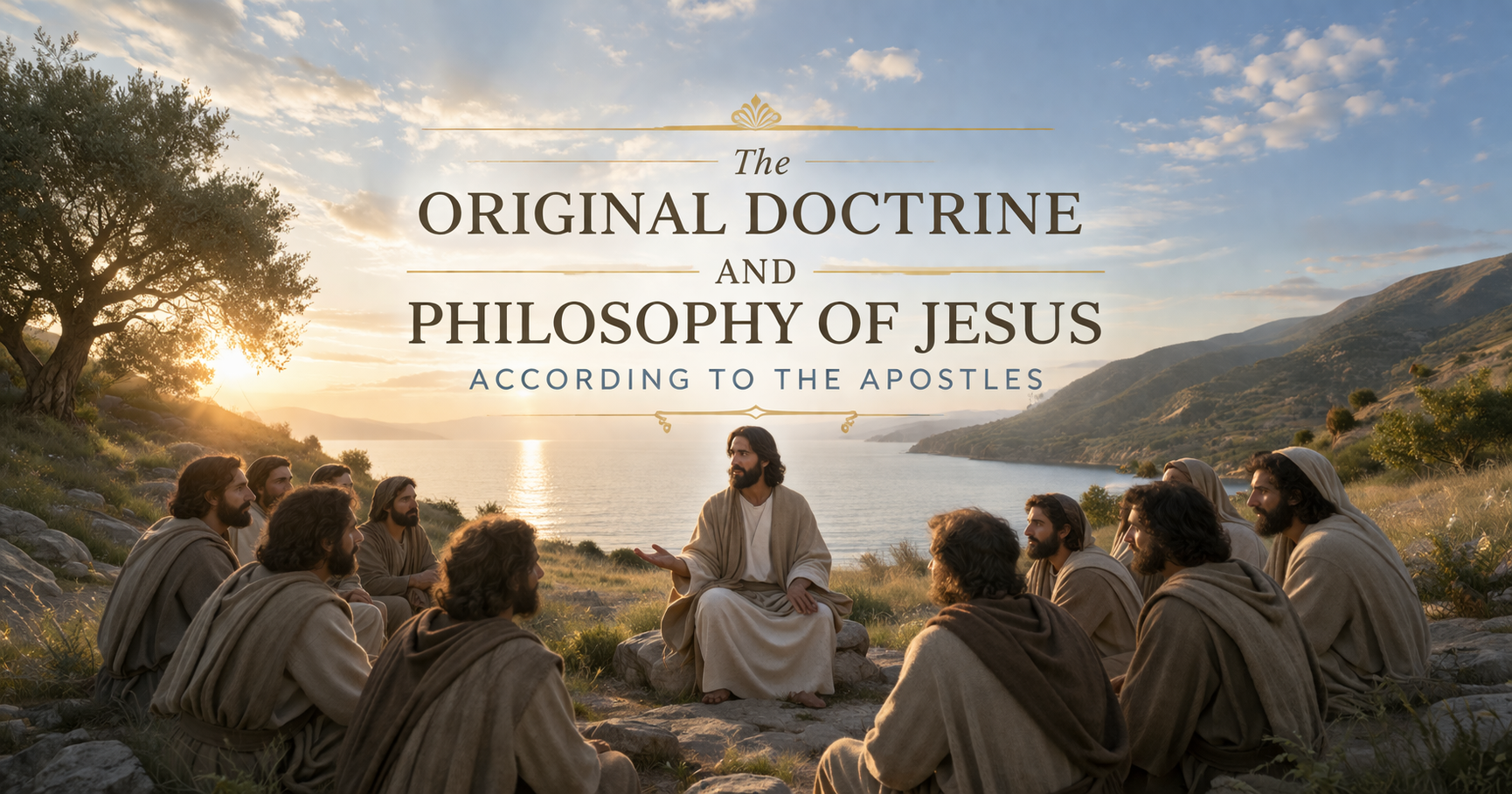
The Original Doctrine and Philosophy of Jesus According to the Apostles
What the Eyewitnesses Believed, Preached, and Died For — Straight from the Writings of Those Who Walked with Jesus
Before there were denominations, seminaries, or theologians with long strings of letters after their names, there were twelve rugged, everyday men — fishermen, tax collectors, skeptics — who followed a carpenter from Nazareth. These were the apostles: eyewitnesses to Jesus’s life, death, and resurrection. It was through their testimony that His doctrine and philosophy was carried forward.
This post explores the original teaching of Jesus as faithfully handed down by those who walked with Him — not filtered through centuries of tradition, but straight from the hearts and writings of the first witnesses.
“They devoted themselves to the apostles’ teaching and to fellowship, to the breaking of bread and to prayer.” — Acts 2:42
Ten Teachings the Apostles Carried Forward
Teaching One
👑 The Kingdom of God — A New Reign Begins
“The time is fulfilled, and the kingdom of God is at hand; repent and believe in the gospel.” — Mark 1:15
From the beginning, Jesus preached that the Kingdom of God had arrived — not in castles and swords, but in hearts surrendered to God’s reign. Peter, preaching in Acts 2, declared Jesus was both Lord and Christ — the King of this new Kingdom. Paul taught that believers were now citizens of heaven (Philippians 3:20). The Kingdom wasn’t postponed — it was present and advancing.
Teaching Two
🔄 Repentance and Faith — Turning and Trusting
“Repent, and be baptized every one of you in the name of Jesus Christ for the forgiveness of your sins.” — Acts 2:38
The apostles didn’t preach self-improvement or personal enlightenment. They preached repentance — a radical change of mind and direction — and faith in the crucified and risen Lord. Faith wasn’t vague optimism; it was trust in Jesus as Savior, Lord, and coming King. Repentance wasn’t about shame; it was release from sin and bondage.
Teaching Three
✝️ The Cross and Resurrection — The Heart of the Gospel
“Christ died for our sins… he was buried… he was raised on the third day in accordance with the Scriptures.” — 1 Corinthians 15:3–4
At the center of apostolic doctrine stood the cross. Jesus’s death wasn’t a tragic mistake — it was a divine mission to take on the sins of the world. His resurrection wasn’t symbolic — it was historical, physical, and world-shaking. To the apostles, the cross also taught them how to live: dying to self, loving sacrificially, trusting God’s power to raise what was dead.
Teaching Four
❤️ Love and Mercy — The Fulfillment of the Law
“A new commandment I give to you, that you love one another: just as I have loved you.” — John 13:34
Jesus summarized the Law in two commands: Love God and love your neighbor (Matthew 22:37–40). The apostles picked up this thread and wove it through everything they wrote. Paul said, “Love is the fulfillment of the law” (Romans 13:10). John wrote, “If anyone says, ‘I love God,’ and hates his brother, he is a liar” (1 John 4:20). Love wasn’t a supplement to the teaching — it was the whole point.
Teaching Five
🤝 Humility and Servanthood — The Way Up Is Down
“Whoever would be great among you must be your servant.” — Matthew 20:26
Jesus washed His disciples’ feet. He forgave sinners. He endured mockery and death without retaliation. The apostles never forgot that — and they built their leadership model on it. Peter told elders to shepherd “not domineering… but being examples” (1 Peter 5:2–3). Paul described Jesus as one who “made Himself nothing… taking the form of a servant” (Philippians 2:7).
Teaching Six
✨ Holiness and Obedience — A New Way of Life
“If you love me, you will keep my commandments.” — John 14:15
The apostles didn’t teach grace as a license to sin. They taught it as the power to live differently. Obedience wasn’t legalism — it was loyalty born of love. Peter called believers to be “holy in all your conduct” (1 Peter 1:15). Paul described salvation as being set free to “walk in newness of life” (Romans 6:4).
Teaching Seven
🔥 The Holy Spirit — God Within Us
“You will receive power when the Holy Spirit has come upon you.” — Acts 1:8
Jesus promised a Helper, and at Pentecost the apostles received Him. The Holy Spirit became their guide, teacher, and source of boldness — empowering Peter to preach, Paul to endure prison, and the early church to grow despite persecution. He convicts, comforts, and transforms hearts from the inside out.
Teaching Eight
🏘️ Community and Church — The Body of Christ
“They devoted themselves to the apostles’ teaching and the fellowship, to the breaking of bread and to prayer.” — Acts 2:42
To the apostles, Christianity wasn’t a solo act. It was life in community — marked by shared meals, mutual care, and unified mission. The Church was not just a gathering — it was a body, each part needing the others (1 Corinthians 12:12–27). Elders shepherded, deacons served, members encouraged one another through hardship and celebration alike.
Teaching Nine
🌅 Eschatological Hope — Living for the Return
“This same Jesus… will come back in the same way you have seen him go into heaven.” — Acts 1:11
The apostles believed Jesus was coming back — and that hope shaped everything. They lived with urgency, purity, and joy, knowing the story wasn’t over. Paul wrote of a day when “the dead in Christ shall rise” and we would be with the Lord forever (1 Thessalonians 4:16–17). Peter urged believers to “live holy and godly lives” in light of the day to come (2 Peter 3:11).
Teaching Ten
📜 Scripture and Fulfilled Prophecy — One Story, One Christ
“All the prophets testify about him that everyone who believes in him receives forgiveness of sins through his name.” — Acts 10:43
The apostles didn’t invent doctrine — they showed how Jesus fulfilled the Scriptures. From Isaiah’s suffering servant to David’s songs of the Messiah, the entire Old Testament was full of shadows pointing to Christ. Jesus taught them this on the road to Emmaus (Luke 24:27), and they repeated it again and again in their preaching. The whole Bible is one story — and Jesus is its destination.
Six Pillars — At a Glance
The apostolic doctrine wasn’t complicated, but it was costly. Here are the load-bearing pillars:
Christ-Centered
All things focused on Jesus — His person, His work, His return
Grace-Filled
Salvation by grace through faith — not earned, not deserved, not fragile
Love-Driven
Love is the fulfillment of the Law — the light without which nothing grows
Spirit-Empowered
The Holy Spirit dwells in believers — the fuel, not a supplement
Eternally-Minded
Life is lived in light of Christ’s return — planting with harvest in view
Community-Shaped
Believers are part of a living Body — not solo acts, but a whole
The Old Farmer’s Gospel
Picture an old farmer sitting on his porch. He’s been through droughts and floods. He’s planted seed in rocky ground and good soil. He knows that harvests come and go — and that some years you don’t understand what God is doing in the field until long after the season has ended.
But he trusts the land. More than that, he trusts the Lord of the harvest.
That’s how the apostles lived. They didn’t preach slick philosophies or self-help formulas. They preached Jesus — crucified, risen, reigning, and returning. They called people to repent, believe, follow, and hope. And they kept planting, trusting God to bring the harvest in His time.
In a world chasing trends and novelty, the apostles took us back to something ancient and unshakable. Their doctrine wasn’t complicated — but it was costly. Their philosophy wasn’t abstract — it was incarnated in the life, death, and resurrection of Jesus Christ.
It was enough to turn twelve ordinary men into history-changers. It is still enough for us today.
“They devoted themselves to the apostles’ teaching and to fellowship, to the breaking of bread and to prayer.” — Acts 2:42
Key Scriptures: Mark 1:15 · Acts 1:8, 11; 2:38, 42 · Acts 10:43 · 1 Corinthians 15:1–4 · Matthew 22:37–40 · John 13:34; 14:15 · Romans 6:4; 13:10 · Philippians 2:7; 3:20 · 1 Peter 1:15; 5:2–3 · 1 John 4:20 · 1 Thessalonians 4:16–17 · Luke 24:27
Want to Go Deeper?
This post is part of an ongoing series on what it means to follow Jesus — in doctrine, in community, and in daily life. If it stirred something in you, here are a few next steps:
- Share it with someone who wonders what “original Christianity” actually looked like — before the denominations, the debates, and the centuries of tradition.
- Read Acts 2:42–47 slowly — the first description of a church living the apostolic doctrine. It’s six verses and it changes everything about what you expect church to look like.
- Subscribe to get new posts delivered straight to your inbox — gospel-rooted, plain-spoken truth for the week ahead.
“For I resolved to know nothing while I was with you except Jesus Christ and him crucified.” — 1 Corinthians 2:2
Mountain Veteran Ministries
Find Your Next Bearing
Every journey needs a direction. If you're wondering where to go from here, choose the path that best fits where you are today.
⚒️ I Want to Live Faithfully
Discover practical wisdom for following Christ in today's world.
→ Living as a Christian Today✝️ I Want to Understand the Gospel
Learn what salvation means and why Jesus came.
→ Understanding Salvation📖 I Want to Understand the Bible
Explore why Christians trust Scripture and how to read it well.
→ Understanding the Bible❓ I Still Have Questions
Explore thoughtful answers to some of Christianity's hardest questions.
→ Hard Questions