✝️ The Five Solas: A Brief Explanation and History
🧭 Roadmap
- What the “solas” are (in plain speech)
- Where they came from (short history)
- How each sola fits together (like posts in a good fence line)
- Common pushbacks (and calm answers)
- What this means for Monday—kitchen table to hayfield
- Scripture anchors & sources
🌾 1) What Are the Five Solas?
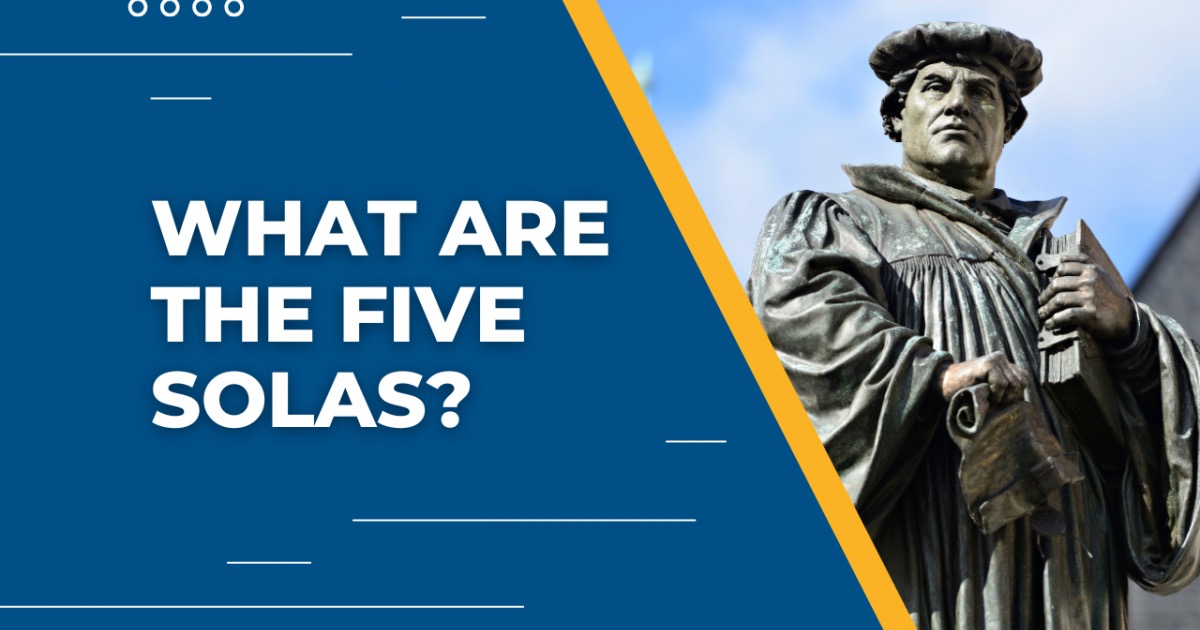
“Sola” is Latin for “alone” or “only.” The Five Solas are a simple way of bundling the Reformers’ heartbeat:
- Sola Scriptura — Scripture alone is our final, infallible rule for faith and life.
- Sola Fide — We’re justified by faith alone.
- Sola Gratia — Salvation comes to us by grace alone, not earned or deserved.
- Solus Christus — Christ alone is the mediator and ground of our salvation.
- Soli Deo Gloria — All of life and salvation aim to the glory of God alone. The Gospel Coalition
Think of the solas like the five strong rails on a working ranch fence. Each rail matters on its own, but together they keep the gospel pasture secure and the flock fed.
🕰️ 2) So Where Did They Come From? (the short origin story)
Here’s the first honest thing to say: the Reformers did not sit down and brand a neat “five-point slogan set” in the 1500s. They taught these truths passionately, wrote them into confessions, sang them, and bled for them—but the tidy fivefold bundle was popularized later (largely in the 20th century) as a memorable summary of Reformation convictions. Still, every part of the five shows up clearly in 16th-century debates, preaching, and confessions. Wikipedia+1
Key flashpoints that formed the solas:
- Authority: When Martin Luther stood before the emperor at Worms (1521), the question was, “By what authority?” Luther insisted that popes and councils can err, but Scripture cannot; conscience is captive to the Word of God. That’s the Sola Scriptura instinct in real time. Tabletalk
- Justification: The Augsburg Confession (1530) and its Apology nailed down Sola Fide / Sola Gratia: we’re accepted by God not by merits or works, but freely for Christ’s sake—through faith. This was called the “material cause” of the Reformation (the main doctrinal issue). Project Gutenberg+2Book of Concord+2
- Mediation: Reformers insisted Solus Christus—no co-mediators, no extra ladders; Christ’s once-for-all priestly work is enough. Reformed and Presbyterian catechisms later echoed this plainly. The Westminster Standard+1
- Goal: If Scripture rules, and grace through faith in Christ saves, then the end is Soli Deo Gloria—God’s glory alone. This theme runs so deep even Bach would write “SDG” at the end of his scores, preaching with ink and melody. Free Lutheran Bible College and Seminary+1
Verbal illustration: Picture a rancher sorting calves at the corral. It’s chaotic unless somebody calls the shots. Sola Scriptura says, “Let the Bible call the shots.” Then as the gate swings and the sort happens, Sola Gratia and Sola Fide say, “This whole operation works because the Ranch Owner showed mercy and we trusted His way, not ours.” Solus Christus says, “And don’t bring in a rival foreman—there’s just one Boss whose word settles it.” Finally Soli Deo Gloria says, “We did it all to make the Ranch Owner look good.”
📖 3) How Each Sola Took Shape (posts in the fence line)
📜 Sola Scriptura — The Bible’s Unique Authority
The Reformers never meant “solo” Scriptura (no creeds, no teachers). They meant the final court of appeal is Scripture; every tradition and teacher must be weighed by the Word. Luther’s stand dramatized this: if convinced by Scripture and plain reason, he would recant; otherwise, he could not. That moment set authority back under the Bible. Tabletalk
Scripture anchors: 2 Tim. 3:14–17; Acts 17:11; Isa. 8:20.
Kitchen-table image: When a family disagrees about how grandma’s biscuit recipe really goes, everyone stops arguing and pulls out the handwritten card. For the church, Scripture is that card—final word on what’s true and good.
🤝 Sola Fide — Justified by Faith Alone
In Article IV of the Augsburg Confession, the Reformers stated it straight: we are justified—counted righteous—“freely for Christ’s sake, through faith,” not by our works or merits. The Apology doubles down on the same. This wasn’t a new idea in God’s economy; they argued it was Paul’s teaching recovered. Project Gutenberg+1
Scripture anchors: Rom. 3–4; Gal. 2:16; Phil. 3:9.
Fence-line image: Faith is the hook that hangs the heavy winter coat on the solid peg of Christ’s righteousness. The hook (faith) doesn’t warm you—the coat (Christ) does. But you won’t get the coat on you without the hook.
🌧️ Sola Gratia — Saved by Grace Alone
Grace isn’t God paying us for a good week. Grace is His undeserved favor toward sinners, shown most clearly in Christ’s cross and resurrection, received through faith. The Reformers argued that, left to ourselves, we cannot earn God’s acceptance; salvation is sheer gift. Faith is the empty hand; grace is the gift it receives. The Lutheran confessions stress the pairing of grace and faith together. Project Gutenberg+1
Scripture anchors: Eph. 2:8–9; Titus 3:4–7; John 1:16–17.
Front-porch picture: Think of a neighbor dropping off a load of split firewood after your surgery. You didn’t pay. You didn’t earn. You just said “thank you” and warmed the house. That’s grace.
🐑 Solus Christus — Christ Alone, Our Only Mediator
Against a whole stack of rival “go-betweens,” the Reformers said Jesus is the only mediator (1 Tim. 2:5)—our Prophet, Priest, and King. His once-for-all sacrifice is enough; we don’t pile on extra ladders to heaven. Later Reformed catechisms make this explicit: Christ alone executes those offices fully for His church. The Westminster Standard
Scripture anchors: 1 Tim. 2:5–6; Heb. 7:23–27; Heb. 10:11–14; John 14:6.
Shop-talk image: At the small-engine repair, you don’t need five different “middlemen” billing you. You need onetrustworthy master mechanic who knows the machine and makes it run. That’s Jesus for sinners—no layers between.
🌟 Soli Deo Gloria — To God Alone Be the Glory
If Scripture rules, grace gives, faith receives, and Christ accomplishes, then the end of it all is God’s glory. The Reformers lived this God-centeredness; centuries later Johann Sebastian Bach kept signing “SDG” on his compositions: Soli Deo Gloria—To God alone, glory. It wasn’t an artist’s flourish; it was theology in ink. Free Lutheran Bible College and Seminary+1
Scripture anchors: Rom. 11:33–36; 1 Cor. 10:31; Ps. 115:1.
Field image: After a good harvest, we clap neighbors on the back—but everyone knows Who sent the rain and held back the hail. That’s Soli Deo Gloria.
🧱 4) Why Bundle Them as “Five”? (and why the bundling came later)
Early Protestants often spoke of three or four “onlys” in certain contexts (Scripture vs. tradition; grace vs. merit; faith vs. works; Christ vs. other mediators). Over time, teachers and churches found the fivefold bundle was the clearest, most balanced summary of Reformation convictions. The popular “Five Solas” list, as a set, settled in more firmly during the last century, though each piece is ancient in Scripture and present in 16th-century confessions and controversies. Wikipedia+1
Illustration: It’s like an old tool roll in the shop. Grandpa didn’t buy it as a kit; he gathered the right tools over the years. Later, the grandkids bundle them in one roll so they’re easy to carry and remember.
🧪 5) Objections You’ll Hear (and calm answers)
Objection A: “Sola Scriptura sounds like ‘no creed but the Bible’—isn’t that chaos?”
Answer: The Reformers used creeds, councils, and teachers—but held them under Scripture. “Sola” means final norm, not lonely reader. Healthy churches use faithful summaries because the Bible is supreme. (Acts 15; 2 Tim. 1:13; 3:16–17.) Luther’s stand at Worms was about the Bible’s ultimate authority. Tabletalk
Objection B: “Isn’t ‘faith alone’ a denial of obedience?”
Answer: The Reformers insisted that we’re justified by faith alone, but the faith that justifies is never alone; it bears fruit in love. They pointed to Paul (Rom. 3–5; Eph. 2:8–10). The Augsburg Confession explicitly denies that human merits earn justification; works follow as the fruit of faith. Project Gutenberg
On the other side, the Council of Trent (1540s–1560s) issued canons that rejected Protestant formulations (for example, anathematizing the idea that “confidence alone” justifies). Knowing this context helps you see the battlefield the solas were born on. Wikisource
Objection C: “Grace alone? Doesn’t that remove human responsibility?”
Answer: Grace is not passivity; it’s God’s initiative that awakens us to repent and believe. The Protestant confessions stress that salvation is a gift, and Trent, from the Roman Catholic side, guarded against any reading that emptied obedience of meaning—another reason the debates were intense. Project Gutenberg+1
Objection D: “Christ alone? What about saints, priests, and sacramental systems?”
Answer: The Reformers honored the church’s ministry but refused to place any mediator beside Jesus. He alone is Priest and Sacrifice; He alone saves. Historic catechisms summarize this beautifully: our Mediator executes the offices of prophet, priest, and king for the good of His church. The Westminster Standard
Objection E: “Soli Deo Gloria feels vague—what does it change?”
Answer: It keeps us from preaching ourselves. The church’s programs, music, budgets, and mission exist to display God’s character—not our brand. Bach’s little “SDG” habit is a memorable reminder that every vocation is worship. Free Lutheran Bible College and Seminary
🛠️ 6) How the Solas Fit Together (a working diagram )
- Sola Scriptura — the rule (final authority)
- Sola Gratia — the cause (why anyone is saved)
- Sola Fide — the means (how salvation is received)
- Solus Christus — the mediator/ground (who saves and how)
- Soli Deo Gloria — the end (why God does it this way)
Shop wall illustration: Picture five labeled hooks: Rule, Cause, Means, Mediator, End. Hang the tools of preaching, sacraments, prayer, and mission on those hooks every week. It keeps a church from drifting.
🐑 7) What This Means for a Rural Congregation (boots-and-denim applications)
a) Teach with the Bible open.
Let Scripture set the agenda for sermons, counseling, and leadership meetings. Start with the text; end with the text. If a beloved tradition bumps into a clear text, the text wins—with a smile and a hug. (2 Tim. 3:16–17.) The Gospel Coalition
b) Keep the gospel gift-shaped.
When folks are hurting, they don’t need a moral ladder; they need good news that God acts in grace and we receive by faith. Then call them to walk in the good works God prepared (Eph. 2:8–10). Project Gutenberg
c) Put Jesus in the middle of everything.
Youth night? Communion? Budget talk? Make Christ the center—who He is, what He’s done, and what He promises. No rival mediators. No extra steps to earn favor. (Heb. 7:25; 10:12–14.) The Westminster Standard
d) Aim for God’s smile, not applause.
When you pick songs, plan outreach, or decide whether to fix the old van or buy a new one, ask, “What will make God look big?” That’s Soli Deo Gloria on the church board. Free Lutheran Bible College and Seminary
e) Teach the kids (and the grandkids) the five words.
Make a bookmark or fridge magnet: Scripture • Faith • Grace • Christ • God’s Glory. Explain each with a story from the ranch, the mill, the classroom, or the kitchen.
🛤️ 8) A Walk Through History You Can Tell in Five Minutes
- Wittenberg to Worms (1517–1521): Luther’s struggle on indulgences and authority crescendos at Worms, where he refuses to recant unless convinced by Scripture. The formal principle of the Reformation—Sola Scriptura—is front and center. Tabletalk
- A Confession in the Open (1530): The Augsburg Confession puts justification by faith in writing—clear enough for a farmhand to get it: “not by our own merits… but freely for Christ’s sake, through faith.” The Apology expands and defends it. Project Gutenberg+1
- Counter-Reformation Response (1540s–1560s): The Council of Trent rejects Protestant formulations (for instance, it anathematizes the claim that confidence alone justifies), clarifying the dividing lines that made the solasnecessary shorthand for Protestant conviction. Wikisource
- Catechisms & Confessions: Reformed catechisms and the Westminster Larger Catechism summarize Christ alone as Mediator (prophet, priest, king), embedding Solus Christus in the church’s teaching tools. The Westminster Standard
- “SDG” Across the Centuries: The Soli Deo Gloria instinct shows up in worship and vocation—famous in Bach’sinitials at the tail of his compositions. The heartbeat remains: everything for God’s honor. Free Lutheran Bible College and Seminary
Campfire illustration: If you were telling the grandkids around a campfire how our church came to love the gospel so fiercely, you’d hit those five mileposts. It’s our family story.
📌 9) Scripture Flyover (quick index for teaching)
- Sola Scriptura: 2 Tim. 3:14–17; Ps. 19:7–11; Acts 17:11; Isa. 8:20
- Sola Fide: Rom. 3:21–28; Rom. 4:1–8; Gal. 2:15–21; Phil. 3:8–9
- Sola Gratia: Eph. 2:1–10; Titus 3:3–7; Rom. 11:5–6; John 1:16–17
- Solus Christus: 1 Tim. 2:5–6; Heb. 7:23–27; Heb. 10:11–14; John 14:6
- Soli Deo Gloria: Rom. 11:33–36; 1 Cor. 10:31; Eph. 1:3–14; Ps. 115:1
🧭 10) Teaching Helps (iconed cues you can drop in slides)
- 📜 Authority: “Friends, if the Bible is the last word, then God still gets the last word in our marriage, our money, and our Monday.” (2 Tim. 3:16–17)
- 🎁 Gift: “You don’t buy grace. You open your hands in faith and receive it.” (Eph. 2:8–9)
- 🐑 Mediator: “There’s one Gate into the fold, and His name is Jesus.” (John 10)
- 🙌 Glory: “We’re not the main character. God is—and that’s incredibly freeing.” (Rom. 11:36)
🪵 11) One-Minute Conclusion
If you remember five words, you’ll keep the main thing the main thing: Scripture, Faith, Grace, Christ, Glory. That’s the old gospel, the living gospel, the only gospel. Let’s be a people whose Bibles are open, whose hands are empty, whose eyes are on Jesus, and whose aim is God’s smile.
📚 Sources & Notes
- Overview of the Five Solas (concise, accessible): The Gospel Coalition essay, “The Five Solas.” The Gospel Coalition
- Augsburg Confession IV (Justification) and the Apology (primary Lutheran sources): public domain translations. Project Gutenberg+1
- Luther at the Diet of Worms (1521)—context for Sola Scriptura and conscience captive to the Word. Tabletalk
- Christ Alone in historic catechesis (Mediator as Prophet, Priest, King): Westminster Larger Catechism. The Westminster Standard
- Soli Deo Gloria in Christian vocation and culture—Bach’s “SDG.” Free Lutheran Bible College and Seminary
- Counter-Reformation context: Council of Trent canons on justification, noting points of disagreement with Protestant formulations. Wikisource
- On the “fivefold bundle” being later popularization: surveys noting the solas were taught in the 16th century but gathered as a five-point set later. Wikipedia
Further reading:
- Reformation Bible College, “The Five Solas” (helpful summaries for lay readers). Reformation Bible College
- Ligonier articles on each sola (pastoral introductions; Christ Alone example). Ligonier Ministries
📝 Endnotes (for the curious)
- On Augsburg IV: “Men cannot be justified before God by their own strength, merits, or works, but are freely justified for Christ’s sake, through faith…”—a crisp statement of Sola Fide and Sola Gratia together. Project Gutenberg
- On the Apology’s defense of faith apart from merits: the controversy sharpened the sola language in real disputes with Rome. Book of Concord
- On Trent: canons explicitly reject “confidence alone” as justifying and set anathemas delimiting Catholic teaching—historical background that shows why Protestant shorthand like the “solas” endured. Wikisource
- On Bach and SDG: while not a 16th-century slogan, SDG captures the Reformation’s God-centered instinct in public vocation. Free Lutheran Bible College and Seminary
📝 Published by Mountain Veteran Ministries
💬 Leave a comment below or share this blog if it stirred your heart.
📧 Subscribe to our newsletter for more gospel-rooted insights.