A Gospel of Grace and Holiness: Understanding Arminian/Wesleyan Theology
A Plain-Spoken Guide to a Theology of Prevenient Grace, Universal Atonement, and the Pursuit of Holy Living
When folks think about theology, they often picture old professors with thick books. But theology isn’t just for seminaries — it’s for the dinner table, the pew, the pickup truck, and the prayer meeting. What we believe about God affects how we live, how we pray, and how we see our neighbors.
Arminian/Wesleyan theology gives us a picture of a God who loves the whole world and gives every person a real opportunity to be saved. It emphasizes both God’s grace and our responsibility to respond. God moves first — and then waits for our yes.
“The grace of God has appeared, bringing salvation for all people.” — Titus 2:11
The Story Behind the Theology
Jacobus Arminius
1560–1609 · Dutch Reformed Pastor and Professor
Arminius began questioning some aspects of strict Calvinist doctrine — particularly the idea that God predestined some for salvation and others for damnation with no regard to their choices. He believed that while humans are deeply sinful, God gives everyone the grace to respond to the gospel. After his death, his followers presented their views in the Remonstrance (1610), outlining five points of disagreement with the emerging Calvinist system. The church’s response at the Synod of Dort (1618–1619) produced TULIP — itself a direct refutation of each Arminian point.
John Wesley
1703–1791 · Anglican Priest · Founder of Methodism
Wesley embraced the Arminian view of grace but added fire — a heavy emphasis on holiness, discipleship, and spiritual growth. He believed the Christian life didn’t stop at being saved. It was meant to go all the way to Christlikeness. His theology added pastoral depth and practical urgency to the Arminian framework, and the movement he started would spread across England and the American frontier alike.
The Five Pillars of Classical Arminianism
Free Will Enabled by Grace
Humans are sinful and fallen — but God gives prevenient grace that awakens the heart and genuinely enables every person to respond freely to His invitation. The will is not self-sufficient; it is grace-enabled. But it is real.
📖 “Choose this day whom you will serve…” — Joshua 24:15
Conditional Election
God does not arbitrarily select who will be saved while passing over others without cause. Instead, He elects those whom He foreknows will freely choose Him. Election is real — but it is grounded in foreknowledge, not arbitrary decree.
📖 “Those whom He foreknew, He also predestined…” — Romans 8:29
Universal Atonement
Jesus Christ died for all people without exception — not just a select group. The atonement is sufficient for the whole world and genuinely offered to the whole world. No one is outside its reach.
📖 “He is the atoning sacrifice… for the sins of the whole world.” — 1 John 2:2
Resistible Grace
God woos and calls with genuine urgency — but He does not override the will He created. His grace can be refused. The call is real, the resistance is real, and the responsibility belongs to the one who turns away.
📖 “You always resist the Holy Spirit…” — Acts 7:51
Possibility of Apostasy
A person who has genuinely been saved can fall away through persistent and willful rejection of grace. Salvation is real — but it is not unconditional. Abiding in Christ, not a past decision, is the ground of assurance.
📖 “If they fall away… it is impossible to renew them again to repentance.” — Hebrews 6:4–6
Wesleyan Distinctives — A Heart Made Holy
Wesley adopted all five Arminian points and built on them with his own rich pastoral theology. The distinctives that set Wesleyanism apart are not just doctrinal positions — they are a vision of the Christian life as a journey toward entire holiness.
✨ Prevenient Grace
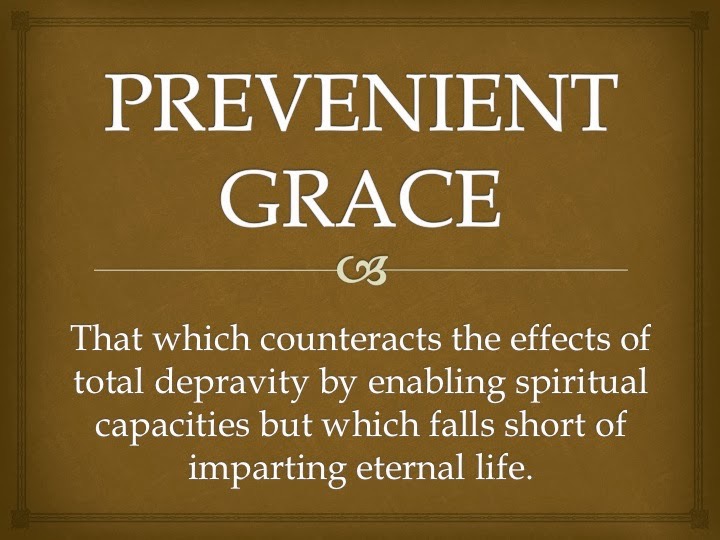
God’s grace comes before we even know to ask. It draws us toward Christ and restores just enough moral capacity to respond. It is universal, preceding salvation, and explains why evangelism is meaningful for everyone.
📖 Titus 2:11 · John 1:9
🕊️ Justification by Faith
When a person responds in faith, they are justified — declared righteous before God and born again. Wesley believed genuine assurance of this salvation is available to every believer through the witness of the Spirit.
📖 Romans 5:1 · Romans 8:16
🌱 Entire Sanctification
Wesley’s most distinctive teaching: a “second work of grace” beyond justification, called entire sanctification or Christian perfection. Not sinless perfection — but a heart so filled with love for God and neighbor that sin no longer reigns. It is the fullest expression of what the Holy Spirit can do in a surrendered life.
📖 1 Peter 1:16 · 1 Thessalonians 5:23
🤝 Grace-Driven Cooperation
Salvation is God’s work from start to finish — but we are called to actively cooperate with grace. Obedience is not the cause of salvation; it is the fruit of it and the condition of remaining in it.
📖 Philippians 2:12–13 · Hebrews 12:14
Strengths and Honest Challenges
✅ Strengths
God’s love is genuinely universal. No one is outside His reach or excluded by decree.
Human dignity is preserved. God created us with the capacity to love Him back or walk away — and both are real.
Evangelism has urgency. If grace is extended to all and people must respond, sharing the gospel is both vital and urgent.
Growth beyond conversion. Wesleyanism doesn’t stop at being saved — it presses on to full transformation of character.
⚠️ Honest Challenges
Security of salvation. Critics ask whether the possibility of falling away robs believers of assurance. Wesley answered: Spirit-given assurance is real, but it rests on abiding, not on a past moment.
Works-based concern. Does cooperation with grace shade into earning? Wesley’s answer: obedience flows from love, not duty — and grace empowers what it requires.
Sovereignty tension. Reformed thinkers ask: if God’s grace can be resisted, is He truly sovereign? Wesleyans answer: God is sovereign enough to create real freedom and still accomplish His purposes.
Three Illustrations
🎁 The Gift Analogy
God offers a gift to every person. You didn’t earn it. You didn’t ask for it. He extends it freely — but you must receive it to benefit from it. The giving is entirely His initiative. The receiving is your real response. Both are genuine. Neither cancels the other.
🚪 The Door of Salvation
On the outside of the door: “Whosoever will may come.” On the inside, after you’ve entered: “Chosen in Christ before the foundation of the world.” Arminian theology stands on the outside and says the invitation is real for everyone. The mystery of how both can be true is held with humility rather than resolved by a system.
🔥 The Fire of Sanctification
Sanctification is not a cold command to do better. It is a holy fire that refines the believer in love and purity — burning away what doesn’t belong and leaving something cleaner and more useful. Wesley believed that fire could go all the way. God’s grace doesn’t just forgive; it transforms.
Voices That Shaped This Tradition
John Wesley
“Give me one hundred preachers who fear nothing but sin and desire nothing but God, and I care not a straw whether they be clergymen or laymen; such alone will shake the gates of hell.”
Roger Olson
“God’s grace is the initiating and enabling cause of salvation, but not its only cause. God enables; we must respond.”
Billy Graham
“God gives us the choice to accept or reject Him. But He pleads with us to choose life.”
Thomas Oden
“Grace is not opposed to effort. Grace is opposed to earning.”
Key Scriptures by Doctrine
| Doctrine | Key Scriptures |
|---|---|
| Prevenient Grace | John 1:9; Titus 2:11 |
| Conditional Election | Romans 8:29; 1 Peter 1:2 |
| Universal Atonement | 1 John 2:2; John 3:16; 2 Corinthians 5:14–15 |
| Resistible Grace | Acts 7:51; Matthew 23:37 |
| Possibility of Apostasy | Hebrews 6:4–6; 2 Peter 2:20–22 |
| Entire Sanctification | 1 Thessalonians 5:23; Romans 6:22 |
| Christian Assurance | Romans 8:16; 1 John 5:13 |
Calvinism vs. Arminian/Wesleyan — Side by Side
| Topic | Calvinist View | Arminian/Wesleyan View |
|---|---|---|
| Human Nature | Totally depraved — dead, unable to respond | Totally depraved — but prevenient grace restores capacity |
| Election | Unconditional — based on God’s sovereign will alone | Conditional — based on God’s foreknowledge of faith |
| Atonement | Limited — designed for and effective for the elect | Universal — Christ died for all without exception |
| Grace | Irresistible — effectually transforms the elect | Resistible — genuinely offered, genuinely refusable |
| Perseverance | Guaranteed — the elect cannot ultimately fall away | Conditional — one can fall away through persistent rejection |
| Sanctification | Progressive only — gradual growth throughout life | Progressive and entire — second work of grace available |
Arminian/Wesleyan theology gives a big vision of God’s grace — not just about escaping hell or checking a theological box. It’s about a lifelong relationship with a God who loves deeply, pursues faithfully, and calls us to be more than we ever imagined we could be.
This theology is for the broken and the seeking, for the farmer and the teacher, for the preacher and the prodigal. It meets us where we are — and refuses to leave us there. It doesn’t just forgive; it transforms. And the transformation is meant to go all the way.
As Wesley himself said in his dying hours: “The best of all is, God is with us.”
“The grace of God has appeared, bringing salvation for all people, training us to renounce ungodliness and worldly passions, and to live self-controlled, upright, and godly lives in the present age.” — Titus 2:11–12
Key Scriptures: Titus 2:11–12 · Joshua 24:15 · Romans 8:29; 5:1; 8:16 · 1 John 2:2; 5:13 · John 3:16; 1:9 · Acts 7:51 · Hebrews 6:4–6 · 1 Thessalonians 5:23 · Philippians 2:12–13 · 2 Peter 3:9 · Romans 10:14
Want to Go Deeper?
This post is part of an ongoing series on the great theological traditions of Christianity. Here are trusted resources for going further:
- Arminian Theology: Myths and Realities — Roger Olson; the best modern defense of Arminianism against common misrepresentations
- A Plain Account of Christian Perfection — John Wesley; his own explanation of entire sanctification, free online
- Why I Am Not a Calvinist — Jerry Walls & Joseph Dongell; a careful, respectful philosophical critique of Calvinist soteriology
- Read the companion MVM posts on Reformed Doctrine and Reformed Theology — this post and those two together give a complete picture of the Calvinist/Arminian conversation that has shaped evangelical Christianity for four centuries.
- Subscribe to get new posts delivered straight to your inbox — gospel-rooted, plain-spoken truth for the week ahead.
“Choose this day whom you will serve… but as for me and my house, we will serve the LORD.” — Joshua 24:15