Did People Make Up the Bible Hundreds of Years Later?
Ten Lines of Evidence That the Bible Is Not Legend — and Why It Matters
The idea that the Bible was invented by church leaders centuries after the events it describes has become a popular talking point — in college classrooms, in documentaries, in bestselling novels. The suggestion is that Scripture is more legend than history: stories edited, revised, and possibly fabricated long after Jesus walked the earth.
From a Christian perspective, this claim doesn’t just miss the mark — it misrepresents the historical evidence on multiple levels. The Bible is not the product of myth-making over generations. It is divine revelation recorded by real people, in real time, in real places, with a coherent and verifiable message.
Here is the evidence that supports that conclusion.
“The grass withers, the flower fades, but the word of our God will stand forever.” — Isaiah 40:8
Ten Lines of Evidence for Biblical Reliability
Evidence One
📅 When Was the Bible Actually Written?
The Old Testament was composed over approximately 1,000 years, from roughly 1400 BC to 400 BC — long before Jesus, and already established as Scripture by His time. Jesus Himself quoted and affirmed these writings repeatedly.
The New Testament was written between AD 45 and AD 95. Paul’s letters began in the late 40s. The Gospels followed. Every book was written within the lifetimes of eyewitnesses — some within 15 to 30 years of the resurrection. That timeline alone makes serious legendary embellishment historically implausible.
Evidence Two
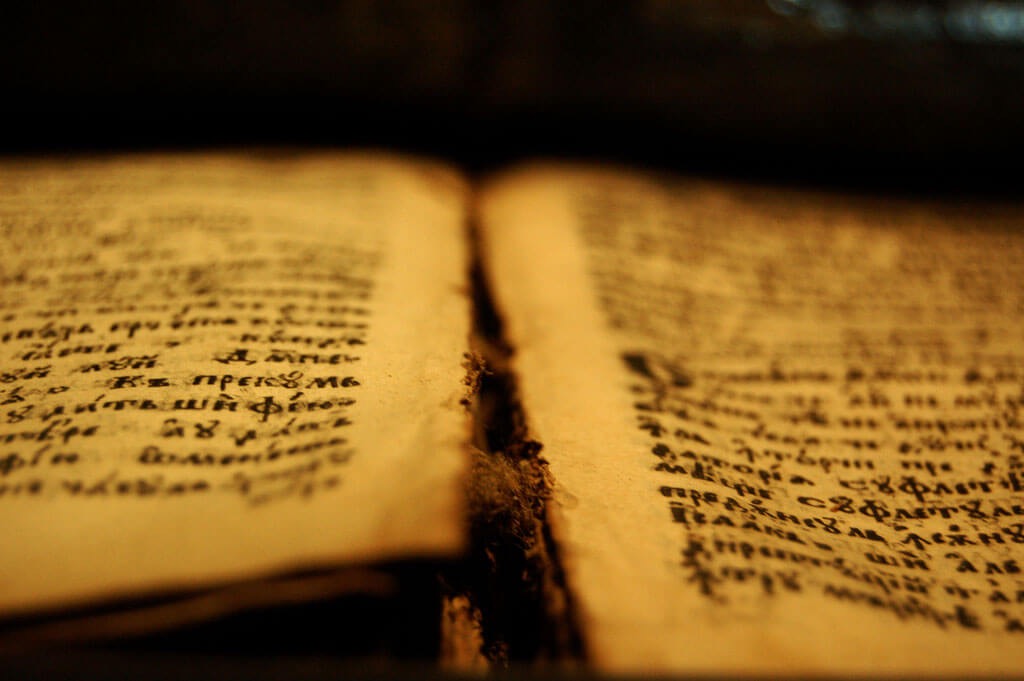
📜 The Manuscript Evidence — Unmatched in the Ancient World
Historians evaluate ancient documents by two criteria: how close the earliest surviving copy is to the original, and how many manuscripts exist to cross-check. On both counts, the New Testament is in a class of its own:
| Ancient Work | Earliest Copy | Time Gap | Manuscripts |
|---|---|---|---|
| Plato | AD 900 | 1,200 years | 7 |
| Caesar’s Gallic Wars | AD 900 | 950 years | 10 |
| Tacitus | AD 1100 | 1,000 years | 20 |
| New Testament | AD 125 (P52) | 30–60 years | 5,800+ Greek; 25,000+ total |
This extraordinary manuscript base allows scholars to reconstruct the original text with more than 99.5% accuracy. No other ancient document comes close.
Evidence Three
🕊️ Divine Inspiration — A Book from God, Not Just About God
Christians do not claim the Bible is merely a reliable historical document. They claim it is the inspired Word of God — that human authors wrote in their own styles and voices, but under the direction of the Holy Spirit, so that what they wrote is what God intended to say.
This is not a claim that bypasses historical investigation — it is a claim that works with it. The historical reliability of Scripture supports the theological claim of inspiration.
Evidence Four
📚 The Canon — Recognized, Not Invented
A widespread myth holds that church leaders at the Council of Nicaea (AD 325) picked the Bible’s contents based on politics. This misunderstands what actually happened. The canon was recognized — not created — by the early church.
By the late first century, most New Testament books were already in widespread use across the churches. By AD 150, Justin Martyr and Irenaeus were quoting from all four Gospels, Acts, and most of Paul’s letters. When councils formally listed the canon in the fourth century, they were acknowledging what the Church had already accepted and used for generations.
The books were included based on four established criteria:
- Apostolic origin — written by or under the authority of an apostle
- Doctrinal soundness — consistent with the body of Christian teaching
- Universal use — accepted and used across the churches, not just one region
- Spiritual impact — evidencing the Spirit’s work in those who received it
Evidence Five
👁️ Eyewitness Testimony — First-Person Accounts in Real Places
The Gospels and letters are saturated with eyewitness markers: specific names, verifiable locations, and the kind of incidental detail that firsthand observers include and later fabricators miss. Luke’s Gospel reads like a formal historical document, opening with an explicit statement of method and sourcing.
If the events had been invented, the hostile Jewish and Roman authorities who were present — and who had every motive to discredit the claims — could have done so by producing the body, the contradicting witnesses, or the missing evidence. They never did. Thousands believed, in the very city where the crucifixion and claimed resurrection had occurred.
Evidence Six
📯 Early Creeds — The Gospel Before the New Testament Was Written
The resurrection proclamation did not begin with the writing of the Gospels — it began immediately after the events themselves. The early church preserved the core message in creeds and hymns, some of which predate even Paul’s earliest letters.
Scholars date this creed to within 3 to 5 years of the crucifixion itself. This is not legend developing over centuries. This is the core proclamation going out within years — while the eyewitnesses were still alive and the events were still within living memory.
Evidence Seven
🩸 The Apostles Died for What They Claimed to Have Seen
People lie for gain. People die for what they believe. But it is nearly impossible to sustain a deliberate fabrication under torture and the threat of death. The apostles had nothing to gain — materially, socially, or politically — from inventing the resurrection. What they had was a claim they would not recant regardless of the cost.
- Peter — crucified upside down in Rome
- Paul — beheaded in Rome
- James (brother of Jesus) — thrown from the Temple and beaten
- Thomas — speared in India
- James (son of Zebedee) — beheaded by Herod (Acts 12:2)
People die for beliefs they hold sincerely. No one sustains a lie they themselves invented all the way to an agonizing death. The apostles’ willingness to die for their testimony is powerful corroborating evidence that they believed they were telling the truth.
Evidence Eight
🏺 Archaeology — Confirming, Not Contradicting
Modern archaeology has repeatedly confirmed specific people, places, and events referenced in Scripture. A few examples:
Evidence Nine
✍️ Literary Style — Not the Shape of Myth
C.S. Lewis spent his career as a literary scholar specializing in myth, legend, and ancient literature. His assessment of the Gospels is striking precisely because of his expertise:
Myths are polished. They smooth out embarrassing details and present heroes heroically. The Gospels do neither. Peter denies Jesus three times. The disciples argue about who is greatest. The women are the first witnesses to the resurrection — at a time when women’s testimony had little legal standing. These are not the details a fabricator includes. They are the details a reporter does.
Evidence Ten
🎓 What Leading Scholars Conclude
The Evidence in Summary
- Written within eyewitness range — within decades of the events, not centuries
- Backed by 25,000+ manuscripts — more than any other ancient document by orders of magnitude
- A canon recognized organically by the early Church — not invented by political committee
- Preserved in creeds dating within years of the crucifixion — not generations later
- Attested by eyewitnesses who died rather than recant what they claimed to have seen
- Confirmed repeatedly by archaeology — no discovery has ever disproved a biblical reference
- Written in the style of history, not the style of myth — as noted by literary scholars
The claim that the Bible was made up long after the events it describes does not survive careful examination. What we find instead is a document with extraordinary historical credentials — written early, preserved faithfully, confirmed archaeologically, and attested by people who gave their lives for what they claimed to have witnessed.
For Christians, Scripture is not merely a reliable historical document. It is the living voice of God — the means by which He has chosen to make Himself and His purposes known to every generation. That is the claim that the evidence supports and that history has not disproved.
“Heaven and earth will pass away, but my words will never pass away.” — Matthew 24:35
Key Scriptures: Isaiah 40:8 · Matthew 5:18; 24:35 · Luke 1:1–4 · 2 Timothy 3:16 · 2 Peter 1:20–21 · 1 Corinthians 15:3–8 · Acts 4:20 · John 17:17
Want to Go Deeper?
These companion resources go further on the Bible’s reliability and the historical case for Christianity:
- Is Jesus Really the Only Way? — the companion post on what the Scriptures actually claim about Christ’s exclusivity, and why those claims are grounded in history
- How Can You Believe in Something Unprovable? — addressing the broader question of what counts as evidence and how faith relates to reason
- The Nicene Creed — how the early Church defined and defended the core claims of Scripture against early challenges
- The New Testament Documents: Are They Reliable? — F.F. Bruce; the classic short treatment, still the best entry point for serious investigation
- Evidence That Demands a Verdict — Josh McDowell; comprehensive survey of the historical, manuscript, and archaeological evidence
- Subscribe to get new posts delivered straight to your inbox — gospel-rooted, plain-spoken truth for the week ahead.
“All Scripture is God-breathed and is useful for teaching, rebuking, correcting and training in righteousness.” — 2 Timothy 3:16