Do All Religions Ultimately Point to the Same God?
A Christian Analysis of Pluralism, Truth, and the Unique Claim of Jesus — With Compassion, Clarity, and Conviction
“All religions are basically the same and lead to the same God.”
It sounds peaceful. It feels inclusive. It avoids conflict. It’s the kind of statement that gets a lot of nodding in a pluralistic age where the highest social virtue is tolerance.
But is it true?
From a Christian perspective — respectfully and carefully — no. While Christianity acknowledges the shared moral instincts found across many traditions, it maintains boldly that only through Jesus Christ can we truly know and be reconciled to the God who made us.
“I am the gate; whoever enters through me will be saved.” — John 10:9
The Appeal — and the Flaw — of Religious Pluralism
The Attractive Idea
Why “We’re All Climbing the Same Mountain” Sounds Right
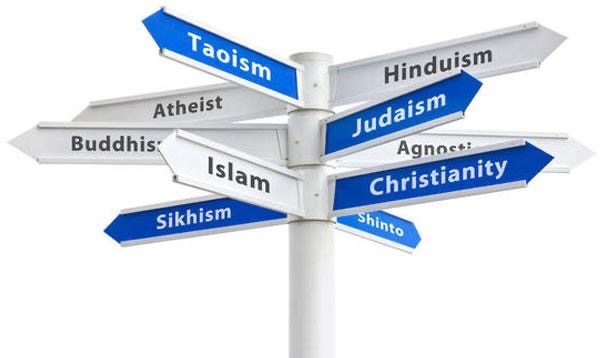
Religious pluralism — the idea that all religions are equally valid paths to the same God — is genuinely appealing. It feels like the spiritually mature position. It promotes peace, avoids offense, and seems to honor the sincere faith of billions of people around the world. Why argue about religion when we can just live and let live?
“We’re all climbing the same mountain, just on different trails,” people say. It sounds kind-hearted. The problem is it doesn’t survive contact with what the major world religions actually teach.
If the major religions genuinely disagree about who God is, what He wants, and what happens after death — and they do, fundamentally — then they cannot all be describing the same God, and they cannot all be leading to the same destination. That’s not intolerance. That’s logic.
Different Religions, Fundamentally Different Gods
The claim that all religions teach the same thing is easiest to make by someone who hasn’t looked closely at any of them. A brief comparison reveals that the differences are not superficial — they are foundational:
| Religion | View of God | View of Jesus |
|---|---|---|
| Christianity | One God in three persons — Father, Son, Holy Spirit | Son of God, crucified and physically risen Savior |
| Islam | One God (Allah), strict monotheism — Trinity rejected | Prophet only, not divine, not crucified |
| Hinduism | Millions of gods, or impersonal Brahman | May be accepted as one avatar among many |
| Buddhism | Often non-theistic — not centered on a personal God | Wise teacher; divine claims irrelevant or rejected |
| New Age | Impersonal energy or divine spark in everything | Enlightened man, spiritual guide among others |
The Logical Problem
You Cannot Have It Both Ways
Islam explicitly teaches that Jesus was not crucified. Christianity teaches that the crucifixion is the central event of human history. These are not complementary perspectives — they are mutually exclusive claims. One is true; the other is not. Both cannot be.
Consider a simple illustration: Imagine someone says they know your spouse. They describe a tall blonde nurse. But your spouse is a short brunette mechanic. You’d say, “That’s not my spouse — you’re describing someone else.” The same logic applies to descriptions of God. When religions describe fundamentally different beings with fundamentally different natures and demands, they are not describing the same God.
What Christianity Actually Claims
The Exclusive Claim — and Its Logic
Christianity Doesn’t Just Suggest Jesus — It Declares Him the Only Way
The New Testament is unambiguous. It doesn’t offer Jesus as a preferred option or the best available path. It declares Him the only means of reconciliation between sinful humanity and a holy God.
Christianity’s reasoning is not tribal preference — it flows from a specific diagnosis of the human condition. All humanity is sinful (Romans 3:23). Sin creates real separation from a holy God (Isaiah 59:2). Reconciliation requires a perfect substitute — sinless, capable of bearing the penalty (Hebrews 9:22). Jesus is the only person in history who qualifies. If there were other ways, the cross would be unnecessary. And cruel.
What About Sincerity? Doesn’t God Honor That?
A Fair Question
Sincerity Is Valuable — But It Doesn’t Override Truth
Many ask: “If someone sincerely follows their religion, doesn’t God honor that sincerity?” It’s a compassionate question, and it deserves a real answer.
Christianity’s answer is that sincerity, while genuinely important, does not override the direction you’re heading. A sincerely made wrong turn still takes you away from your destination. A sincerely applied poison is still fatal. Sincerity doesn’t change what is actually true.
God values a humble and seeking heart (Isaiah 66:2). He is not indifferent to sincere faith. But He has also spoken clearly about how He is to be known and approached — through Christ. The door is wide open. But there is one door.
Four Christian Leaders on the Uniqueness of Jesus
Billy Graham
John Stott
Tim Keller
Alistair Begg
What Sets the Gospel Apart
The most important difference between Christianity and every other religious tradition is not a detail — it is the central direction of movement. Every other religion is, in some form, a description of what humans must do to reach God. Christianity alone describes what God did to reach humans.
| Category | Other Religions | Christianity |
|---|---|---|
| Salvation | Earned through works, rituals, or enlightenment | Freely given by grace through faith |
| God’s Nature | Impersonal, unknowable, or strictly unitary | Personal, relational, triune |
| Sin | Downplayed, denied, or overcome by effort | Recognized as real and deadly — but fully redeemed |
| Mediator | Teachers, prophets, lawgivers | One Mediator — Jesus Christ (1 Timothy 2:5) |
| Resurrection | Absent, allegorical, or cyclical | Historical, physical, once-for-all |
⛰️ Flipping the Mountain
The most common image for religious pluralism is the mountain: “We’re all climbing different trails to the same summit.” It’s a compelling picture. And Christianity flatly disagrees with it.
We are not climbing to God. We cannot. The chasm created by sin is too deep, the summit too high, and every human climber too compromised to make it.
God descended. The cross is not one peak among many — it’s the only bridge across the gap that no religion could build. We could never reach Him through religion. He reached us through redemption.
Holding Truth Without Losing Compassion
The Christian Way Forward
Speak the Truth in Love — Always Both at Once
Christianity commands believers to love their neighbors — including and especially those of other faiths. The exclusivity of Christ’s claims does not license contempt, dismissal, or arrogance toward people who hold different beliefs. Jesus Himself never ridiculed the Samaritan woman’s religious tradition — He lovingly pointed her to living water (John 4).
Christians hold an exclusive claim with a universal invitation. The door is one. But it is wide open to everyone, and the call goes out to every person regardless of background, religion, or history of failure. Holding both of those together — the narrow gate and the open welcome — is the shape of genuine Christian witness.
Four Things Christians Should Do With This Truth
The question is not whether all roads lead to God. The question is whether God has made a road to us. And the Christian answer is yes — but only one, because only one person in history was qualified to build it.
Jesus is not one guide among many pointing toward the summit. He is the God who descended the mountain Himself, crossed the chasm of sin and death, and offers to bring us home. Not all paths lead to God. But all people are invited — urgently, freely, openly — to come through the One who made the only path that works.
“For God so loved the world that He gave His one and only Son, that whoever believes in Him should not perish but have everlasting life.” — John 3:16
Key Scriptures: John 14:6; 10:9; 4; 3:16; 6:37 · Acts 4:12 · Romans 3:23; 10:13–14 · Hebrews 9:22 · Galatians 2:21 · Isaiah 59:2; 45:5; 66:2 · Proverbs 14:12 · Matthew 7:13–14 · Ephesians 2:8–9; 4:15 · 1 Timothy 2:5 · 1 Peter 3:15
Want to Go Deeper?
This post is the companion to MVM’s series on Christian apologetics and the uniqueness of Jesus:
- Is Jesus Really the Only Way? — the companion post on Christ’s exclusivity, focusing on what Scripture says and why the claim is logical, not arrogant
- What Is Truth? — the full treatment of why truth is objective, knowable, and personal — essential grounding for this discussion
- Ten Christian Leaders on the Doctrine of Jesus — who Jesus actually claimed to be, and why those claims cannot be safely reduced to “wise teacher”
- Jesus Among Other Gods — Ravi Zacharias; the most thorough and compassionate treatment of Christ’s uniqueness compared to other world religious figures
- Tactics — Greg Koukl; practical tools for engaging pluralism conversations with grace, clarity, and respect
- Subscribe to get new posts delivered straight to your inbox — gospel-rooted, plain-spoken truth for the week ahead.
“I am the way, and the truth, and the life. No one comes to the Father except through me.” — John 14:6