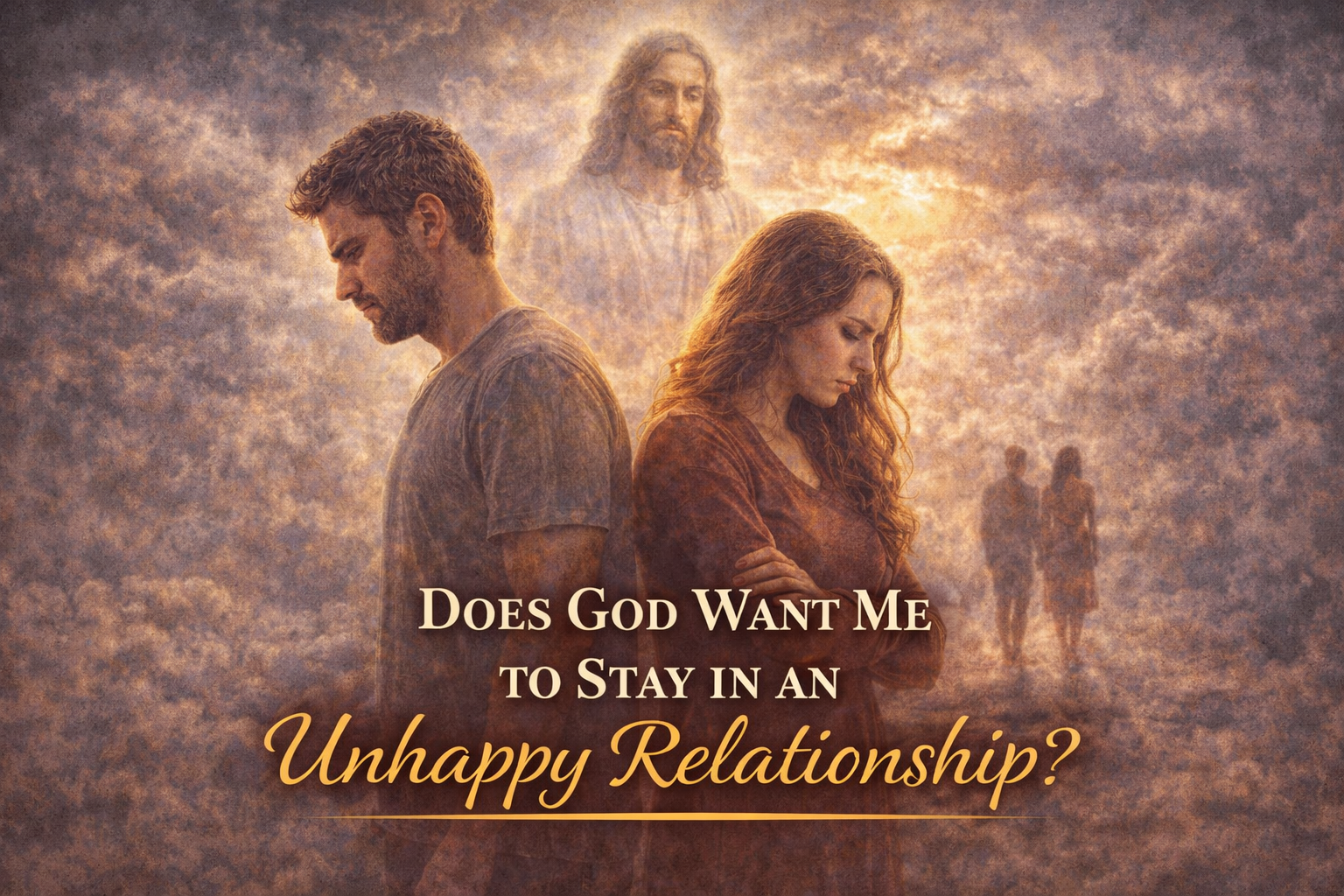
Does God Want Me to Stay in an Unhappy Relationship?
Biblical Wisdom, Grace, and the Value of the Human Heart
In quiet moments behind closed doors — in whispered prayers and late-night tears — a question stirs deep in the soul:
“Does God want me to stay in this unhappy relationship?”
This isn’t theoretical. It’s personal. It’s about worn-out marriages, struggling friendships, broken engagements, and tense family dynamics. For many Christians — especially those who believe deeply in commitment and covenant — it’s a question wrapped in guilt, fear, and spiritual confusion.
The Christian path isn’t always simple. But it is full of truth, grace, and freedom — when we lean into God’s heart.
“I will instruct you and teach you in the way you should go; I will counsel you with my eye upon you.” — Psalm 32:8
What Scripture Says About Relationships
From the beginning, God created relationships as sacred, not disposable. Marriage was meant to reflect the love between Christ and His Church — sacrificial, faithful, and enduring (Ephesians 5:22–33). God’s design was for relationship to bless, not burden; to sanctify, not shatter.
This is why Scripture takes seriously the warnings against frivolous divorce or emotional abandonment (Malachi 2:16; Matthew 19:6). But Scripture is not a blunt instrument that ignores human pain — it is the sword of truth that discerns between covenant and captivity.
An Important Distinction
The word “unhappy” covers a lot of ground. Biblical counseling always asks:
Is the unhappiness circumstantial — a hard season that could be worked through — or chronic, a pattern of harm that shows no sign of change?
Is the relationship redeemable — difficult but capable of growth — or destructive — unsafe, demeaning, and persistently unrepentant?
Is this a call to endurance, or a cry for rescue?
These questions don’t have one-size-fits-all answers. But they are the right questions to bring before God, a trusted pastor, and a Christian counselor.
What God Does Not Want
🚨 God Does Not Call You to Endure Abuse
Too often, Christians interpret “God hates divorce” (Malachi 2:16) as “God commands me to stay no matter what.” That is not a biblical reading — it is a misreading that causes real harm to real people.
A marriage that is violent, sexually abusive, persistently demeaning, emotionally manipulative, or chronically unrepentant is not a reflection of God’s covenant. It is a distortion of it. God hates what is being done in that marriage as much as He hates the breaking of marriage.
God does not call His children to endure wickedness disguised as faithfulness. He calls them to walk in truth (John 8:32), to seek peace (Romans 12:18), and to honor the image of God within themselves (Genesis 1:27).
If you are in danger, please reach out to a trusted pastor, counselor, or the National Domestic Violence Hotline: 1-800-799-7233.
But What About “Just” Being Unhappy?
Sometimes a relationship is not abusive, but it feels deeply unsatisfying. Communication has eroded. Affection has died. The laughter is gone. Is that enough to leave?
Honest Pastoral Perspective
Unhappiness Is a Warning Light — Not Always a Reason to Run
In many cases, God calls us to grow, not go. Relationships go through valleys. Many are redeemed through prayer, counseling, spiritual renewal, and practical changes. But this requires two willing people. If one partner resists growth, deflects blame, controls, or gives up — the other is left alone in the covenant.
That’s when prayer, wise counsel, and the Spirit’s specific guidance must direct the next step.
Four Biblical Principles for Discernment
Faithfulness Is Not the Same as Foolishness
Staying in a relationship that crushes your soul for the sake of appearances isn’t faith — it’s fear. Faithfulness doesn’t mean denying reality or enabling sin. Wise people name what is happening, and seek truth even when it’s costly.
Proverbs 14:16 — “The wise fear the Lord and shun evil, but a fool is hotheaded and yet feels secure.”
God Cares About the People in the Marriage — Not Just the Institution
He cares about marriage deeply. He also cares about the people inside it. He is not unmoved by the suffering of those who are being diminished, silenced, or harmed. His care for the oppressed is woven through Scripture from beginning to end.
Isaiah 1:17 — “Learn to do right; seek justice. Defend the oppressed.”
Healthy Relationships Reflect God’s Character
A relationship that honors God shows love, patience, forgiveness, respect, and mutual repentance (1 Corinthians 13:4–7). When those are consistently and stubbornly absent, the image of Christ’s love is being marred — not mirrored. That matters to God.
Both Staying and Leaving Can Be Holy Decisions
There is no universal rule that makes staying always faithful or leaving always unfaithful. Both can be holy decisions when made with prayer, wise counsel, honest self-examination, and the Spirit’s guidance for your specific situation.
James 1:5 — “If any of you lacks wisdom, let him ask God, who gives generously to all without reproach.”
What Respected Christian Voices Say
John Piper
Marriage is sacred and should be preserved — but abuse and abandonment must be confronted, and pastoral care must protect the vulnerable. The covenant does not override the duty to protect life.
Gary Thomas
“We must never allow the institution of marriage to silence the cries of those who are being destroyed by it.” — Sacred Marriage
Rick Warren
Encourages couples to fight for their marriages with everything they have — while affirming that abuse, adultery, and abandonment are biblically recognized grounds for separation.
Leslie Vernick
Author of The Emotionally Destructive Marriage — teaches Christians to distinguish between a difficult marriage worth fighting for and a destructive one requiring safety-seeking first.
A Practical Framework — What to Do Next
Pour your heart out to God without editing it for propriety. He already knows. Ask Him to show you truth — no matter how difficult — and to guide you toward it.
Talk to a trusted pastor, a Christian counselor, or a mature believer who knows you and the situation. You were never meant to make this decision alone.
Proverbs 11:14 — “In an abundance of counselors there is safety.”
- Is this relationship redeemable with both parties willing?
- Is the unhappiness due to conflict and sin that could be repented of — or to patterns that show no sign of changing?
- Is there evidence of danger, ongoing abuse, or spiritual harm?
- What does wise, trusted counsel say — not just what do I feel?
Depending on your situation, this might include: counseling (individually or together), temporary separation for safety and reflection, church accountability, honest conversation, repentance and forgiveness — or in serious cases, a biblically guided separation or divorce under pastoral care.
A Pastoral Word for the Wounded
Dear friend — if this is your story, know this: God sees. He hears. He cares. He knows the nights you cried yourself to sleep, the days you smiled in public and broke down in private. He knows your heartache, your longing for clarity, and your desire to do what is right.
You are not a failure. You are not forgotten. And you are not called to bear something alone that Christ came to carry with you.
🙏 A Prayer for the Weary
“Father God, I don’t know what to do. I want to be faithful to You — but I’m hurting. Please show me the way forward. Give me wisdom, courage, and clarity. Help me walk in truth and grace. And surround me with people who can guide me in Your love. In Jesus’ name, Amen.”
God may call you to stay and rebuild — or He may call you to leave and heal. Either way, He never calls you to live in silent despair or spiritual isolation.
You were made for more than misery. You were made in His image, for His glory, and for His love. Don’t let fear or shame keep you from seeking the truth — because He is still guiding, and He is still good.
“I came that they may have life and have it abundantly.” — John 10:10
Key Scriptures: Psalm 32:8; 11:5 · Genesis 2:24 · Ephesians 5:22–33 · Malachi 2:16 · Matthew 19:6 · 1 Corinthians 7:15 · Romans 5:3–4; 12:18 · John 8:32; 10:10 · Genesis 1:27 · Isaiah 1:17 · Proverbs 11:14; 14:16 · James 1:5 · 1 Corinthians 13:4–7
Further Support and Resources
If you are in a difficult relationship and need guidance, please reach out to trusted support:
- Talk to your pastor or a Christian counselor — trained, compassionate, and confidential support for exactly these situations
- Sacred Marriage — Gary Thomas; a rich look at what God is doing in and through marriage, including hard ones
- The Emotionally Destructive Marriage — Leslie Vernick; helps believers discern between difficult and destructive relationships
- Boundaries in Marriage — Dr. Henry Cloud & Dr. John Townsend; practical biblical wisdom for protecting and structuring healthy relationships
- Focus on the Family Marriage Crisis Line: 1-855-771-HELP — free pastoral counsel for marriages in crisis
- National Domestic Violence Hotline: 1-800-799-7233 — if you are in danger, please call
“If any of you lacks wisdom, let him ask God, who gives generously to all without reproach, and it will be given him.” — James 1:5