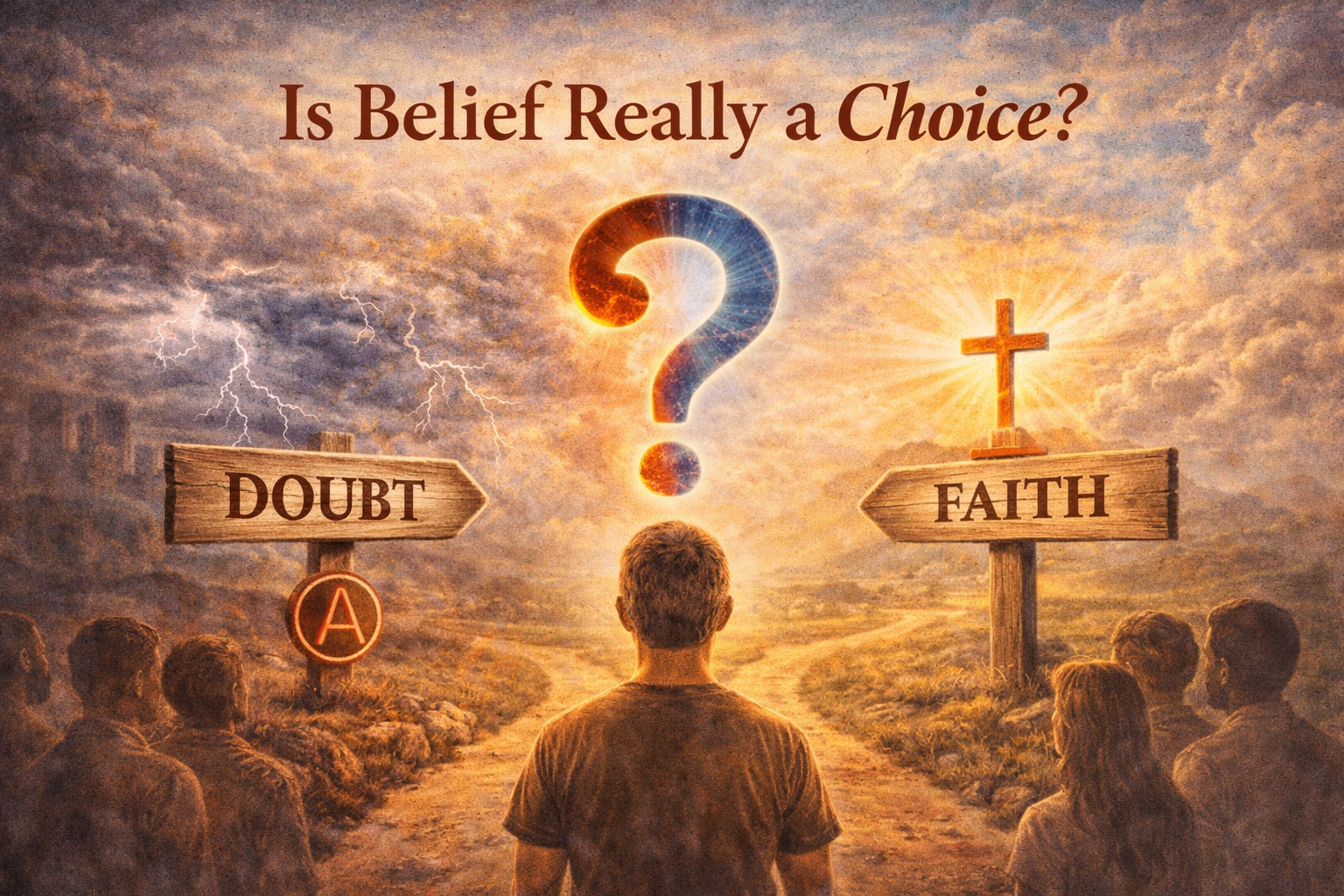
Is Belief Really a Choice?
A Deep Dive into Faith, Free Will, and God’s Grace from a Christian Perspective
In today’s world, belief is often treated like flipping a switch. “Just believe,” some say. Others confess: “I wish I could believe, but I just can’t.” Still others assume belief is a simple personal choice — like picking a flavor of ice cream or choosing a political party.
From a Christian point of view, belief is far more complex and profound. It involves both human responsibility and divine grace — a mysterious interaction between our will and God’s work in the heart. And understanding that mystery matters enormously, whether you’re a believer, a seeker, or a committed skeptic.
“For God, who said, ‘Let light shine out of darkness,’ has shone in our hearts to give the light of the knowledge of the glory of God in the face of Jesus Christ.” — 2 Corinthians 4:6
The Short Answer: Yes and No
✅ Yes — Belief Is a Choice
The New Testament commands belief directly and repeatedly. Jesus calls individuals to respond, to trust, to follow. God holds people accountable for their response. The call presupposes the ability to answer.
“Believe in God; believe also in Me.” — John 14:1
“Do not disbelieve, but believe.” — John 20:27
🎁 Also No — Belief Is a Gift
No one can generate saving faith from their own resources. The fallen human will is in bondage to sin and cannot move toward God unaided. The Spirit must move first.
“For it is by grace you have been saved, through faith — and this is not from yourselves, it is the gift of God.” — Ephesians 2:8
Both things are true simultaneously. That’s not a contradiction — it’s a mystery that Scripture holds together without resolving. The divine and the human are both real, both necessary, and both present in every genuine conversion.
Belief Is Not Just a Rational Decision
Beyond Facts and Logic
Even Demons Believe — and It Doesn’t Save Them
For some people, belief seems like a simple matter of evidence: “If I had more proof, I’d believe.” But Scripture teaches that belief is not merely intellectual agreement. James 2:19 makes the point sharply: even demons believe God exists — and they shudder. Intellectual assent is not the same as saving faith.
Biblical belief has three inseparable components:
- Mind — affirming that the gospel is true; knowledge of its content
- Heart — desiring and loving the truth; the affections moved toward Christ
- Will — surrendering and obeying; committing the weight of the soul to Christ
Faith is not irrational — it is supra-rational. It transcends the intellect without rejecting it. It requires all three components, not just one.
Two Theological Traditions — Both Taking Scripture Seriously
The relationship between human choice and divine grace has been the defining theological debate among Protestants for five centuries. Both traditions affirm Scripture; they differ on the sequence and mechanism of salvation.
Arminian / Wesleyan
God’s prevenient grace restores genuine freedom to all people. Faith is a real, free human response to God’s invitation. People can genuinely resist or receive saving grace.
God initiates; humans respond with real freedom enabled by His grace.
Reformed / Calvinist
Human nature is so fallen that no one can believe without regeneration first. God must change the heart before the will can turn. Faith is the result of irresistible grace given to the elect.
God regenerates; the renewed will then freely and gladly chooses Christ.
Despite their differences on the mechanics, both traditions agree on the essentials: people are responsible to believe, God must enable belief, and no one is saved without genuine faith in Christ. The tension between sovereignty and responsibility is held — not dissolved — by both sides.
What Blocks People from Believing?
Many assume unbelief is primarily an intellectual problem — not enough evidence. But Scripture teaches that unbelief is primarily a moral and spiritual problem.
“Light has come into the world, but people loved darkness instead of light because their deeds were evil.” — John 3:19
People don’t reject Christ simply because they lack proof. They resist because they don’t want to bow. Three forces are typically at work:
How Belief Actually Happens
When someone comes to faith, we typically see only the outward story — a Bible opened, a sermon heard, a prayer whispered. Behind the scenes, the Spirit is doing the deeper work. The process usually involves:
Sometimes this process is dramatic — like Paul’s encounter on the Damascus road. Often it is quiet and gradual. But the same elements are always present.
Three Illustrations
🌱 The Seed and the Soil
In Matthew 13, Jesus told the parable of the sower. The same seed — the Word of God — falls on four different soils. Only one bears fruit. Belief depends not just on hearing the message, but on the condition of the heart that receives it — which God prepares.
🚪 Jesus at the Door
“I stand at the door and knock” (Revelation 3:20). Faith opens the door — but Jesus initiates the knock. No one seeks God unless first sought by God. The door is locked from the inside, and yet no one opens it without hearing the knock first.
💡 Light in the Darkness
In a completely dark room, you can’t see anything — no matter how hard you look. Then someone turns on the light. Now you see, and you respond to what you see. God turns on the light. We respond with sight and faith. The initiative is His; the response is ours.
A Summary Table
| Question | Christian Answer | Key Scripture |
|---|---|---|
| Is belief a choice? | Yes — people are responsible to respond | John 14:1; Mark 1:15 |
| Is belief a gift? | Yes — it is enabled and given by grace | Ephesians 2:8; John 6:44 |
| What prevents belief? | Sin, pride, and spiritual blindness | Romans 8:7; John 3:19 |
| What enables belief? | God’s Word, Spirit, and grace | Romans 10:17; Titus 3:5 |
Four Practical Implications
Share the Gospel Boldly — and Pray Deeply
We preach the gospel because people must hear and believe to be saved (Romans 10:14). We pray because only God can open blind eyes (2 Corinthians 4:6). Both are essential. Neither replaces the other.
Stay Humble if You Believe
If you have faith, it isn’t because you’re smarter or more spiritually perceptive than someone who doesn’t. It’s because God had mercy on you. That should produce deep humility, not spiritual pride.
Be Patient with Seekers
Faith often unfolds slowly. Jesus was patient with doubters — Thomas got a private appearance. So should we be patient with friends, family members, and anyone who is honestly wrestling with the question.
If You’re Struggling to Believe — Don’t Walk Away
Even struggling faith is precious in God’s sight. The father of the demon-possessed boy cried, “Lord, I believe; help my unbelief!” (Mark 9:24) — and Jesus honored that honest half-faith. Ask God to help you see. Keep listening, keep asking, keep seeking.
So — is belief really a choice? Yes, in that God calls us to believe and holds us responsible for our response. And also no, in that we cannot generate saving faith from our own fallen nature. It is both a real decision and a real gift.
The miracle of belief is that God reaches into the dark room, turns on the light, and gives eyes to see. If you’re reading this and wondering whether you can believe — here is the good news: you can, because God is already knocking.
He is not waiting for you to generate faith from scratch. He is offering it. Open the door.
“Lord, I believe; help my unbelief!” — Mark 9:24
Key Scriptures: John 14:1; 20:27; 3:16, 19; 6:44 · Mark 1:15; 9:24 · Ephesians 2:8–9; 2:1 · Romans 10:9, 14, 17; 8:7 · 1 Corinthians 12:3 · James 2:19 · 2 Corinthians 4:4, 6 · Titus 3:5 · Acts 16:31 · Philippians 1:6 · Matthew 13 · Revelation 3:20
Want to Go Deeper?
This post sits at the intersection of several major MVM theological threads. These companion posts go deeper on the specific questions it raises:
- Reformed vs. Arminian Theology — the full comparative treatment of the sovereignty/free will debate that this post introduces
- What Is Salvation? Ten Theologians — ten voices across twenty centuries on how God saves and what role human response plays
- The Holy Spirit — the Spirit’s role in conviction, regeneration, and the gift of faith explored fully
- The Call to Faith — what it looks like to actually respond to God’s invitation
- How Can You Believe in Something Unprovable? — addressing the intellectual side of the unbelief problem
- Subscribe to get new posts delivered straight to your inbox — gospel-rooted, plain-spoken truth for the week ahead.
“For it is by grace you have been saved, through faith — and this is not from yourselves, it is the gift of God.” — Ephesians 2:8