Reformed Doctrine: A Biblical Faith That Honors the Sovereignty of God
A Plain-Spoken Guide to the Five Solas, TULIP, and Why Reformed Theology Is for Shepherds, Soldiers, and Sinners
If you’ve ever wondered what the “Reformed” part of Reformed Christianity really means, you’re not alone. While the word might sound academic or even rigid to some, Reformed doctrine is actually a deeply biblical, humble, and worshipful way of understanding God and His plan for salvation.
Rooted in the 16th-century Protestant Reformation, Reformed theology seeks to bring every area of life under the Lordship of Jesus Christ. It proclaims a God who is sovereign, a Savior who is sufficient, and a salvation that is entirely by grace — from beginning to end.
“For from Him and through Him and to Him are all things. To Him be the glory forever. Amen.” — Romans 11:36
A Brief History
Reformed doctrine grew out of the Protestant Reformation, when men like Martin Luther and John Calvin called the Church back to Scripture as the final authority over tradition, councils, and papal decree. While Luther helped spark the Reformation, it was Calvin — along with Ulrich Zwingli, Theodore Beza, and John Knox — who systematized what became known as Reformed theology, centered around the sovereignty of God in all things, especially in salvation.
Later theologians like Herman Bavinck, B.B. Warfield, Charles Hodge, and R.C. Sproul expanded and defended this biblical system against modern skepticism, liberal theology, and the drift toward a man-centered gospel.
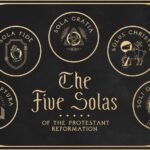
The Five Solas — The Reformation’s Heartbeat
Reformed theology is often summarized in two sets of principles. The first is the Five Solas — the core convictions of the Reformation, each one a direct answer to the Roman Catholic system the Reformers were challenging:
Sola Scriptura
Scripture Alone
The Bible is the only infallible authority for faith and practice
2 Timothy 3:16–17
Sola Fide
Faith Alone
Justified by faith — not works, not sacraments, not merit
Romans 5:1
Sola Gratia
Grace Alone
Salvation is God’s unearned, undeserved gift — entirely His doing
Ephesians 2:8–9
Solus Christus
Christ Alone
Jesus is the only mediator between God and man — no other name
Acts 4:12
Soli Deo Gloria
To God Alone Be Glory
Every part of life — every vocation, every moment — exists for His glory
1 Corinthians 10:31
Together
One conviction
Salvation is entirely God’s work — for His glory alone, from first to last
The Five Points of Calvinism — TULIP
The second set of principles is TULIP — the five points that emerged from the Synod of Dort (1618–1619) in direct response to the Arminian challenge. These are not additions to the gospel — they are the Reformed tradition’s attempt to faithfully articulate what the gospel actually says about how God saves sinners.
Total Depravity
Humanity is not merely wounded by sin — we are spiritually dead, incapable of coming to God apart from divine grace. Every faculty is affected: mind, will, and affections.
📖 Romans 3:10–12 · Ephesians 2:1–3
Unconditional Election
God’s choice to save individuals is not based on foreseen merit, faith, or moral advantage — but on His sovereign will and mercy alone. The ground of election is in God, not in us.
📖 Ephesians 1:4–5 · Romans 9:11–13
Limited Atonement — Particular Redemption
Christ died specifically to secure salvation for the elect — not potentially for everyone, but actually and effectively for those the Father gave Him. His death accomplishes what it was designed to accomplish.
📖 John 10:14–15 · Matthew 1:21
Irresistible Grace
When God calls a sinner to salvation by His Spirit, that effectual call cannot ultimately be resisted. He doesn’t just make salvation available — He transforms the will so that the sinner freely and gladly comes.
📖 John 6:37 · Acts 13:48
Perseverance of the Saints
Those whom God truly saves will endure in faith to the end — not because of their own strength, but because God who began the good work will complete it. The security is in His grip, not ours.
📖 Philippians 1:6 · John 10:28–29
Four Reasons Reformed Doctrine Still Matters
It Puts God at the Center
The Reformed tradition constantly reminds us that God is not a supporting actor in our story — we are in His. Everything exists to glorify Him. This re-centering brings awe, genuine worship, and the kind of humility that only grace produces.
It Takes the Bible Seriously
Rather than cherry-picking feel-good verses, Reformed theology works through all of Scripture — even the hard parts. It reads the Bible as one unfolding covenantal story of God’s grace, from the garden to the New Jerusalem.
It Grounds Us in Grace
Reformed theology teaches that we are not saved because we are good, smart, or deserving. That means: we don’t have to pretend we’re better than we are, we don’t have to earn God’s love, and we can rest in His promises rather than in our performance.
It Strengthens the Church
By focusing on sound doctrine, expository preaching, and serious discipleship, the Reformed tradition tends to produce churches that are doctrinally deep, spiritually serious, and genuinely mission-minded — not just relevant.
Three Illustrations
🌊 Drowning at Sea
Imagine a man unconscious in the ocean — not waving for help, not choosing to be rescued. He’s dead in the water. Reformed doctrine says God doesn’t just throw a life ring and hope for a response. He dives in, pulls the man to shore, breathes new life into him, and carries him home. That’s what grace looks like when total depravity is taken seriously.
🌳 A Tree Planted by Water
Psalm 1 compares the righteous man to a tree planted by streams of water — unhurried, deeply rooted, bearing fruit in every season. Reformed faith sees Scripture as that stream, Christ as the root system, and grace as the light. The fruit is a life lived for God’s glory.
🔗 Chains Broken
The sinner is bound in chains of pride, lust, and rebellion. No man breaks his own chains — he doesn’t even want to. But God, by His sovereign grace, breaks them, sets the captive free, and gives him a new heart that now wants what it once despised. That’s irresistible grace — not compulsion, but transformation.
Voices That Shaped the Reformed Tradition
John Calvin
“We are not our own: let not our reason nor our will, therefore, sway our plans and deeds.”
R.C. Sproul
“The Reformed faith is simply the Christian faith without dilution.”
J.I. Packer
“Election is the ultimate guarantee that God’s purpose will be fulfilled.”
Tim Keller
“If you think you’re not all that bad, the grace of God will never seem that great.”
Alistair Begg
“The main things are the plain things, and the plain things are the main things.” Even the deep truths of Reformed doctrine are meant to be understood and cherished by ordinary believers.
A Word on Free Will
This is one of the biggest objections to Reformed theology: if God chooses who will be saved, do we still have free will? Reformed theology answers yes — but our will is not free in the way we imagine.
- Before grace: Our will is in bondage to sin — we freely choose what we desire, and we desire the wrong things (Romans 6:20)
- After grace: Our will is made alive and freed to follow Christ — we now freely choose what the Spirit has made us want (Romans 6:22)
God’s sovereignty doesn’t cancel human responsibility — it enables genuine human response. The sinner who comes to Christ comes freely and willingly — because God has changed what the sinner wants.
“It is not freedom to do as you please, but the freedom to please God.” — Sinclair Ferguson
Practical Implications — On a Monday Morning
Reformed doctrine isn’t just for scholars — it’s for shepherds, soldiers, students, and sinners. It’s for people who need real hope in a real Savior. In a world chasing after itself, Reformed theology calls us to lift our eyes and behold the God who reigns — the God who saves.
At the end of the day, Reformed doctrine isn’t about puffing up the mind. It’s about bending the knee. It reminds us that God owes us nothing — but gives us everything in Christ. And our response should be worship, gratitude, and obedience.
“Amazing grace! how sweet the sound, that saved a wretch like me!” — John Newton
Key Scriptures: Romans 11:36 · 2 Timothy 3:16–17 · Romans 5:1 · Ephesians 2:8–9 · Acts 4:12 · 1 Corinthians 10:31 · Romans 3:10–12 · Ephesians 1:4–5 · John 10:14–15, 28–29 · John 6:37 · Philippians 1:6 · Romans 8:28 · Romans 6:20, 22
Want to Go Deeper?
This post is part of an ongoing series on Reformed theology and the great doctrines of the Christian faith. Here are trusted resources for going further:
- Institutes of the Christian Religion — John Calvin; the foundation of Reformed theology, still essential after 500 years
- Chosen by God — R.C. Sproul; the clearest modern introduction to Reformed soteriology
- Knowing God — J.I. Packer; the most beloved modern devotional treatment of Reformed theology
- Podcasts: Renewing Your Mind (Sproul), The White Horse Inn, Theocast
- Read the companion MVM posts on Reformed Theology, Calvinism (TULIP), and the Protestant Reformation — this post and those together give a complete picture.
- Subscribe to get new posts delivered straight to your inbox — gospel-rooted, plain-spoken truth for the week ahead.
“For from Him and through Him and to Him are all things. To Him be the glory forever. Amen.” — Romans 11:36