
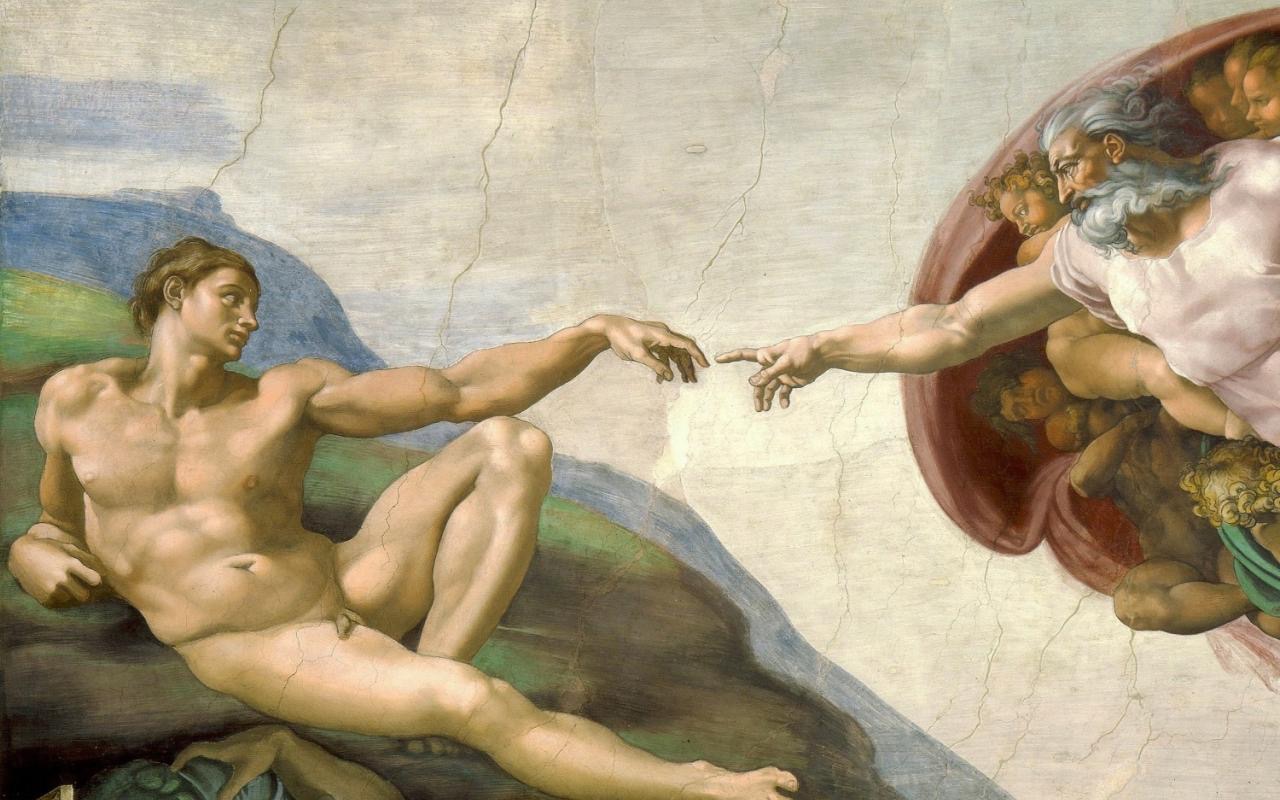
The Existence of God: Insights from Christian Theologians
From Augustine and Aquinas to Plantinga and Lennox — Why the World’s Greatest Christian Thinkers Concluded That God Is Not Just Possible, but Necessary
The Bible opens not with an argument but with an assertion: “In the beginning, God…” (Genesis 1:1). Scripture doesn’t try to prove God’s existence — it simply proceeds from it. But Christian thinkers across twenty centuries have asked a different question: what can reason, science, philosophy, and human experience tell us about whether that assertion is warranted?
The answer, consistently and from remarkably diverse angles, has been: a great deal. Belief in God is not a retreat from reason. It is, for these thinkers, the most reasonable conclusion available when you take the full scope of evidence seriously.
Here is a survey of ten of the most significant contributors to that argument.
“I believe in Christianity as I believe that the sun has risen — not only because I see it, but because by it I see everything else.” — C.S. Lewis
Ten Thinkers — Ten Arguments
Thinker One
Augustine of Hippo — The Restless Heart as Evidence
354–430 AD · Bishop of Hippo · Confessions, City of God
Core Argument: Inner longing as evidence of a transcendent source
Augustine drew on Neoplatonism and Christian theology to argue that the universal human hunger for truth, beauty, and goodness — a hunger that no earthly thing can permanently satisfy — is itself evidence of a perfect, unchanging Source that alone can fulfill it. If we were purely material creatures, our deepest longings would be satisfiable by material things. They are not. That gap points upward.
Augustine also argued that all humans share an intuitive sense of moral law — a common recognition that some things are genuinely right and others genuinely wrong. The existence of that shared standard points beyond individual preference or cultural conditioning toward a universal Lawgiver. His framework established the subjective and existential dimension of the case for God that later thinkers would complement with more formal arguments.
Thinker Two
Anselm of Canterbury — The Ontological Argument
1033–1109 · Archbishop of Canterbury · Proslogion
Core Argument: The concept of a maximally great being requires its existence
Anselm’s ontological argument remains one of the most discussed philosophical arguments in history: God is “that than which nothing greater can be conceived.” If that being existed only in the mind and not in reality, then we could conceive of something greater — namely, a being that exists in both mind and reality. But that would mean the greatest conceivable being is not the greatest conceivable being. Contradiction. Therefore, the greatest conceivable being must exist in reality.
The argument was challenged by Kant, who argued that existence is not a property that adds greatness. It was later reformulated by Alvin Plantinga in terms of possible worlds — if a maximally great being is possible, then it necessarily exists in every possible world, including ours. The argument remains actively debated in contemporary analytic philosophy as a serious contribution, not a curiosity.
Thinker Three
Thomas Aquinas — Five Ways to Rational Theism
1225–1274 · Scholastic Theologian · Summa Theologica
Core Argument: Five distinct cosmological and teleological proofs
Aquinas’s five arguments remain the most systematic classical case for theism ever assembled. Each approaches the question from a different angle:
The Unmoved Mover
Motion requires a mover. An infinite regress is impossible. There must be a first mover, itself unmoved — God.
The First Cause
Every effect requires a cause. An infinite causal regress is impossible. There must be an uncaused First Cause — God.
Necessary Being
Contingent things might not have existed. Something must exist necessarily to ground their existence — God.
Argument from Degree
Comparative qualities (more/less true, good, noble) imply a maximum — a perfect standard by which all else is measured.
The Teleological Argument
Natural things act toward ends — they exhibit purpose without possessing intelligence. This goal-directedness implies an intelligent director — God.
Aquinas showed that faith and reason are not enemies. Rational proofs for God’s existence are not only possible — they are appropriate for creatures made in the image of the God who is Logos, reason itself.
Thinker Four
Blaise Pascal — The Wager
1623–1662 · Mathematician · Pensées
Core Argument: Rational decision-making under uncertainty favors belief
Pascal took a different approach than his predecessors — not arguing that reason proves God, but that reason, applied to the conditions of uncertainty, recommends belief. His wager: if God exists and you believe, you gain eternal life. If God doesn’t exist and you believe, you lose nothing meaningful. If God exists and you don’t believe, you lose everything. If God doesn’t exist and you don’t believe, you gain nothing.
The asymmetry in outcomes makes belief the rational choice under genuine uncertainty. Pascal’s wager is not an argument for certainty — it’s an argument that the stakes of the question are asymmetric enough to make the pursuit of faith reasonable even before certainty is achieved. It has been criticized and refined extensively, but its core insight — that the question of God is not merely intellectual but existential, with real consequences — remains important.
Thinker Five
Alvin Plantinga — Belief in God as Properly Basic
1932–2023 · Notre Dame / Oxford · God, Freedom, and Evil; Warranted Christian Belief
Core Argument: Belief in God is rational without requiring proof
Plantinga transformed the conversation about faith and reason by challenging the assumption that belief requires proof to be rational. He argued that certain beliefs are “properly basic” — foundational to a rational belief system without themselves requiring justification from other beliefs. Belief in the external world, belief in other minds, memory-based beliefs — none of these are provable by argument, yet we accept them as rational starting points. Belief in God, Plantinga argued, can function the same way.
Plantinga also developed the Free Will Defense as the most rigorous philosophical response to the problem of evil: if God created beings with genuine free will, then the existence of moral evil — evil chosen by those free beings — does not contradict God’s existence or goodness. His contributions moved academic philosophy of religion from a defensive posture to an offensive one. By the 1980s, theism was no longer considered philosophically embarrassing in serious academic contexts — largely because of Plantinga.
Thinker Six
William Lane Craig — The Modern Cosmological Case
b. 1949 · Reasonable Faith; On Guard
Core Argument: The Kalam Cosmological Argument, fine-tuning, and moral objectivity
Craig revived the Kalam Cosmological Argument — developed in Islamic philosophy and refined through Christian scholarship — and brought it into dialogue with contemporary cosmology and physics:
Craig also presses the fine-tuning argument: the physical constants of the universe are calibrated with extraordinary precision for the existence of life — precision so extreme that chance strains credibility as an explanation. A designer is the more parsimonious hypothesis. His work represents the most rigorous integration of classical arguments with modern cosmology available at the popular level.
Thinker Seven
C.S. Lewis — The Argument from Morality and Longing
1898–1963 · Oxford · Mere Christianity, The Problem of Pain
Core Argument: Universal moral law and the experience of longing point to God
Lewis made two related arguments with unusual accessibility and force. First, the moral argument: all human beings appeal to a standard of right and wrong that transcends personal preference or cultural convention. We call some things genuinely unjust — not just inconvenient to us. That appeal to an objective moral standard requires a source outside the natural world. If there is no God, there is no objective morality. But we all act as if there is one. Therefore God exists.
Second, the argument from desire (or Sehnsucht): we experience longings that nothing in this world can satisfy — for beauty, meaning, belonging, permanence — and those longings point toward a reality beyond the natural order. Lewis argued that natural desires generally have objects that correspond to them. The desire for food corresponds to food; the desire for companionship corresponds to other people. The desire for something transcendent likely corresponds to something transcendent.
Thinker Eight
R.C. Sproul — Classical Theism and the Absurdity of Atheism
1939–2017 · The Existence of God; Essential Truths of the Christian Faith
Core Argument: Atheism leads to philosophical incoherence
Sproul pressed the classical theist case with characteristic directness: the contingent universe — things that exist but didn’t have to — requires explanation in terms of something that exists necessarily. If there is nothing necessary, then there was a state of absolute nothingness, from which nothing could have come. The fact that anything exists at all demands a necessary being as its foundation. Atheism, for Sproul, cannot account for its own starting point.
Sproul also insisted on what he called “the primacy of the intellect” in faith — that Christianity is not a leap into irrationality but a commitment that is intellectually defensible, indeed intellectually demanded, by the nature of reality. His Reformed theology and classical apologetics formed a distinctive combination that shaped a generation of pastors and teachers.
Thinker Nine
Tim Keller — Faith as Universal, Not Optional
1950–2023 · Redeemer Presbyterian · The Reason for God
Core Argument: Secular worldviews depend on assumptions that only theism can ground
Keller’s distinctive contribution was to turn the apologetic question around. Rather than simply defending Christian belief against secular critiques, he pressed secular worldviews on their own premises: the values they hold most dear — human dignity, justice, love, freedom, meaning — cannot be sustained by a worldview that reduces reality to matter in motion. Secularism borrows its moral capital from theism without acknowledging the debt.
For Keller, everyone lives by faith. The question is what you place your faith in — and whether your faith is adequate to bear the weight you are putting on it. Christianity, he argued, provides the most coherent and complete account of why these things matter. His pastoral and cultural apologetics reached millions who found traditional philosophical arguments inaccessible.
Thinker Ten
John Lennox — Science Points to a Mind Behind the Universe
b. 1943 · Oxford mathematician · God’s Undertaker; Can Science Explain Everything?
Core Argument: Scientific discoveries provide positive evidence for an intelligent Creator
Lennox brings a perspective unusual in apologetics — he is a research mathematician and scientist who has spent a career arguing that the more we understand about the natural world, the more the evidence points toward a mind behind it. The information encoded in DNA, the fine-tuning of physical constants, the mathematical elegance of the universe’s structure — these are not evidence against God; they are what you would predict if God exists.
Lennox has debated the leading figures of the New Atheism and consistently made the case that the conflict between science and faith is a cultural narrative, not a logical necessity. Science describes the mechanisms of creation. It cannot address the questions of why those mechanisms exist, why they are comprehensible to minds like ours, or what it means that there are minds to comprehend them at all.
Common Threads Across Ten Centuries
These arguments do not force belief. Philosophical arguments for God’s existence are not coercive demonstrations — they are invitations to honest inquiry. What they do establish, overwhelmingly, is that believing in God is not intellectually embarrassing. It is, if anything, the most intellectually honest response to the full scope of the evidence.
Faith is not what you resort to when reason runs out. For these thinkers, faith is what reason, pursued honestly and fully, leads toward. The God who made the universe rational, and made human minds capable of understanding it, is not hidden in the gaps of our knowledge. He is the best explanation for why there is knowledge at all.
“The heavens declare the glory of God; the skies proclaim the work of his hands.” — Psalm 19:1
Key Scriptures: Genesis 1:1 · Psalm 19:1 · Romans 1:19–20 · Acts 17:24–28 · John 1:1–3 · Colossians 1:16–17 · Hebrews 11:3 · Job 38–39
Want to Go Deeper?
This survey introduces the major arguments. These companion posts and resources explore the specific questions each thinker raises:
- How Can You Believe in Something Unprovable? — addressing the epistemology question that Plantinga and Craig engage most directly
- How Can You Not Believe — the Wonders of Creation — the experiential and observational version of Lennox and Lewis’s arguments, from Mt. Hood, Oregon
- Absolute vs. Relative Truth — grounding the moral argument (Lewis, Keller) in the broader question of whether objective truth exists
- Mere Christianity — C.S. Lewis; the moral argument and argument from desire developed in accessible prose
- The Reason for God — Tim Keller; the most readable modern treatment of each of the major objections to God’s existence
- Subscribe to get new posts delivered straight to your inbox — gospel-rooted, plain-spoken truth for the week ahead.
“For since the creation of the world God’s invisible qualities have been clearly seen, being understood from what has been made.” — Romans 1:20