Would God Command Something Inherently Evil?
Wrestling Honestly with Hard Bible Passages, the Euthyphro Dilemma, and What God’s Holiness Actually Means
If God is good, why do some of His commands in Scripture seem troubling? Would a righteous God ever instruct someone to commit an inherently evil act? It’s one of the most pressing questions skeptics raise — and one that thoughtful Christians should be prepared to engage with honesty rather than defensiveness.
The Christian answer, carefully worked out across twenty centuries of theology, is a firm no. But that “no” requires real engagement with the hard passages, not just a wave of the hand. Let’s work through it.
Defining “Good” — the Biblical Starting Point
In the Christian worldview, goodness is not defined by majority vote, cultural sentiment, or human preference. God Himself defines good — because God is good, essentially and unchangeably.
“No one is good — except God alone.” — Mark 10:18
Goodness isn’t an external standard that God measures up to. It’s not a rule He follows. It’s a description of what He is. What God commands flows from who He is — holy, just, and loving. Which means His commands cannot be arbitrary, and they cannot be evil.
Psalm 119:68
“You are good, and what you do is good; teach me your decrees.”
James 1:13
“God cannot be tempted by evil, nor does He tempt anyone.”
Titus 1:2
“God, who does not lie…” — His character makes certain things impossible for Him.
The Euthyphro Dilemma — and the Christian Answer
A 2,400-Year-Old Question
Is Something Good Because God Commands It — or Does God Command It Because It’s Good?
Plato posed this in the Euthyphro. It sounds like a trap: if morality is simply whatever God commands, then it seems arbitrary — He could command cruelty and call it good. But if God commands things because they’re already good, then there’s a moral standard above God, and He’s not the ultimate authority.
Christian philosophers — most notably Alvin Plantinga and William Lane Craig — resolve this with what’s called the third option: God commands what is good because His nature is good. Morality is neither arbitrary nor above God. It is rooted in His own unchanging character. He cannot command evil, not because some external law forbids it, but because evil is contrary to what He fundamentally is.
The dilemma only works if you separate God’s will from God’s nature. Christian theology refuses that separation. God’s commands and God’s character are unified.
The Hard Passages — Two Honest Examinations
Hard Passage One — Genesis 22
🔪 Abraham and Isaac — Was God Commanding Child Murder?
God commands Abraham to offer his son Isaac as a burnt offering. On the surface this appears to be a direct command to kill an innocent child — which would be evil under any moral framework.
Three things are essential to understanding what’s actually happening:
- It was a test, not a completed command. God stopped Abraham before Isaac was harmed (Genesis 22:12). He never intended Isaac to die. The test was about Abraham’s trust, not about proving that God endorses child sacrifice.
- It foreshadows the cross. The entire narrative points forward to Christ — God’s own Son, offered in our place (John 3:16). Isaac carried the wood up the hill. He was bound and placed on the altar. Then God provided a substitute. This is the gospel in shadow form.
- Hebrews interprets it as faith in resurrection. Abraham believed that God could raise Isaac from the dead (Hebrews 11:17–19). He was trusting God’s promises, not expecting to commit murder and leave it at that.
God did not command murder. He tested faith and intervened before harm was done. The moral horror that would have existed had Abraham killed Isaac was preempted — by design — by God’s own provision of a substitute.
Hard Passage Two — Joshua and Deuteronomy
⚔️ The Conquest of Canaan — Was God Commanding Genocide?
The commands to destroy Canaanite nations are among the most difficult passages in all of Scripture, and they deserve honest engagement rather than avoidance.
Several things must be held together:
- God acted as Judge, not as aggressor. Deuteronomy 9:4–5 is explicit: this was judgment for extreme and sustained wickedness — including child sacrifice, cult prostitution, and practices so corrupting that the land itself is described as being defiled. God had waited over 400 years (Genesis 15:16). This was not impulsive violence.
- These were not moral blueprints for all time. These commands were specific, historically bounded, and given to one people in one context. They were never presented as a general model for how nations should treat their enemies. They are not repeated in the New Testament.
- The covenant context is essential. God was forming a holy nation set apart from the corrupting practices of surrounding cultures (Leviticus 18:24–30). The severity of the commands reflects the severity of what was at stake — the preservation of the line through which redemption would come.
These passages remain genuinely difficult. But they represent divine justice through limited, historically specific acts — not arbitrary cruelty, and not a model for Christian conduct.
Five Theologians on God’s Moral Character
Augustine
354–430 · Bishop of Hippo · City of God
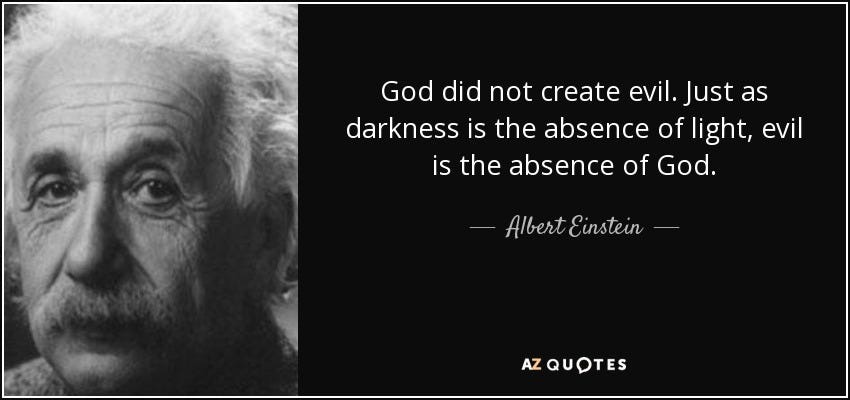
God permits evil to exist in the world, but He is never its source or its commander. He brings good from evil — but He Himself is never evil’s author.
Thomas Aquinas
1225–1274 · Scholastic Theologian · Summa Theologica
God is not above morality, and morality is not above God. Both are grounded in His own perfect nature, which He cannot contradict.
John Calvin
1509–1564 · Reformer · Institutes of the Christian Religion
Providence includes God working through sinful human actions without Himself being responsible for the sin in those actions.
R.C. Sproul
1939–2017 · The Holiness of God
God’s holiness is not one attribute among many — it is the attribute that governs all the others. A God who commanded evil would be a different being entirely, not the God of Scripture.
C.S. Lewis
1898–1963 · Oxford · Mere Christianity
Lewis resolves the Euthyphro dilemma by grounding morality not in God’s arbitrary will but in God’s unchanging nature — which cannot will its own opposite.
But What About “God Told Me to Do It”?
A Critical Pastoral Warning
History Is Full of People Who Made This Claim
Cult leaders, criminals, and tragically misguided believers have invoked divine command to justify horrific acts. The Christian framework provides clear tools for evaluating these claims — and for rejecting them when they contradict what God has already revealed.
Scripture gives us four tests:
If a voice, prompting, or claimed prophecy leads someone toward sin — toward hatred, cruelty, abuse, or injustice — it is not from God. Full stop. The framework is not difficult. It simply requires the honesty to apply it.
God Brings Good from Evil — Without Commanding It
The most powerful demonstration of this principle is the crucifixion of Jesus. The death of Christ was, from a human standpoint, the greatest injustice in history. Pilate knew Jesus was innocent. The religious leaders acted out of envy. The crowd was manipulated. Every participant bore real moral responsibility for a real crime.
“This Jesus, delivered up according to the definite plan and foreknowledge of God, you crucified and killed by the hands of lawless men.” — Acts 2:23
God ordained the cross. He did not command the sin of those who carried it out. He used their evil — fully foreknown, fully planned for — to accomplish salvation that no righteous act could have achieved. Justice and mercy collided. The darkest moment in human history became the hinge on which redemption turned.
This is what Augustine meant: God brings good from evil not by commanding evil, but by being sovereign over it. He is the master craftsman who takes the most twisted threads of human sin and weaves them into something that accomplishes His purposes — without ever being the source of the twisting.
From a Christian perspective, it is theologically impossible for God to command something inherently evil. His commands flow from His nature — and His nature is holy, just, and good in ways that do not bend or change. He cannot contradict Himself.
When passages seem difficult, the first questions to ask are honest ones: Are we reading the context correctly? Are we importing modern assumptions into ancient covenantal settings? Are we hearing a human voice and calling it God’s?
God’s commands are never cruel. They are good — even when they challenge us deeply. And even when He works through the darkest human actions, He remains unstained by them, accomplishing purposes that only a God of perfect wisdom and perfect goodness could have designed.
“And we know that in all things God works for the good of those who love him, who have been called according to His purpose.” — Romans 8:28
Key Scriptures: Mark 10:18 · Psalm 119:68 · James 1:13 · Habakkuk 1:13 · Titus 1:2 · Genesis 22 · Deuteronomy 9:4–5 · Hebrews 11:17–19 · 1 John 4:1 · Galatians 5:22–23 · Acts 2:23; 4:27–28 · Romans 8:28 · 2 Timothy 3:16–17
Want to Go Deeper?
This post addresses one of apologetics’ hardest questions. These companion resources go further:
- Which Morality Is Right? — the foundational post on how Christian ethics are grounded in God’s character rather than cultural consensus
- How Can You Believe in Something Unprovable? — addressing the broader intellectual framework behind these kinds of hard questions
- What Is Truth? — why objective moral truth requires a personal God whose character doesn’t change
- The Holiness of God — R.C. Sproul; the most readable and convicting treatment of what God’s holiness actually means — and why it matters for every other attribute
- Reasonable Faith — William Lane Craig; includes the most rigorous philosophical treatment of the Euthyphro dilemma and divine command theory available at the popular level
- Subscribe to get new posts delivered straight to your inbox — gospel-rooted, plain-spoken truth for the week ahead.
“Your eyes are too pure to look on evil; you cannot tolerate wrongdoing.” — Habakkuk 1:13