The Parable of the Ten Virgins: A Wake-Up Call for Our Times
Matthew 25:1–13 — Readiness, Faith, and the Midnight Hour
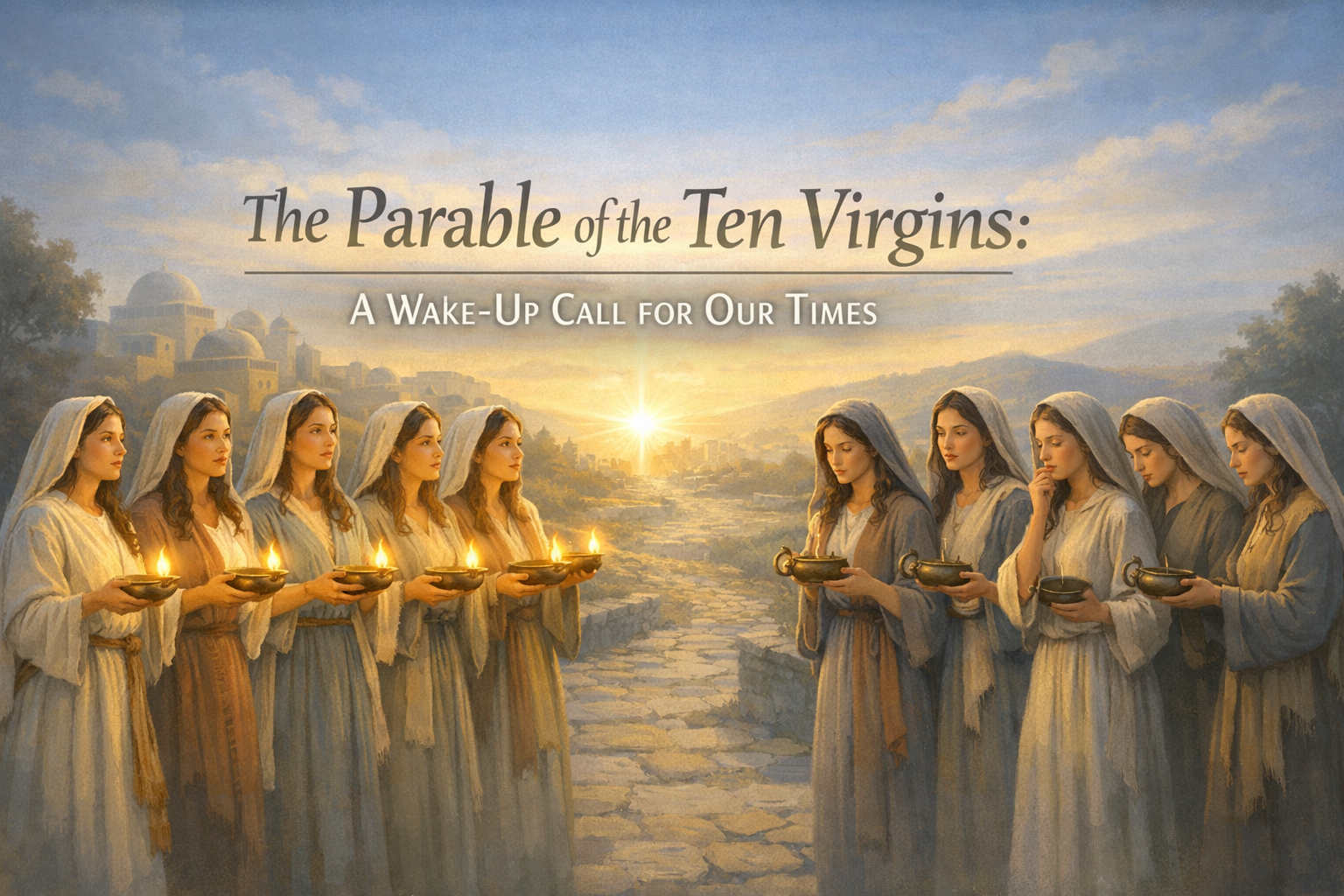
Jesus told a story about a wedding. Ten young women waited for the bridegroom with lamps in their hands. Five were wise — they brought extra oil. Five were foolish — they didn’t. When the bridegroom was delayed, they all fell asleep. At midnight the call rang out. The wise were ready. The foolish were scrambling. And when the unprepared returned from searching for oil, the feast had started, the door was shut, and they were left outside.
The parable ends with seven words that have echoed through every generation since: “Keep watch, because you do not know the day or the hour.”
The Parable — Matthew 25:1–13
“At midnight the cry rang out: ‘Here’s the bridegroom! Come out to meet him!’ Then all the virgins woke up and trimmed their lamps. The foolish ones said to the wise, ‘Give us some of your oil; our lamps are going out.’ ‘No,’ they replied, ‘there may not be enough for both us and you. Instead, go to those who sell oil and buy some for yourselves.’ But while they were on their way to buy the oil, the bridegroom arrived. The virgins who were ready went in with him to the wedding banquet. And the door was shut… ‘Truly I tell you, I don’t know you.'” — Matthew 25:6–12 (NIV)
Cultural Background
In ancient Jewish weddings, the bridegroom often arrived after sunset. Bridesmaids met him with lamps and escorted him to the feast — oil lamps that burned only a few hours without extra fuel. Delays were normal. Timing was part of the celebration. So for Jesus’ listeners, the scene was entirely familiar. What shocked them wasn’t the midnight arrival — it was the foolishness of showing up without extra oil when everyone knew a delay was possible.
Key Symbols
| Symbol | In the Story | Spiritual Meaning |
|---|---|---|
| Bridegroom | The man coming for the wedding | Jesus Christ at His return |
| Virgins | Bridesmaids, guests-to-be | Professing believers — visible church |
| Lamps | Their role and readiness | Outward profession of faith |
| Oil | Fuel for the lamps | Genuine faith; the Spirit’s work |
| The Banquet | The wedding celebration | The Kingdom of Heaven |
| The Closed Door | End of opportunity | Final judgment — no more delay |
What the Parable Teaches
Lesson One
Preparation Matters
The wise and the foolish both had lamps — but only the wise had oil. Outward appearances aren’t enough. It’s the inward reality of a heart surrendered to Christ that keeps the flame burning. Every one of the ten virgins looked ready. Only half were.
Lesson Two
Delay Tests the Depth of Faith
The bridegroom was a long time coming — and they all fell asleep waiting. The delay mirrors Christ’s return. Waiting isn’t the enemy of faith; it’s the test of it. What keeps a lamp burning at midnight, when enthusiasm has faded and the night drags on, is whether there was genuine oil in the first place.
Lesson Three
You Can’t Borrow Faith
When the foolish asked for oil, the wise said no — not out of cruelty, but because it can’t be shared. Salvation and spiritual life are personal. You can’t inherit them from your parents. You can’t borrow them from your church. You can’t buy them at the last minute from someone who has them. The oil must be yours.
Lesson Four
The Door Will Close
Once the bridegroom came and the feast began, the door shut. Scripture is plain: there is a final moment when opportunity ends (Hebrews 9:27). God is patient — “not wanting anyone to perish” (2 Peter 3:9) — but His patience is not endless. The parable does not traffic in fear-mongering. It traffics in urgency: the door is still open now.
Lesson Five
Watchfulness Is a Lifestyle
“Keep watch” doesn’t mean staring at the sky. It means living so that if Christ returned tonight, you wouldn’t need to rearrange anything in your life to meet Him. Readiness isn’t a one-time decision — it’s the shape of faithful daily living.
Voices from the Church
Matthew Henry
“Those, and those only, shall be admitted into the marriage-feast, that are ready to meet the Bridegroom.”
Charles Spurgeon
“A great many have the lamps of profession, but have no oil in them.”
Augustine
“You cannot be lazy and expect to be ready; you cannot be careless and expect to be known by Him.”
The Parable in Our Modern World
We live in a world obsessed with preparedness for everything except eternity. We save for retirement, stock food for emergencies, and keep our devices charged — yet many remain unprepared for the one event that Scripture insists is certain.
🕛 The Midnight Cry Can Come Suddenly
A diagnosis. A car crash. A phone call in the night. Any of these can be a midnight cry — a sudden reckoning with eternity that leaves no time to search for oil you don’t have. God’s patience is a mercy, not a guarantee of more time.
🛢️ Oil Is Countercultural
Genuine faith — real oil, not just a lamp — is countercultural in an age of self-reliance. Many prefer to manage their own lives, including their spiritual lives, without surrendering to Christ. The parable says that strategy fails at midnight.
🏛️ Borrowed Faith Is Common
Many lean on family heritage, church membership, or vague spiritual optimism rather than knowing Christ personally. Your grandmother’s oil doesn’t fill your lamp. Your church attendance doesn’t supply the fuel you need. The oil must be yours — personally received, genuinely held.
📱 Busyness Is Not Readiness
In our distracted, scrolling age, it’s easy to mistake spiritual activity for spiritual life. Don’t mistake being busy with religious things for having oil in the lamp. The foolish virgins were present, engaged, and waiting — and still unprepared.
Application for Believers
- 1Check your oil. Is your faith genuine and Spirit-filled — or is it a lamp with a nice shape and no fuel? (2 Corinthians 13:5: “Examine yourselves to see whether you are in the faith.”)
- 2Live ready. Don’t delay repentance, obedience, or surrender. The door is open now — don’t shop for oil when you should already be at the feast.
- 3Encourage others. Share the gospel before the door closes. The urgency of this parable is not for your benefit alone — it’s fuel for your witness.
- 4Stay alert. Guard against spiritual laziness. Faithful daily habits — Scripture, prayer, worship, community — are how you keep oil in the lamp over the long wait.
If you see yourself in the foolish virgins, the good news is the door is still open. Christ offers the oil of His Spirit freely to everyone who comes to Him in faith and repentance. Don’t wait for a “better time.” Don’t borrow someone else’s readiness.
Because when the Bridegroom comes, the only thing that will matter is whether your lamp is burning.
“Therefore keep watch, because you do not know the day or the hour.” — Matthew 25:13
Key Scriptures: Matthew 25:1–13 · Hebrews 9:27 · 2 Peter 3:9 · 2 Corinthians 13:5 · John 10:27–28 · Revelation 3:20 · 1 Thessalonians 5:2–6 · Romans 8:9–11 · Ephesians 5:15–16
Want to Go Deeper?
This post is part of an ongoing series on the parables of Jesus. If the midnight cry stirred something in you, here are a few next steps:
- Share it with someone who’s been putting off a serious reckoning with their faith — this parable was made for that conversation.
- Read Matthew 24–25 in one sitting — the Ten Virgins sits inside Jesus’ extended teaching on readiness, and the full context makes every detail sharper.
- Subscribe to get new posts delivered straight to your inbox — gospel-rooted, plain-spoken truth for the week ahead.
“Behold, I stand at the door and knock. If anyone hears my voice and opens the door, I will come in to him and eat with him, and he with me.” — Revelation 3:20
Mountain Veteran Ministries
Find Your Next Bearing
Every journey needs a direction. If you're wondering where to go from here, choose the path that best fits where you are today.
⚒️ I Want to Live Faithfully
Discover practical wisdom for following Christ in today's world.
→ Living as a Christian Today✝️ I Want to Understand the Gospel
Learn what salvation means and why Jesus came.
→ Understanding Salvation📖 I Want to Understand the Bible
Explore why Christians trust Scripture and how to read it well.
→ Understanding the Bible❓ I Still Have Questions
Explore thoughtful answers to some of Christianity's hardest questions.
→ Hard Questions