Speech, Civility, and Disagreement: A Christian Field Guide for a Loud Age
Speech, Civility, and Disagreement in a World That Has Forgotten How to Listen
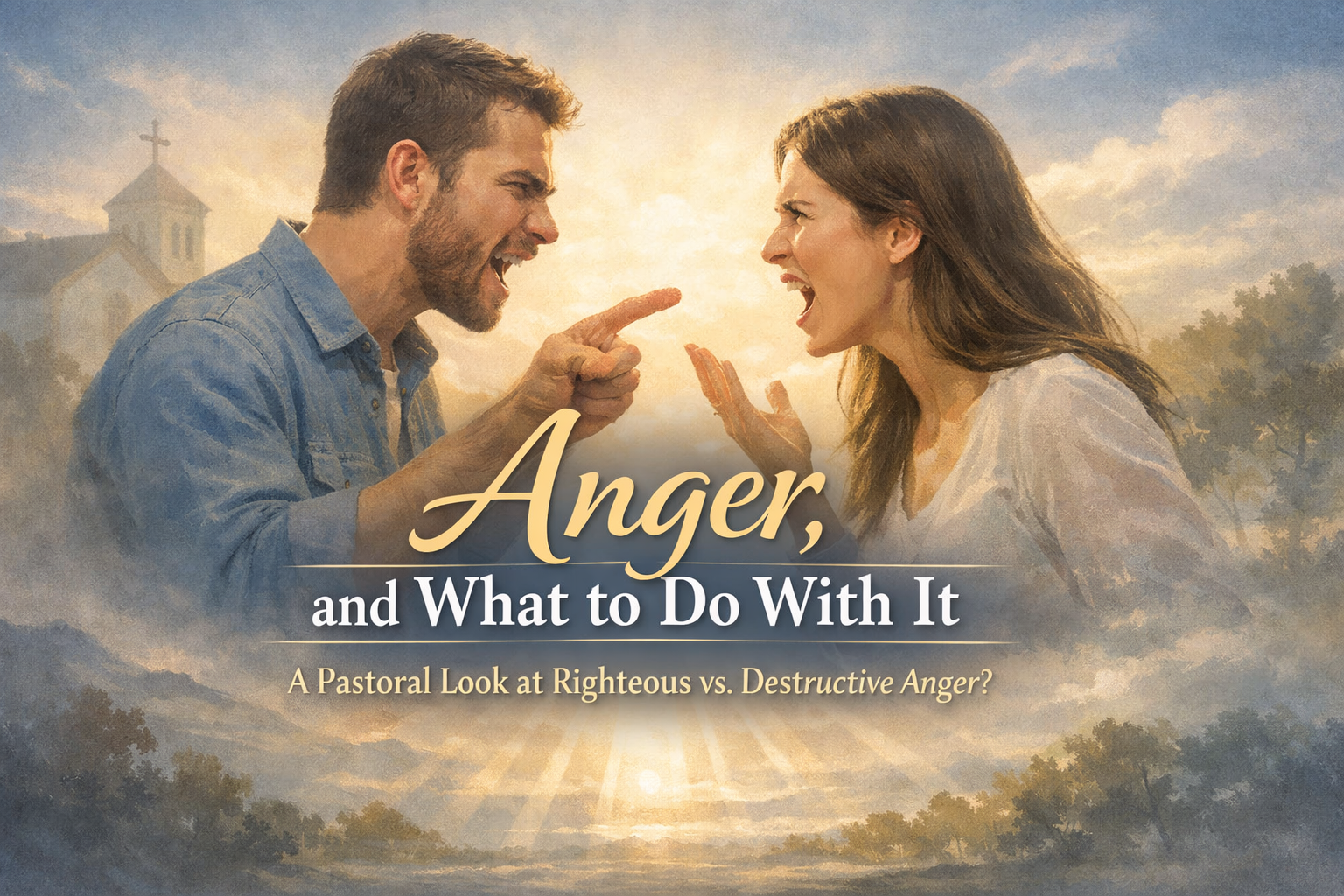
Your conversation ends. Thirty seconds after the last word, someone fires back with a comment that has nothing to do with what you said. The podcast hosts are talking over each other. The family group text just went sideways again. We have more ways to speak than any generation before us — and we often seem less willing to listen.
The volume has gone up. The warmth has gone down.
Christians are called to a different way — speech that fits the gospel, civility that looks like Christ, and disagreement that tells the truth without tearing the fabric of love. What follows is a plain-spoken field guide: a biblical foundation for our words, the theological roots of Christian civility, practical steps for peacemaking conversations, and a few illustrations from everyday life. Think of it as boot leather for a loud age.
The Weight of Words: A Biblical Foundation
Jesus doesn’t leave us guessing: “Out of the abundance of the heart the mouth speaks” (Matthew 12:34). Our words aren’t disposable — they’re diagnostic. James compares the tongue to a spark that can set a whole forest ablaze (James 3:5–6). Proverbs says rash words are like sword thrusts, but the tongue of the wise brings healing (Proverbs 12:18). Scripture paints speech as a stewardship: what we say flows from who we love.
“Let every person be quick to hear, slow to speak, slow to anger; for the anger of man does not produce the righteousness of God.” — James 1:19–20 (ESV)
A Gospel Test for Every Sentence
Paul gives us a three-part test in Ephesians 4:29: Is it true? Is it timely? Is it tender — edifying and grace-giving? Christian speech is neither “anything goes” nor “nothing hard ever gets said.” We tell the truth, even when it stings. We time it well — not every moment is the moment. And we aim it to build up, not to show off.
Listening as Neighbor-Love
James sets the cadence: quick to hear, slow to speak, slow to anger. That’s not a personality type — it’s discipleship. Listening honors the image of God in another person (Genesis 1:26–27). When we rush to reply, we reveal what we value — often our own rightness over our neighbor’s good.
Truth, Correction, and the Log in the Eye
Scripture commends honest correction: “Faithful are the wounds of a friend” (Proverbs 27:6). But Jesus insists we start with our own hearts — remove the log before the speck (Matthew 7:3–5). Truth without humility becomes a hammer; humility without truth becomes vapor. The church needs both: clear doctrine and a Christlike manner.
Peacemaking Without Papering Over
Paul urges, “If possible, so far as it depends on you, live peaceably with all” (Romans 12:18). Sometimes peace isn’t possible without betraying conscience — but hostility is never the fruit of the Spirit. Christians refuse verbal vengeance. Our tongues aren’t given to repay evil but to overcome evil with good (vv. 19–21).
Why Civility Is Not Optional: Four Theological Roots
1. God Speaks — Therefore Words Are Sacred
The Bible opens with “And God said…” (Genesis 1:3). The universe exists because God spoke. Salvation comes because the Word became flesh (John 1:14). A speaking God teaches His people to treat language as holy ground. Lies vandalize reality. Gossip weaponizes trust. Flattery sells out our neighbor for a cheap compliment. Christian civility begins with reverence for a God who communicates truthfully and keeps every promise.
2. The Image of God Grounds Dignity in Debate
Every person you address bears the stamp of the King. That’s why contempt is forbidden — even when you’re right. Jesus warns against vilifying speech: “Whoever says, ‘You fool!’ will be liable to the hell of fire” (Matthew 5:22). Civility isn’t window dressing. It’s love dressed for work. It doesn’t downplay truth; it dignifies people while telling it.
3. The Cross Shapes Our Tone and Tactics
At Calvary, perfect truth and perfect love meet. The cross forbids cruelty — the One who could have called ten thousand angels prayed for His enemies instead. And it forbids cowardice — He bore witness to the truth unto death. In disagreement, then, we aim to illuminate, not humiliate; to invite, not incinerate.
4. The Spirit Produces the Self-Control We Lack
James says no human can tame the tongue (James 3:8). That’s not a depressing conclusion — it’s a gracious one. It drives us to the Spirit, who grows patience, gentleness, and self-control (Galatians 5:22–23). Techniques help — a pause before sending, a question before a verdict — but transformation powers technique. We don’t white-knuckle our way to Christlike speech. We walk by the Spirit.
The great voices of the church have always known this. Augustine taught that sin dis-orders our loves — our words go wrong when we love being right more than we love God and neighbor. C.S. Lewis warned that pride wants to win more than it wants to love, turning arguments into performance. John Calvin emphasized truth spoken for edification, not for scoring points. John Wesley urged “think and let think” on lesser matters while remaining “of one heart” in the gospel. Four centuries. One witness.
What Christian Speech Is — and Isn’t
✅ Is
- Spirit-empowered — not white-knuckled effort
- Truth-telling — even when uncomfortable
- Timely — not every moment is the moment
- Edifying — aimed at the hearer’s good
- Humble — log out, speck later
❌ Isn’t
- Anything goes — grace isn’t a license for poison
- Conflict avoidance — niceness that abandons truth
- Winning at all costs — goal is neighbor-love, not a scoreboard
- Performance — remember the audience of One
- Verbal vengeance — our tongues don’t repay evil
Putting Boots on the Ground
When we talk about Christian speech, it usually shows up in three distinct arenas. And in every one of them, the same principles apply.
In the Workplace
Disagree with ideas, not identities. Critique the proposal; honor the person who made it.
Start with shared ground. Restate the mission you both serve before suggesting a change.
Encourage in public, correct in private. It preserves dignity and invites real growth.
In Family & Church Life
Use the 24-hour rule. Delay written replies when emotions are running hot (Proverbs 29:11).
Follow the Matthew 18 pathway. Go directly, privately, graciously before you go anywhere else (Matthew 18:15–17).
Bless before you bring a concern. Lead with genuine goodwill, then share what’s on your heart.
In Online Spaces
The face-to-face test. Before you post, ask: Would I say this the same way in person? If not, rewrite it.
Yield the last word; keep the better witness. Don’t feed the trolls — and don’t become one.
Edify your algorithm. Like and share what is true, beautiful, and good. Starve outrage-bait.
A Simple Framework for Hard Conversations
You cannot fight a loud culture with a checklist — but a framework helps. Here’s one that works, grounded in Scripture:
- 1Pray. “Set a guard, O LORD, over my mouth” (Psalm 141:3). Begin there, every time.
- 2Clarify. Name the issue and the stakes briefly and fairly. Don’t overstate; don’t minimize.
- 3Invite. Ask, “Help me understand how you see this.” Then actually listen to the answer.
- 4Reflect. Paraphrase their view: “So you’re saying…” Let them correct you if you’ve got it wrong.
- 5State. Offer your conviction with Scripture, reasons, and a gentle tone (Colossians 4:6).
- 6Seek. Identify shared ground or a workable next step forward.
- 7Bless. End with goodwill, even if you still disagree. The Aaronic blessing was given to a people in conflict (Numbers 6:24–26). It still works.
Three Stories from the Gravel Road
The Gate That Wouldn’t Latch
A rancher’s neighbor kept forgetting to latch the gate. Calves wandered onto the gravel road — no accidents, but plenty of close calls. The rancher rehearsed a sharp speech on the drive over, then showed up with a pie instead. They talked about weather first, then the gate. “Friend, I love you, and I love these calves. Can we solve this together?” No shouting. No shaming. A pie, a porch, and a problem solved.
Civility is truth wrapped in love so the heart can receive it.
The Choir and the Microphone
At a small church, the new sound volunteer kept missing cues, cutting mics late, and leaving feedback squeals in the rafters. The worship leader had two options: public frustration or private formation. He chose a quiet Tuesday, coffee in hand. “I love your eagerness. Could we walk through the cue sheet and practice the transitions?” Two weeks later — smoother services and a grateful volunteer.
Correction is an act of compassion when it’s delivered with dignity.
The Family Group Text
A big family chat went sideways over politics. One sister bowed out with a simple note: “I love you all too much to turn this into a scorecard. I’m making stew Saturday — anyone’s welcome.” The group chose stew over sniping.
Sometimes the best argument is an invitation to the table.
Disagreement Triage: Not Every Hill Is Calvary
One of the most freeing things a Christian can learn is that not every disagreement demands a battle. Scripture calls us to triage.
| Order | What It Covers | How to Handle It |
|---|---|---|
| First Order — Dogma | Trinity, deity of Christ, salvation by grace through faith alone | Hold tight. This is non-negotiable — the foundation, not a preference. |
| Second Order — Doctrine | Baptism mode, church polity, gifts of the Spirit | Stay charitable. You may worship in different buildings and still serve the same Lord. |
| Third Order — Opinion | Strategies, styles, preferences | Yield gladly. Unity is stronger than uniformity (Romans 14:1). |
Three Practices for This Week
The Compliment Habit. For every correction you must give, offer two honest encouragements first (Ephesians 4:29). It loosens the soil of the heart so truth can take root.
The Five-Second Prayer. Before you speak or press “send,” whisper: Lord, let this be true, timely, and tender. Five seconds can save five days of cleanup (Colossians 4:6).
The Table Invitation. When a disagreement stalls, move toward embodied fellowship. Share a meal, a walk, a work project. Hospitality lowers shields. “Do not be overcome by evil, but overcome evil with good” (Romans 12:21).
Citizens of a Better Kingdom
In a world that monetizes outrage and rewards spectacle, Christians are called to something older, wiser, and far more beautiful. Our words should sound like our King — truthful and tender, courageous and kind. Civility is not cosmetics. It is the everyday clothing of love.
Disagreement isn’t a license for contempt. It’s a laboratory for Christlikeness.
When followers of Jesus speak this way, neighbors may still disagree with us — but they’ll find it hard to doubt that we have been with Jesus.
I will speak truthfully — no lies, no flattery.
I will speak hopefully — not with cynicism or despair.
I will speak helpfully — aiming to edify, not inflame.
I will speak humbly — ready to repent, ready to learn.
I will speak worshipfully — remembering whose Name I bear.
“Let the words of my mouth and the meditation of my heart be acceptable in your sight, O LORD, my rock and my redeemer.” — Psalm 19:14 (ESV)
Key Scriptures: James 1:19–20 • Ephesians 4:25–32 • Proverbs 12:18; 15:1; 27:6 • Colossians 4:6 • Romans 12:9–21; 14:1 • Matthew 5:21–26; 7:3–5; 12:34; 18:15–17 • Genesis 1:3, 26–27 • John 1:14 • Galatians 5:22–23 • Numbers 6:24–26 • Psalm 19:14; 141:3
Want to Go Deeper?
This post is part of an ongoing conversation about living faithfully as citizens of a better Kingdom. If it resonated with you, here are a few next steps:
- Share it with someone in your church who’s wrestling with how to disagree well.
- Study James 1–3 — it’s a masterclass in the theology of speech.
- Subscribe to get new posts delivered straight to your inbox — gospel-rooted, no algorithm required.
“Let no corrupt word proceed out of your mouth, but what is good for necessary edification, that it may impart grace to the hearers.” — Ephesians 4:29
Mountain Veteran Ministries
Find Your Next Bearing
Every journey needs a direction. If you're wondering where to go from here, choose the path that best fits where you are today.
⚒️ I Want to Live Faithfully
Discover practical wisdom for following Christ in today's world.
→ Living as a Christian Today✝️ I Want to Understand the Gospel
Learn what salvation means and why Jesus came.
→ Understanding Salvation📖 I Want to Understand the Bible
Explore why Christians trust Scripture and how to read it well.
→ Understanding the Bible❓ I Still Have Questions
Explore thoughtful answers to some of Christianity's hardest questions.
→ Hard Questions