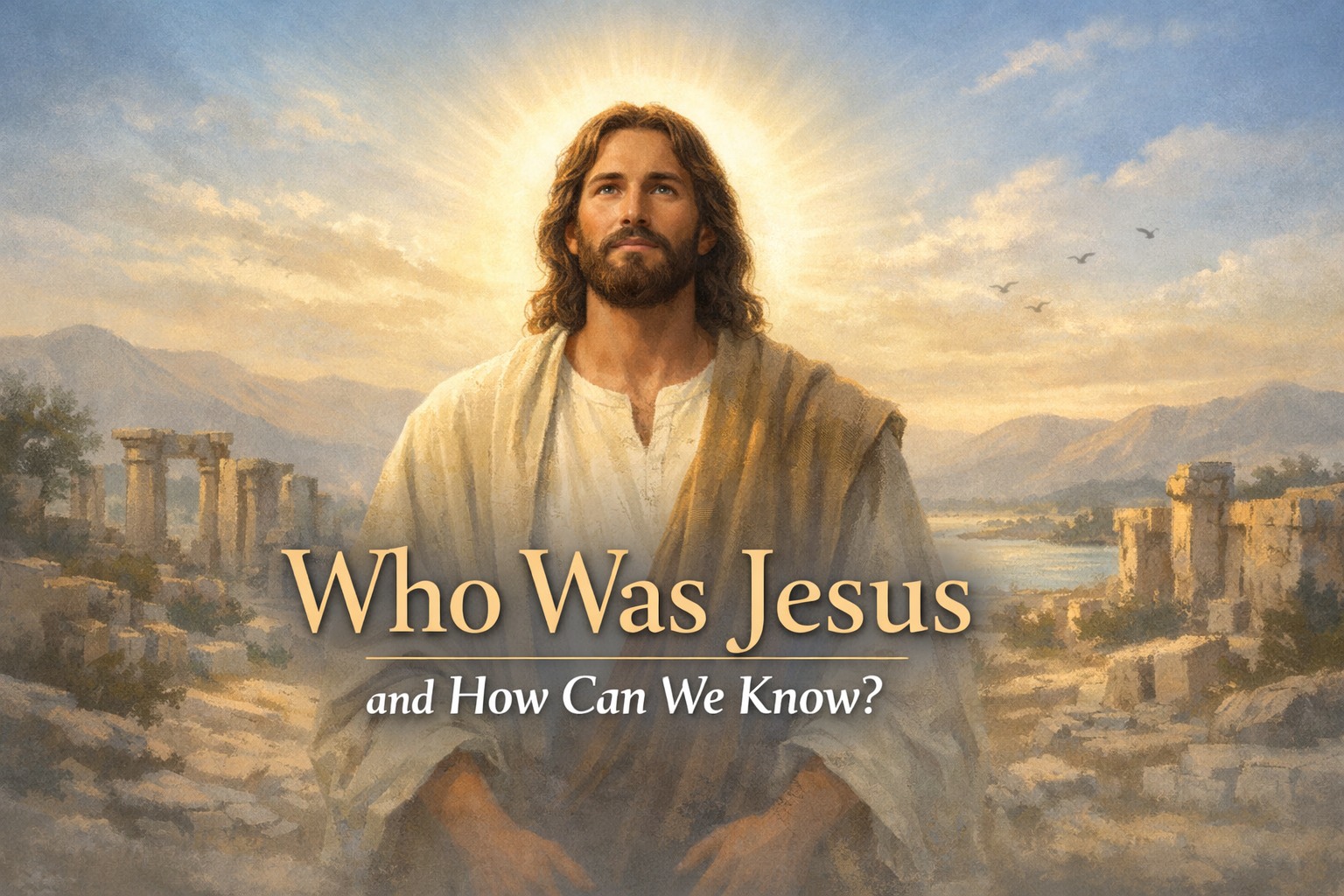
Who Was Jesus and How Can We Know?
From R.C. Sproul to C.S. Lewis — How Nine of Christianity’s Most Trusted Voices Answer the Question Jesus Still Asks Every Person
Few questions are more central to the Christian faith — or to the human search for meaning — than this: who was Jesus, and how can we really know?
Some say He was a good man, a moral teacher. Others call Him a prophet, a myth, or a revolutionary. But for more than two thousand years, the Church has proclaimed something that none of those categories can contain: Jesus was the Son of God, the Savior of the world, and His resurrection from the dead changes everything about how human beings understand themselves, their history, and their future.
Here is how nine of the most respected Christian leaders and theologians — across several centuries — have answered this question, and what Scripture anchors each of their answers.
“Who do you say that I am?” — Matthew 16:15
Nine Leaders on Who Jesus Is
Voice One
R.C. Sproul — Fully God and Fully Man
1939–2017 · Ligonier Ministries · The Mystery of the Incarnation
Sproul taught that understanding who Jesus is depends entirely on understanding the Incarnation — God becoming man. He pressed the doctrine of the hypostatic union: two natures, divine and human, united in one Person without confusion or contradiction. John 1:1–14 and Colossians 1:15–20 were his anchors. Jesus is not simply from God — He is God, who entered the world He made in order to accomplish from within what could not be accomplished from outside it.
The classic illustration: a bridge spanning a vast canyon. On one side, sinful humanity; on the other, a holy God. Jesus, being both God and man, is that bridge — the only Person who could stand on both sides simultaneously and connect the two.
Voice Two
N.T. Wright — The Fulfillment of Israel’s Story
b. 1948 · Oxford · Jesus and the Victory of God
Wright approaches Jesus as a historian and theologian simultaneously. His central argument: Jesus cannot be properly understood outside of the Jewish story — He is the fulfillment of everything God promised to Israel, the climax of the covenant narrative that runs from Abraham through the prophets. Jesus redefined what “Messiah” meant, not by abandoning the promises but by fulfilling them in a way nobody anticipated — through suffering, death, and resurrection rather than military victory.
Voice Three
Billy Graham — The One and Only Savior
1918–2018 · Evangelist · Peace with God
Graham’s message across seven decades of ministry was simple, consistent, and urgent: Jesus is the only Savior, and the appropriate human response is repentance, faith, and surrender. He anchored his evangelistic message in John 3:16 and John 14:6. Knowing Jesus, for Graham, was not primarily an intellectual exercise — it was a personal decision that changed the direction of a life. Millions responded to that invitation across every continent.
The courtroom: you are guilty, and the penalty is death. Jesus steps forward, takes your place, and pays your debt. That is the gospel, as plainly as Graham ever put it.
Voice Four
Tim Keller — The Risen Lord of History
1950–2023 · Redeemer Presbyterian · The Reason for God
Keller made the case that the resurrection is not merely a tenet of faith — it is a historical event that carries historical weight, and that the evidence for it is stronger than the evidence for most events from the ancient world that we accept without question. Citing 1 Corinthians 15 and the early creed Paul quotes there — within years of the crucifixion — Keller pressed the point: if the resurrection happened, the implications are total. Nothing about how a person understands reality, purpose, or hope can remain unchanged.
Voice Five
Charles Spurgeon — The Hub of All History
1834–1892 · Metropolitan Tabernacle, London
Spurgeon preached more than 3,500 sermons and made it a practice to find a path to Christ in every passage of Scripture — because he believed Christ was already there, embedded in the whole biblical narrative. His anchor for the person of Christ was Philippians 2:5–11: the humility, the obedience, the death on the cross, and the subsequent exaltation to the name above every name. He believed that knowing Jesus was the work of the Holy Spirit operating through faith, repentance, and the preaching of the Word.
History as a wheel, Jesus as the hub. Every spoke — every nation, every century, every individual story — finds its center and meaning in Him.
Voice Six
John Piper — The All-Satisfying Treasure
b. 1946 · Desiring God · Desiring God
Piper’s contribution is experiential and doxological: knowing Jesus is not primarily about accumulating correct beliefs, though those matter. It is about finding in Jesus the satisfaction that every human being is seeking in lesser things. Hebrews 1:3 calls Jesus the “radiance of God’s glory” — not a reflection but the radiance itself. For Piper, Christ fulfills every longing and every need that the human soul carries. We know Him by treasuring Him above everything else that competes for that position.
Voice Seven
C.S. Lewis — Lord, Liar, or Lunatic
1898–1963 · Oxford · Mere Christianity
Lewis’s famous trilemma systematically dismantles the most common escape route from Jesus’ claims — the “good teacher” option. A man who claims to be the Son of God, to forgive sins, to be one with the Father, and to be the only way to God cannot be merely a good teacher. Either His claims are true, or He was deeply deluded, or He was deliberately deceiving. Lewis spent the rest of Mere Christianity making the case for the first option — and inviting readers to stop deferring the decision that Jesus’s claims require.
A fork in the road: one sign reads “Good Man,” the other reads “Son of God.” You cannot take both paths. Jesus left no room for the comfortable middle ground of admiring Him without following Him.
Voice Eight
A.W. Tozer — The Light the Soul Must Open To
1897–1963 · Christian and Missionary Alliance · The Pursuit of God
Tozer emphasized the experiential and devotional dimension of knowing Jesus. Scripture is essential, doctrine is necessary — but the actual encounter with Christ comes through worship, sustained prayer, and genuine surrender. He leaned on Revelation 3:20 — “I stand at the door and knock” — and pressed the question of whether believers had truly opened the door of their interior life to Christ or merely acknowledged His existence at a distance. For Tozer, orthodox belief and warm devotion were not alternatives. They were inseparable.
Voice Nine
Alistair Begg — Our Substitute at the Cross
b. 1952 · Parkside Church · Truth for Life
Begg consistently returns to substitutionary atonement as the heart of what knowing Jesus means. Isaiah 53 and 1 Peter 2:24 are his anchors: the righteous for the unrighteous, the sinless bearing the sin of the guilty. Knowing Jesus, for Begg, means understanding what He did in our place — and resting entirely in that finished work rather than in any contribution of our own. The Christian life is not a performance that earns God’s approval; it is a life lived in response to an approval already fully granted at the cross.
Nine Voices — at a Glance
| Leader | Core View of Jesus | How We Come to Know Him |
|---|---|---|
| R.C. Sproul | Fully God and Fully Man | Scripture and doctrine of the Incarnation |
| N.T. Wright | Fulfillment of Israel’s story | Historical Gospels and Jewish context |
| Billy Graham | Savior of the world | Repentance and personal faith |
| Tim Keller | The Risen Lord of history | Historical evidence for the resurrection |
| Charles Spurgeon | Hub of all history | Faith, the Spirit’s work, the whole of Scripture |
| John Piper | The all-satisfying treasure | Worship, Scripture, treasuring Him above all |
| C.S. Lewis | Lord — not a safe middle option | Reason, imagination, and honest decision |
| A.W. Tozer | The light the soul opens to | Sustained prayer, worship, and surrender |
| Alistair Begg | Our substitute at the cross | Trust in the finished work — nothing added |
So How Can You Know Jesus Personally?
Knowing about Jesus is one thing. Knowing Him — as Lord, Savior, and the Person your life is organized around — is something else entirely. Jesus Himself defined eternal life in those terms: “This is eternal life, that they know you, the only true God, and Jesus Christ whom you have sent” (John 17:3).
Jesus once asked His disciples: “Who do you say that I am?” Peter answered on behalf of them all: “You are the Christ, the Son of the living God.” Jesus called that answer blessed — not because Peter had figured something out but because the Father had revealed it to him.
That same question is still being asked. Across nine centuries, nine traditions, nine distinctive voices — the answer is the same: Jesus is the Son of God, the Savior of the world, the risen Lord of history, and the most important Person you will ever decide what to do with.
He is still asking. What do you say?
“And this is eternal life, that they know you, the only true God, and Jesus Christ whom you have sent.” — John 17:3
Key Scriptures: Matthew 16:15 · John 1:1–14; 14:6; 17:3 · Colossians 1:15–20 · Luke 24:27 · 1 Corinthians 15:3–8, 17 · Philippians 2:5–11 · Hebrews 1:3 · Psalm 73:25 · Isaiah 53 · 1 Peter 2:24 · Revelation 3:20
Want to Go Deeper?
This post connects to the theological core of everything MVM publishes. These are the most direct companion posts:
- What Is Christianity? — how Jesus’s identity connects to the five foundational convictions of the Christian faith
- Why Did Jesus Have to Die? — the full treatment of the atonement, drawing on seven theologians from Athanasius through N.T. Wright
- The Trinity — who Jesus is within the eternal relationship of Father, Son, and Spirit — the doctrinal framework that makes sense of everything the nine voices above are saying
- The Call to Faith — what responding to Jesus personally actually looks like and produces
- Mere Christianity — C.S. Lewis; still the finest short introduction to who Jesus is and what His claims require of every person who encounters them
- Subscribe to get new posts delivered straight to your inbox — gospel-rooted, plain-spoken truth for the week ahead.
“Who do you say that I am?” — Matthew 16:15