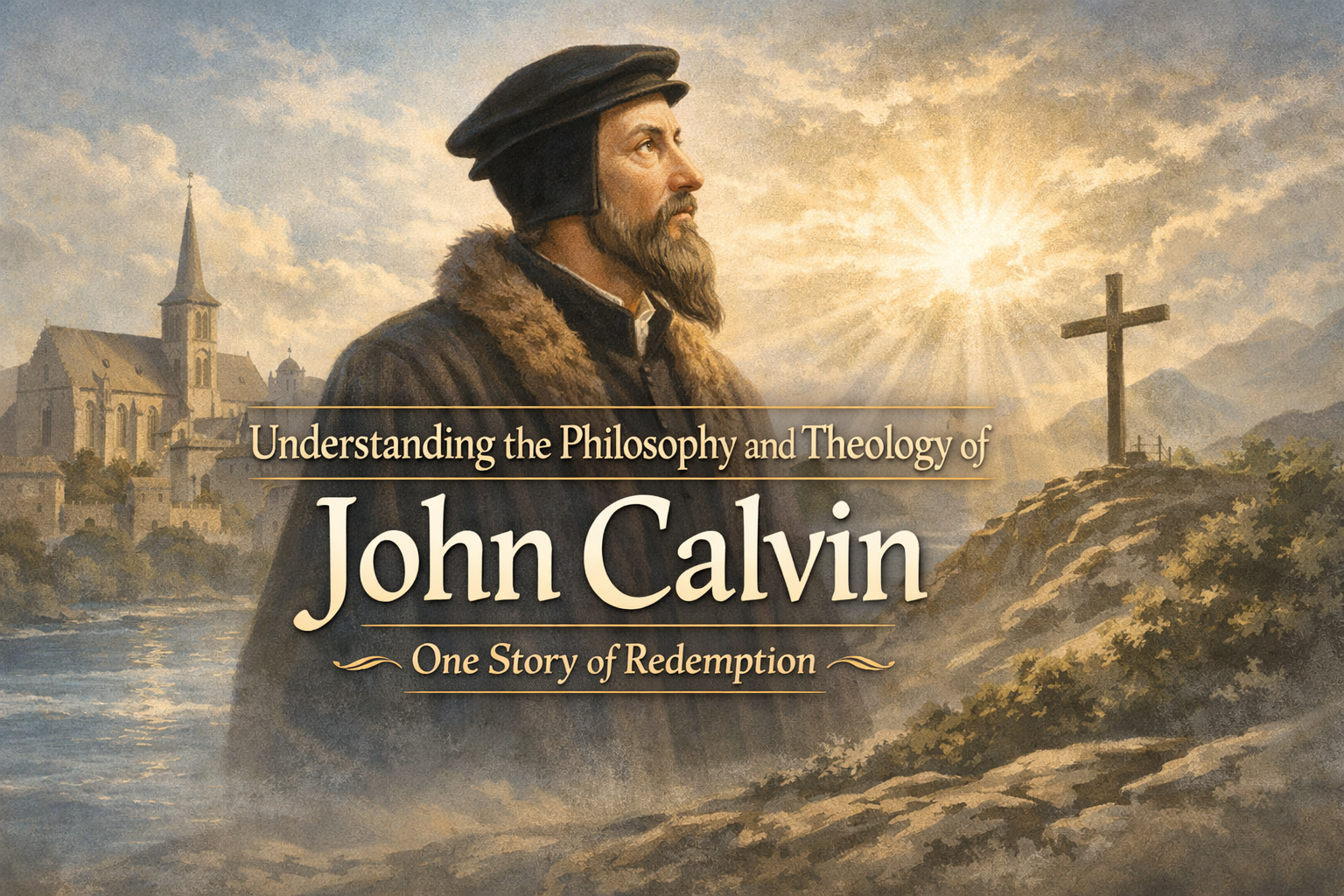
Understanding the Philosophy and Theology of John Calvin
God’s Sovereignty, Grace, and the Glory of God — the Core of Calvin’s Theology
John Calvin remains one of the most influential figures in Christian history. Born in 1509 in Noyon, France, his writings and teachings profoundly shaped the Protestant Reformation and the theological framework we now call Reformed Theology. But Calvin’s work wasn’t merely about reforming the Church — it was about lifting high the sovereignty and glory of God in every area of life.
John Calvin — 1509–1564
French-born pastor, theologian, and Reformer. His major work, Institutes of the Christian Religion, became one of the most influential books in church history. His motto: Soli Deo Gloria — “To God alone be the glory.”
“Our wisdom, insofar as it ought to be deemed true and solid wisdom, consists almost entirely of two parts: the knowledge of God and of ourselves.” — John Calvin, Institutes, Book I
Ten Pillars of Calvin’s Theology
Teaching One
👑 God’s Absolute Sovereignty
For Calvin, everything begins and ends with God’s sovereignty. He believed that God, as the Creator, is in full control of every aspect of existence. Nothing happens outside His knowledge or will. The universe is not governed by blind chance but by God’s wise and loving providence.
“For from him and through him and to him are all things. To him be glory forever.” — Romans 11:36
Teaching Two
📖 The Authority of Scripture
Calvin was convinced that the Bible is the final authority for all matters of faith and life. In the 16th century, many church leaders placed tradition or papal decrees above Scripture. Calvin pushed back: God’s Word alone — Sola Scriptura — is the standard of truth. He also believed the Holy Spirit must open our hearts to truly understand and apply it.
“All Scripture is God-breathed and is useful for teaching, rebuking, correcting and training in righteousness.” — 2 Timothy 3:16
Teaching Three
💔 Human Sinfulness — Total Depravity
One of Calvin’s most sobering teachings is that human beings are deeply sinful because of Adam and Eve’s fall. Total depravity doesn’t mean people are as bad as they could possibly be — it means sin has affected every part of our being: mind, will, emotions, and body. We cannot save ourselves or even genuinely seek God without His prior work.
“There is no one righteous, not even one; there is no one who understands; there is no one who seeks God.” — Romans 3:10–11
Teaching Four
🎁 Salvation by Grace Alone
Because we are unable to save ourselves, Calvin taught that salvation is entirely a gift from God. Good works cannot earn it — they are the fruit of salvation, not its cause. God, in His mercy, extends grace to sinners, and we receive it through faith in Jesus Christ.
“For it is by grace you have been saved, through faith — and this is not from yourselves, it is the gift of God — not by works, so that no one can boast.” — Ephesians 2:8–9
Teaching Five
🌟 Predestination and Election
Calvin’s most debated teaching: before the foundation of the world, God chose certain people — the elect — to be saved. His choice was not based on anything foreseen in them, but solely on His own will and purpose. This doctrine is not meant to produce despair, but assurance: God’s electing love is unchanging.
“He chose us in him before the creation of the world to be holy and blameless in his sight.” — Ephesians 1:4
Teaching Six
🩸 Christ’s Atoning Work
Calvin taught that Jesus’ death on the cross fully and effectively paid for the sins of those God chose to save. Christ didn’t just make salvation possible — He secured it. His death satisfied God’s justice and guaranteed the salvation of all who believe.
“I am the good shepherd. The good shepherd lays down his life for the sheep.” — John 10:11
Teaching Seven
🔥 The Holy Spirit’s Essential Role
Calvin placed a strong emphasis on the Holy Spirit. The Spirit draws people to Christ, grants new hearts, illuminates Scripture, and empowers believers to live holy lives. Salvation doesn’t begin and end with a decision — the Spirit continues to guide and sanctify throughout the believer’s whole life.
“I will give you a new heart and put a new spirit in you; I will remove from you your heart of stone and give you a heart of flesh.” — Ezekiel 36:26
Teaching Eight
🛡️ Perseverance of the Saints
Those whom God saves will remain in faith to the end. Not because they are strong enough to hold on, but because God holds them. Believers may stumble and struggle, but God never lets go. This teaching is designed to give Christians deep assurance that their salvation rests on God’s faithfulness, not their own.
“He who began a good work in you will carry it on to completion until the day of Christ Jesus.” — Philippians 1:6
Teaching Nine
🌿 Obedience and Holiness in the Christian Life
Salvation by grace doesn’t mean we can live however we want. True faith produces genuine desire to obey God and live a holy life. Good works are the evidence of salvation, not the cause. Calvin encouraged believers to live out their faith visibly — in families, workplaces, and communities, not just in church buildings.
“Put on the new self, created to be like God in true righteousness and holiness.” — Ephesians 4:24
Teaching Ten
✨ The Glory of God — the Purpose of Everything
Ultimately, Calvin believed the purpose of human life — and of all creation — is to glorify God. Every doctrine he taught flows from this conviction. Soli Deo Gloria. Whether eating or drinking, working or worshipping, raising children or plowing a field — all of it is meant to display God’s majesty, holiness, and love.
“So whether you eat or drink or whatever you do, do it all for the glory of God.” — 1 Corinthians 10:31
The Takeaways at a Glance
God is sovereign over all things and worthy of our full trust.
Scripture alone is the final authority for faith and life.
Sin has affected every part of human nature — we cannot save ourselves.
Salvation is by grace alone through faith — never by works.
God’s electing love assures us — it rests on His will, not our merit.
Christ’s death fully secured salvation for all who believe.
The Spirit draws, regenerates, and sustains believers throughout life.
True believers persevere — held by God, not by their own grip.
Grace produces obedience — good works are the fruit, not the root.
The purpose of all things is the glory of God. Soli Deo Gloria.
Questions for Personal Reflection
- Do you truly trust God’s sovereignty — even in the circumstances that don’t make sense right now?
- Are you anchoring your beliefs and daily decisions in Scripture, or in the opinions and traditions around you?
- Are you living out your faith with gratitude and obedience — or treating grace as permission to coast?
Calvin’s theology can seem weighty — even overwhelming at first. But at its core, it’s about magnifying God’s greatness and His grace toward sinners. Calvin wanted Christians to live with humble confidence: knowing that salvation is God’s work from beginning to end, and that the proper response is not pride but worship.
When we grasp God’s sovereignty and grace as Calvin taught, our hearts are freed from fear and filled with the kind of joy that only comes from knowing the God who holds everything — including us.
“For from him and through him and to him are all things. To him be glory forever. Amen.” — Romans 11:36
Key Scriptures: Romans 11:36 · 2 Timothy 3:16 · Romans 3:10–11 · Ephesians 2:8–9 · Ephesians 1:4 · John 10:11 · Ezekiel 36:26 · Philippians 1:6 · Ephesians 4:22–24 · 1 Corinthians 10:31 · Romans 8:28–30
Want to Go Deeper?
This post is part of an ongoing series on the theological traditions that have shaped the church. If it helped clarify what Reformed theology is actually about, here are a few next steps:
- Compare perspectives — read the MVM posts on Arminianism and the Catholic view of predestination alongside this one for a fuller picture of how different traditions answer the same questions.
- Read further — R.C. Sproul’s Chosen by God is the most accessible modern introduction to Calvin’s doctrines of grace; The Institutes themselves are surprisingly readable in modern translation.
- Subscribe to get new posts delivered straight to your inbox — gospel-rooted, plain-spoken truth for the week ahead.
“To him be glory forever. Amen.” — Romans 11:36
Mountain Veteran Ministries
Find Your Next Bearing
Every journey needs a direction. If you're wondering where to go from here, choose the path that best fits where you are today.
⚒️ I Want to Live Faithfully
Discover practical wisdom for following Christ in today's world.
→ Living as a Christian Today✝️ I Want to Understand the Gospel
Learn what salvation means and why Jesus came.
→ Understanding Salvation📖 I Want to Understand the Bible
Explore why Christians trust Scripture and how to read it well.
→ Understanding the Bible❓ I Still Have Questions
Explore thoughtful answers to some of Christianity's hardest questions.
→ Hard Questions