What Did the Ancient Theologians Say About the Rapture?
Five Ancient Theologians on the Second Coming, Tribulation, and the Hope of the Church
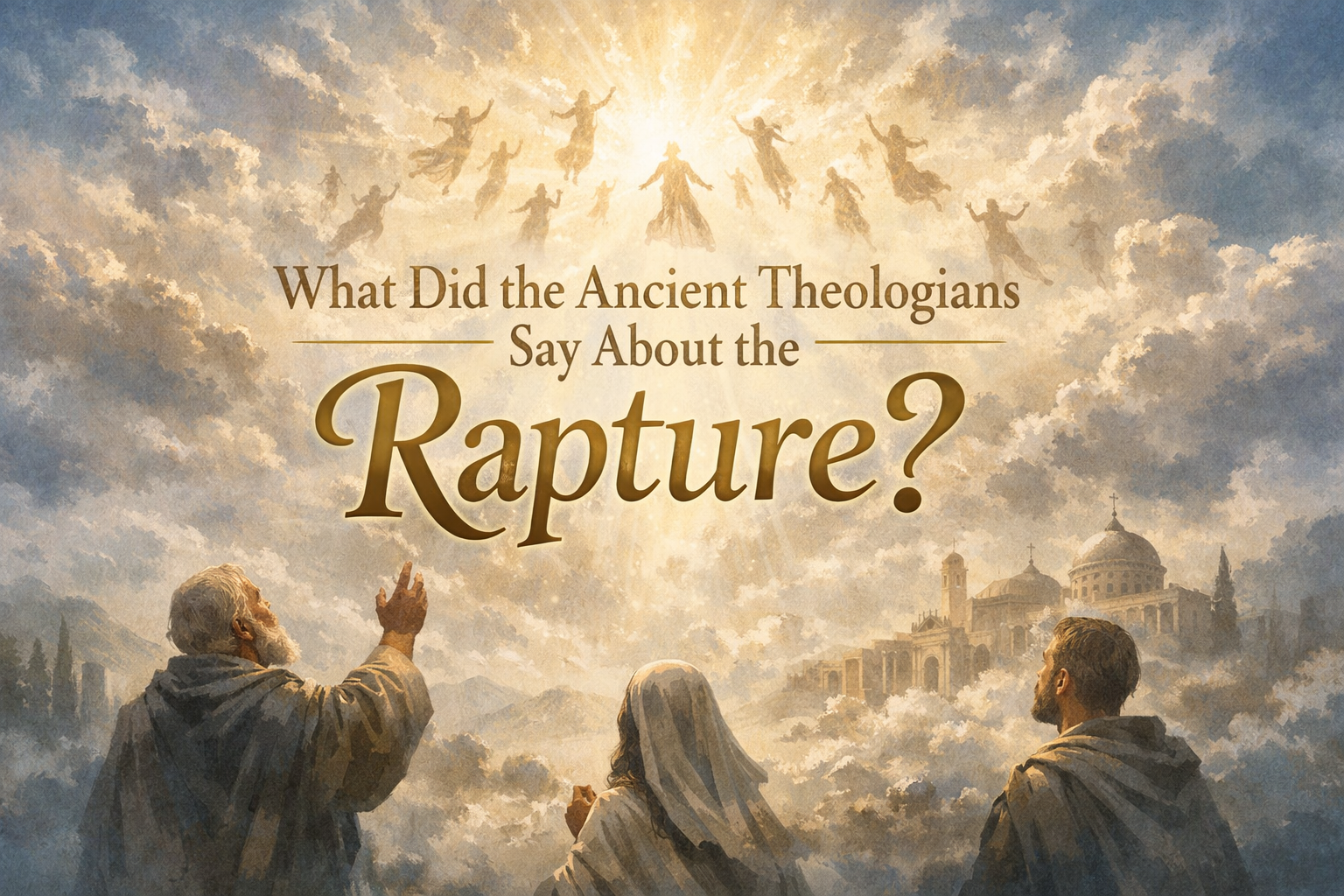
If you’ve ever sat through a Sunday morning sermon or cracked open a Left Behind novel, chances are you’ve heard about the rapture — the idea that believers will be “caught up” and whisked away before a time of great tribulation. But here’s a question worth sitting with: the earliest Christians didn’t talk about the end times the way many modern evangelicals do. In fact, the very word “rapture” doesn’t appear in Scripture — it comes from rapturo, the Latin translation of harpazo (“caught up”) in 1 Thessalonians 4:17.
So what did the ancient theologians — those early Church Fathers who were closest in time to the apostles — actually teach about the Second Coming and the end of the age?
“Even so, come, Lord Jesus.” — Revelation 22:20
A Brief Word on Where the Rapture Came From
Historical Context
The pretribulational rapture — the idea that Christ returns secretly before a seven-year tribulation to remove believers — is a relatively recent development in church history. It emerged in the early 1800s through John Nelson Darby and the Plymouth Brethren movement, spread widely through the Scofield Reference Bible, and reached popular culture through Hal Lindsey’s The Late Great Planet Earth and the Left Behind series.
It was not the teaching of the ancient Church. Not one of the early Church Fathers taught a pretribulational rapture. This doesn’t automatically make the doctrine wrong — but it is a historical fact worth knowing before we examine what they actually said.
Five Voices from the Ancient Church
c. 130–202 AD
Irenaeus of Lyon
Bishop in Gaul; disciple of Polycarp, who was discipled by the Apostle John
Irenaeus was one of the earliest post-apostolic theologians, and one of the most important. His magnum opus, Against Heresies, combats Gnostic distortions of Christianity and articulates what the Church actually believed. On the end times, he was clear: Christ’s return would be literal and glorious, followed by a bodily resurrection of the saints and a millennial reign on earth.
His framework — resurrection after tribulation, a literal millennium, Christ’s visible return — is what historians now call historic premillennialism.
c. 170–235 AD
Hippolytus of Rome
Theologian and presbyter in Rome; detailed interpreter of Daniel and Revelation
Hippolytus is most known for his detailed treatment of the Antichrist and end-time events in On Christ and Antichrist. He interpreted Daniel and Revelation as literal prophecies of future events. His sequence: the Antichrist rises, Christians endure tribulation, then Christ returns to destroy the Antichrist and raise the dead.
Notably, Hippolytus placed believers inside the tribulation period, not raptured out before it. Christians facing tribulation were to stand firm, not escape.
c. 200–258 AD
Cyprian of Carthage
Bishop of Carthage; leading pastoral voice during Roman persecution
Cyprian was a bishop who shepherded his flock through devastating persecution and plague. His writings are more pastoral than prophetic — his goal was to strengthen believers for suffering, not to map out a prophetic timeline. Some modern pretribulationist writers have attempted to claim Cyprian taught a rapture, but his context makes clear he was encouraging readiness for death and martyrdom, not a pretribulational evacuation.
This is a call to readiness for death — the “departure” he describes is martyrdom or natural death, not a rapture event. His consistent message was that tribulation is expected and should be endured with hope.
354–430 AD
Augustine of Hippo
Bishop of Hippo; arguably the most influential theologian in Western Christian history
Augustine shaped Western Christianity more than almost any other figure. In The City of God, written in response to Rome’s sack in 410, he laid out a sweeping theology of history and the end. He rejected literal millennialism and interpreted the “thousand years” of Revelation 20 as symbolic of the current Church age — the amillennial view that became dominant in Western Christianity for over a millennium.
For Augustine, history moves toward a single, climactic event: Christ returns, the dead are raised, the world is judged, and eternity begins. No rapture, no two-phase return, no separate seven-year tribulation.
c. 347–407 AD
John Chrysostom
Archbishop of Constantinople; renowned biblical preacher and homilettist
Chrysostom is arguably the greatest biblical preacher of the ancient Church. His homilies on the New Testament epistles remain valuable to this day. Crucially, he preached directly on 1 Thessalonians 4:17 — the very verse at the center of the modern rapture debate — and his interpretation is strikingly different from the pretribulational reading.
Chrysostom’s picture is not believers being carried to heaven. It’s believers rising to escort the returning King back to earth — exactly as honored citizens would ride out to meet an arriving emperor and then accompany him into the city. The direction of travel is down, not up. It’s a welcoming procession, not an escape.
The Fathers at a Glance
| Father | Time Period | View on Rapture | End-Time Framework |
|---|---|---|---|
| Irenaeus | 130–202 AD | Not taught; return after tribulation | Historic Premillennial |
| Hippolytus | 170–235 AD | Not taught; Antichrist comes first | Historic Premillennial |
| Cyprian | 200–258 AD | Not taught; tribulation expected | Pastoral hope in resurrection |
| Augustine | 354–430 AD | Not taught; single final event | Amillennial |
| Chrysostom | 347–407 AD | Not taught; escort, not evacuation | Amillennial / Single Return |
Two Different Timelines
📊 Modern Pre-Trib View
🏛️ Ancient Church View
The ancients didn’t split Christ’s return into two phases. They saw it as one climactic, visible, final event — glorious, unexpected, and world-ending. They weren’t looking for an escape hatch. They were looking for a King.
What Modern Scholars Say
Why This Matters Today
Many Christians today have been taught to expect an escape from hard times. But the ancient Church — the men and women who were closest to the apostles, who read the letters of Paul in their original context, who faced genuine persecution for their faith — did not share that expectation.
They expected to stand firm in the faith, endure trials, and wait with courage for Christ’s triumphant return. They weren’t watching the sky for an escape. They were living faithfully in the present, anchored by an unshakable hope in the future.
Understanding their perspective doesn’t require abandoning your current eschatology. But it does challenge all of us to examine whether our end-times beliefs are driving us toward faithfulness or toward comfort — and whether our hope is in a rescue from the world or in the King who is coming to renew it.
The rapture debate might stir strong emotion. But here is what every one of these ancient theologians agreed on — and what every tradition in Christianity has confessed for two thousand years:
Christ will return. The dead will rise. There will be justice, resurrection, and glory. And the faithful will be with Him forever.
So whether we meet Him in the air, or on the other side of the grave, the hope is the same. And it has always been enough.
“Even so, come, Lord Jesus.” — Revelation 22:20
Key Scriptures: 1 Thessalonians 4:16–17; 5:2 · Revelation 20:1–6; 22:20 · Matthew 24:30–31, 36 · Acts 1:11 · 2 Thessalonians 2:1–4 · 1 Corinthians 15:51–52
Want to Go Deeper?
This post is part of an ongoing series on eschatology and how different Christian traditions have understood the end times. Read the companion posts for the full picture:
- David Jeremiah on Revelation — MVM’s treatment of the dispensational premillennial view, which shapes most American evangelical end-times thinking.
- C.S. Lewis and the Rapture — How one of the most beloved Christian thinkers of the 20th century viewed the Second Coming — and why he avoided the rapture debate entirely.
- Read further — George Eldon Ladd’s The Blessed Hope (1956) is the most accessible scholarly treatment of historic premillennialism; N.T. Wright’s Surprised by Hope is the best contemporary case for rethinking our end-times assumptions.
- Subscribe to get new posts delivered straight to your inbox — gospel-rooted, plain-spoken truth for the week ahead.
“Christ has died. Christ is risen. Christ will come again.” — The ancient confession of the Church
Mountain Veteran Ministries
Find Your Next Bearing
Every journey needs a direction. If you're wondering where to go from here, choose the path that best fits where you are today.
⚒️ I Want to Live Faithfully
Discover practical wisdom for following Christ in today's world.
→ Living as a Christian Today✝️ I Want to Understand the Gospel
Learn what salvation means and why Jesus came.
→ Understanding Salvation📖 I Want to Understand the Bible
Explore why Christians trust Scripture and how to read it well.
→ Understanding the Bible❓ I Still Have Questions
Explore thoughtful answers to some of Christianity's hardest questions.
→ Hard Questions